

Your front yard is doing more work than you think. It’s the first thing guests see, the thing neighbors notice, and honestly, it’s the thing you either love or quietly feel embarrassed about every time you pull into the driveway. The good news? A beautiful front yard doesn’t require a huge budget or a professional landscape architect.
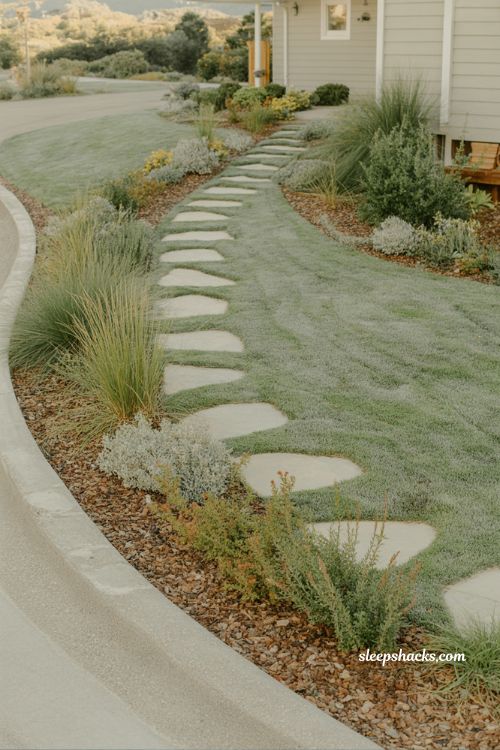
With the right front yard landscaping ideas, even the most overlooked patch of grass can become a space you’re genuinely proud of.
- Front yard landscaping can significantly boost your home’s curb appeal and even its resale value.
- Low-maintenance options like native plants, ornamental grasses, and clover lawns are just as beautiful as high-effort traditional gardens.
- Your home’s architectural style, sun exposure, and soil type should all guide your planting and design choices.
Why Your Front Yard Landscaping Matters More Than You Think
Most homeowners pour their energy into the backyard — the space they actually live in. But here’s the thing: the front yard is what the world sees. It sets expectations. A thoughtfully landscaped front yard signals care, personality, and pride of ownership. And if you ever plan to sell, research consistently shows that strong curb appeal makes a measurable difference in how potential buyers experience your home from the moment they arrive.
The other reason front yard landscaping deserves your attention? The front yard often has conditions that work against you — compacted soil from years of turf, tricky sun angles, proximity to the street, and foot traffic patterns that don’t match where you put the path. Understanding your space before you plant anything is the single most important step you can take.
| Factor | Why It Matters | What to Do |
|---|---|---|
| Sun exposure | Determines what plants will thrive | Observe your yard at different times of day |
| Soil type | Affects drainage and plant health | Amend compacted soil before planting |
| Home style | Guides hardscape and plant choices | Match materials and plants to architecture |
| Maintenance time | Shapes your plant palette | Choose natives and low-care shrubs if time is limited |
| HOA/local rules | Can restrict lawn alternatives or fencing | Check local guidelines before designing |
17 Front Yard Landscaping Ideas That Actually Work
1. Ditch the Lawn for Ornamental Grasses
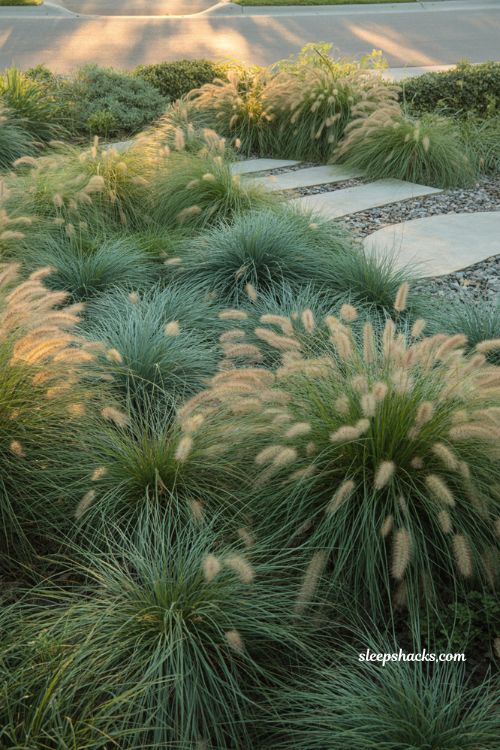
Swapping your turf for ornamental grasses is one of the smartest moves you can make. Mexican feather grass ripples in the breeze like a living painting, and once it’s established, you’ll never mow again. Pair it with blue fescue or prairie dropseed for texture contrast. These grasses handle drought, poor soil, and neglect without complaint. Your neighbors will ask what you did, and you’ll just smile.
- Choose grasses that suit your climate zone — Mexican feather grass thrives in warm regions.
- Mix at least three grass varieties for a layered, naturalistic look.
- Edge the bed cleanly to keep the no-mow look intentional, not messy.
2. Add a Rose-Covered Arbor at the Entry
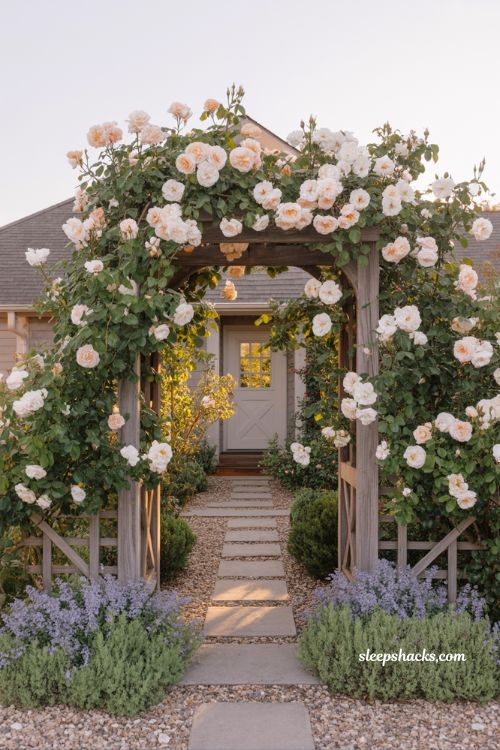
Nothing says “welcome” like a climbing rose arching over your front gate or walkway. Nearly thornless varieties like ‘Zéphirine Drouhin’ or ‘New Dawn’ are perfect for entries where people brush past. The arbor itself adds vertical structure your front yard probably lacks, and the blooms add weeks of color and fragrance. Pair it with a simple stone path beneath and the whole entry becomes something people remember.
- Choose a rot-resistant wood or powder-coated metal arbor for longevity.
- Train canes horizontally along the structure to encourage maximum blooming.
- Underplant with lavender or catmint to extend the color season at ground level.
3. Plant a Japanese Maple as a Living Focal Point
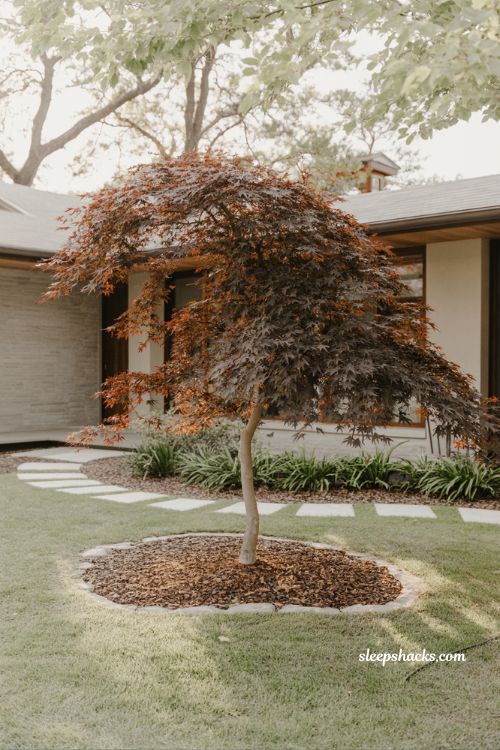
Japanese maples are genuinely one of the best trees you can put in a front yard. They stay manageable — rarely taller than 25 feet — and they earn their keep all year long. Spring brings delicate new foliage, summer gives you shade, fall sets the whole yard on fire in oranges and reds, and winter reveals the gorgeous branch structure. They tolerate partial shade, which makes them ideal under taller trees.
- Look for weeping varieties if you want a sculptural, low-canopy effect.
- ‘Crimson Queen’ and ‘Bloodgood’ are reliable performers in most zones.
- Give the tree space — don’t crowd it with foundation shrubs that compete visually.
4. Create a Cottage Garden Along the Front Path
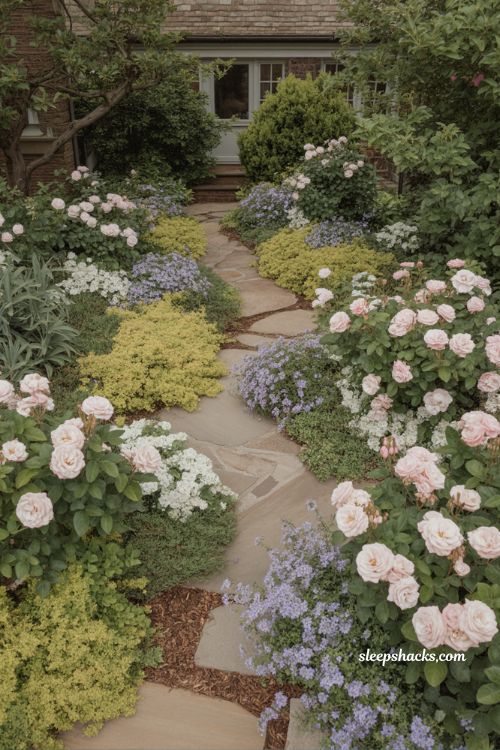
A cottage-style front yard feels effortlessly abundant — like the garden just grew that way. The trick is layering plants at different heights: shrub roses at the back, catmint and lady’s mantle spilling forward, with sweet alyssum or creeping phlox at the edges. Repeat color blocks along the path to create rhythm. This style works beautifully with Cape Cod, Colonial, or craftsman homes.
- Stick to a tight color palette — two or three colors always look more intentional than a rainbow.
- Include at least one evergreen shrub to anchor the bed through winter.
- Let some plants self-seed lightly — that casual abundance is what makes cottage style feel real.
5. Install Permeable Pavers for an Eco-Friendly Path
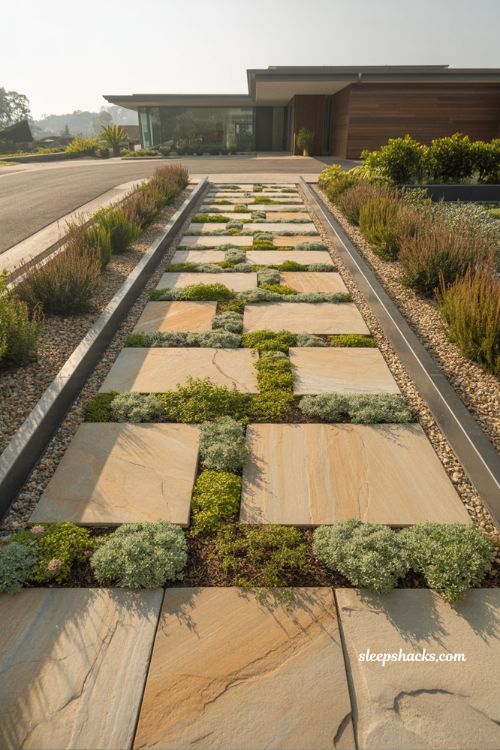
Traditional concrete sidewalks send rainwater rushing straight into storm drains. Permeable pavers or gravel paths let water percolate into the soil instead, which is better for your plants and better for your neighborhood. They also look far more interesting than plain concrete. Flagstone with creeping thyme between the joints, or exposed aggregate pavers in warm tones, both give your entry a sense of crafted intention.
- Space flagstones to allow planting gaps — creeping thyme and sedum handle foot traffic well.
- Edge paver paths with steel or stone to prevent gravel migration.
- Match paver color to your home’s exterior tones for a cohesive, designed look.
6. Build Low Retaining Walls for Slope Control
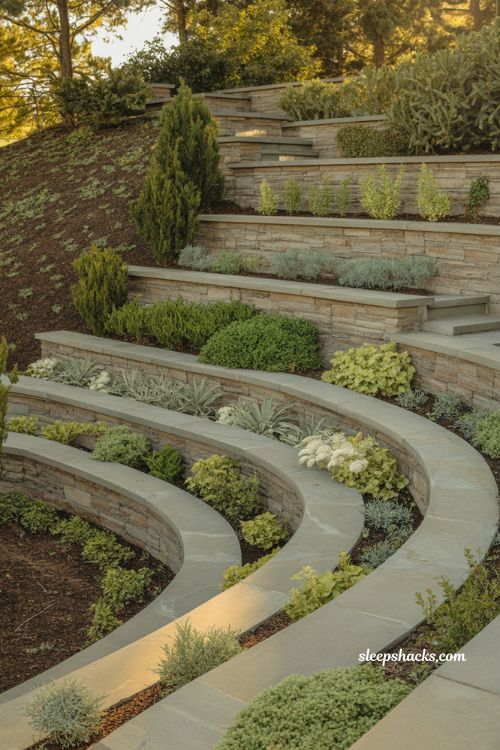
A sloping front yard doesn’t have to mean erosion, mowing nightmares, or bare dirt. Low retaining walls — built from native stone, brick, or concrete block — create flat terraced planting beds that look intentional and handsome. Fill those terraces with a mix of evergreens, ornamental grasses, and seasonal perennials. The walls themselves become part of the design, especially when softened with creeping sedum or phlox spilling over the edges.
- Keep individual wall heights under 24 inches for a DIY-friendly project.
- Stagger planting levels so taller plants at the back don’t block shorter ones at the front.
- Add landscape lighting at the wall base for dramatic nighttime depth.
7. Go Turfless With Succulents and Natives
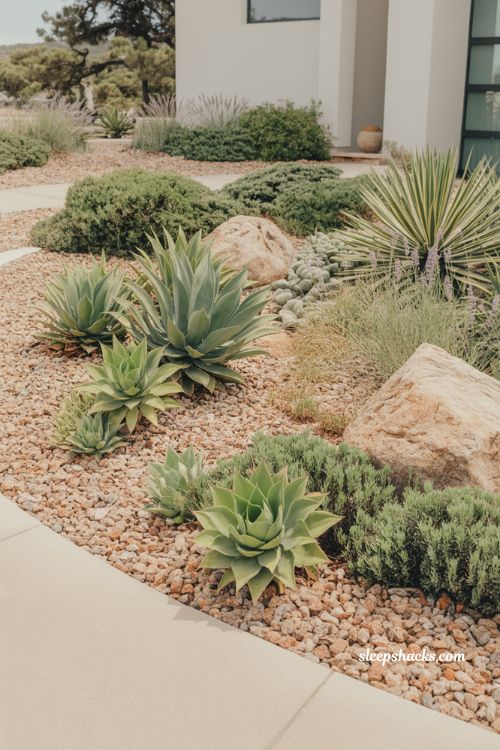
If you’re in a dry climate or just tired of watering, a xeriscape front yard is your best friend. Mix low-water succulents, agave, ornamental grasses, and native shrubs like Texas sage or lavender. Once established, these plantings need almost no irrigation and absolutely no mowing. Gravel mulch in warm tones pulls it all together and keeps the look clean rather than sparse.
- Group plants by water needs — succulents and natives don’t always share the same requirements.
- Use boulders as anchors — they add visual weight and retain heat that benefits nearby plants.
- Avoid using dark gravel in hot climates; it absorbs heat and can stress plants planted nearby.
8. Frame the Door With Symmetrical Foundation Planting
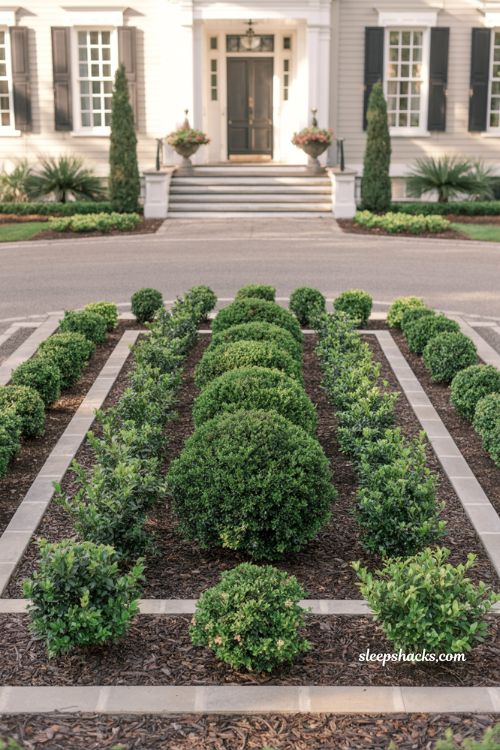
The front door is the focal point of your home’s facade, and symmetrical foundation planting makes it sing. Matching shrubs flanking the entry — boxwoods, Sky Pencil hollies, or dwarf evergreens — create a sense of order that feels classic and welcoming. Add a pair of containers with seasonal color for a finishing touch. This approach works with almost any home style, from traditional Colonial to modern craftsman.
- Choose shrubs that stay compact naturally — avoid varieties that need constant trimming.
- Mirror the planting on both sides exactly for the most polished symmetry.
- Swap container plants seasonally: spring bulbs, summer annuals, fall mums, winter greens.
9. Add Window Boxes for Instant Charm
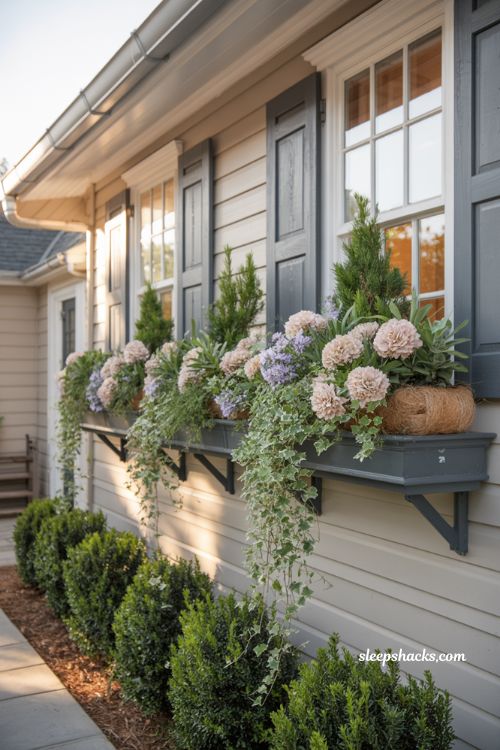
Window boxes punch well above their weight in the curb appeal department. They bring color and life right to the face of your house, drawing the eye upward and making the home feel lived-in and loved. Plant them with a thriller, filler, and spiller combination — a tall center plant, bushy mid-layer plants, and trailing vines that cascade down the front. Change them with the seasons for year-round interest.
- Use coco liner inside window boxes for better drainage and airflow to roots.
- Water window boxes more frequently than in-ground plants — they dry out fast in summer.
- Match the box color to your shutters or trim for a pulled-together look.
10. Plant a Hydrangea Hedge for Summer Drama
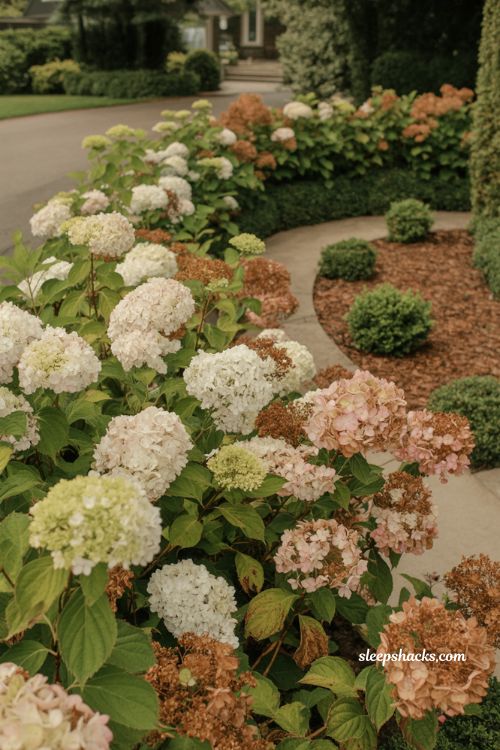
Panicle hydrangeas make an extraordinary informal hedge. Varieties like Limelight or Invincibelle Mini Mauvette can reach six to ten feet and bloom from mid-summer into fall with massive flower clusters that age beautifully from white to pink to parchment. They’re tough, easy to grow, and give you months of color with minimal fuss. Line them along a fence or property edge and let them do the work.
- Give panicle hydrangeas morning sun and afternoon shade for best bloom performance.
- Prune in early spring — cut back by about a third to encourage strong new growth.
- Leave dried seed heads on through winter; they look beautiful against snow.
11. Design a Front Yard Seating Area
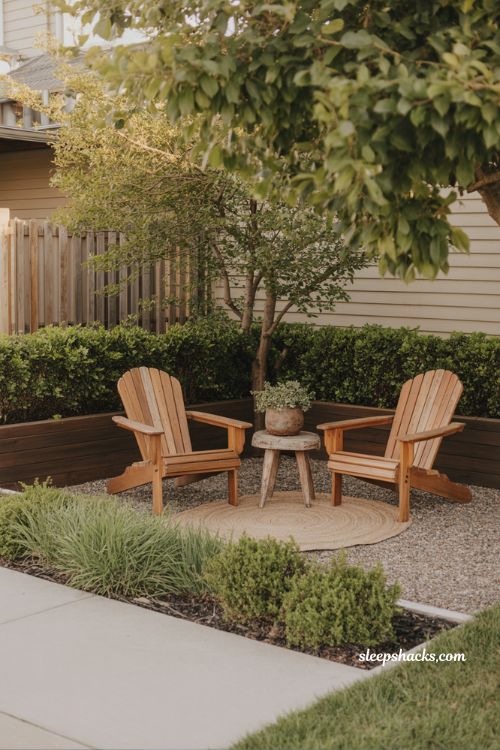
Who says the front yard can’t be a place to sit and enjoy the world? A pair of Adirondack chairs tucked near a low fence or arbor, with shade from a well-placed tree, creates a porch-free porch. It’s a surprisingly social choice — you’ll wave at neighbors, watch the street, and use your front yard in a way you never have before. The key is making it feel private enough to be comfortable.
- Use a low hedge or decorative fence panel behind the seating area to create a sense of enclosure.
- Add a small side table and outdoor rug to make it feel like a real room, not an afterthought.
- Choose durable, weatherproof furniture — teak, cedar, or powder-coated aluminum hold up well outdoors.
12. Try a Clover Lawn Instead of Grass
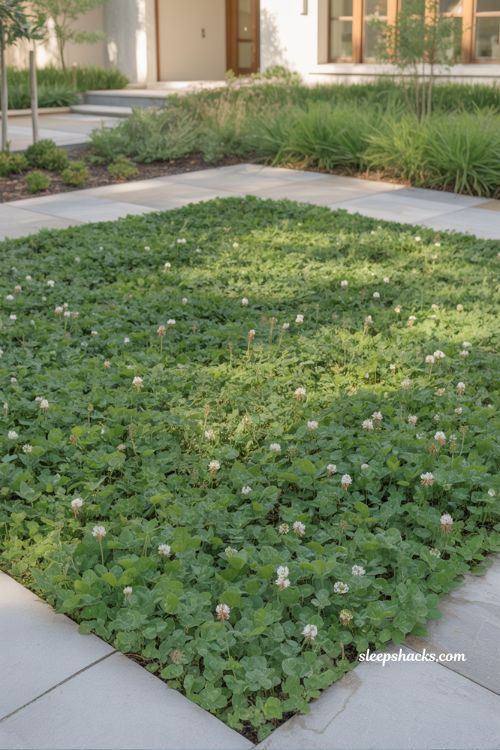
Clover is having a serious moment, and for good reason. It stays green through summer drought, fixes nitrogen in the soil, requires almost no mowing, and attracts pollinators like a magnet from early spring. White Dutch clover is the classic choice — soft underfoot, low-growing, and forgiving of foot traffic. You can overseed an existing lawn with clover or go all-in on a full clover replacement.
- Clover grows best from seed broadcast in early spring or early fall.
- Mow once or twice a season if you want a tidier look; otherwise, let it grow naturally.
- Pair clover with a clean, defined bed edge to keep the low-maintenance lawn looking intentional.
13. Plant for Pollinators Along the Walkway
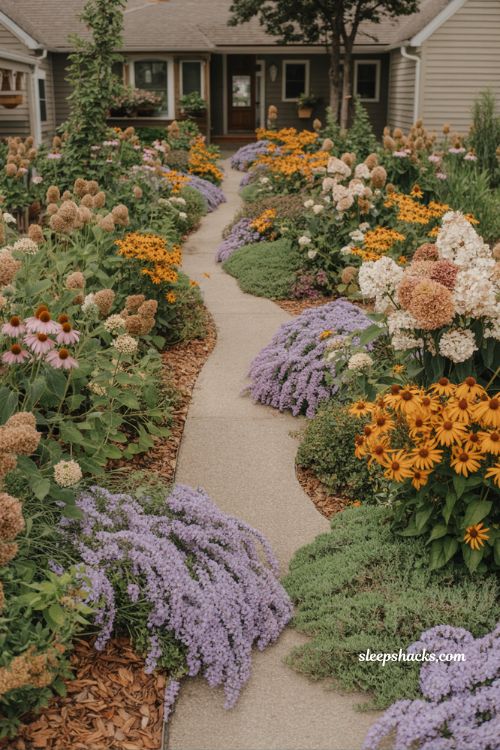
A flower-flanked front walk can double as a pollinator corridor that benefits your whole neighborhood. Russian sage, ornamental allium, coneflowers, and PeeGee hydrangeas create a blooming buffet for bees, butterflies, and hummingbirds from spring through fall. These plants are also largely low-maintenance — deadheading optional, dividing only every few years. It’s one of those ideas that feels good to look at and good to do.
- Overlap bloom times so something is always flowering from May through October.
- Include a few plants with seed heads that feed birds through winter.
- Avoid treated mulch near pollinator plantings — go with natural wood chip or leaf mulch.
14. Use Boulders to Anchor a Sloped Yard
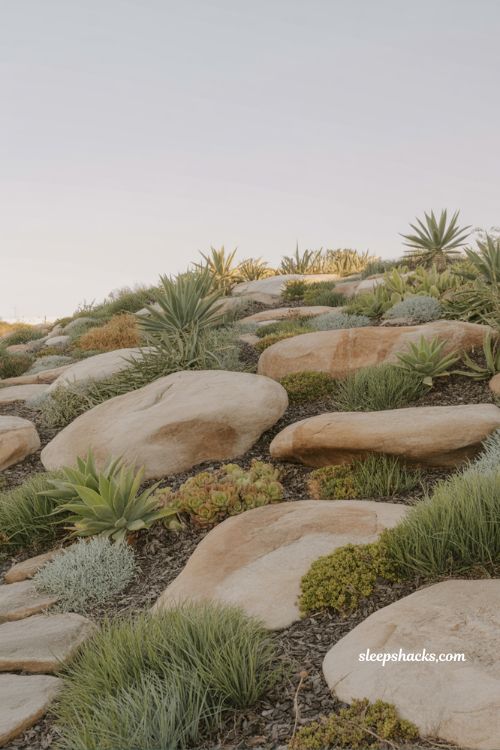
Large smooth boulders are one of the most underrated landscaping tools available. They look natural, require zero maintenance, prevent erosion on slopes, and give your landscape a sense of permanence that young plantings can’t provide. Surround them with drought-tolerant succulents and low ornamental grasses and you have a front yard that looks like it belongs to the land. Choose locally quarried stone when possible — it reads as native to the landscape.
- Bury at least one-third of each boulder underground so it looks settled, not dropped.
- Group boulders in odd numbers — threes and fives feel natural; even numbers feel arranged.
- Use similar stone in retaining walls or path edging to unify the design language.
15. Install Landscape Lighting for Nighttime Curb Appeal
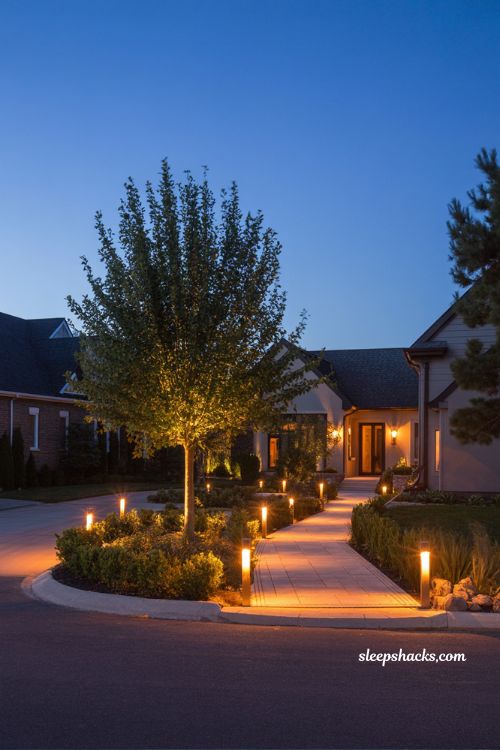
Your front yard only gets noticed during daylight hours — unless you light it well. Path lights guide visitors safely, uplighting dramatizes a beautiful tree, and wall-mounted lanterns make your front door feel warm and welcoming long after sunset. Choose fixtures that complement your home’s architecture: Arts & Crafts lanterns for bungalows, sleek bollard lights for modern homes, classic coach lights for Colonials.
- Use LED landscape lighting — it’s energy-efficient and lasts years without bulb replacement.
- Layer light sources: path lights, uplights, and porch lights at different heights.
- Put lights on a timer or photocell so they turn on automatically at dusk.
16. Grow Colorful Caladiums in a Shady Front Bed
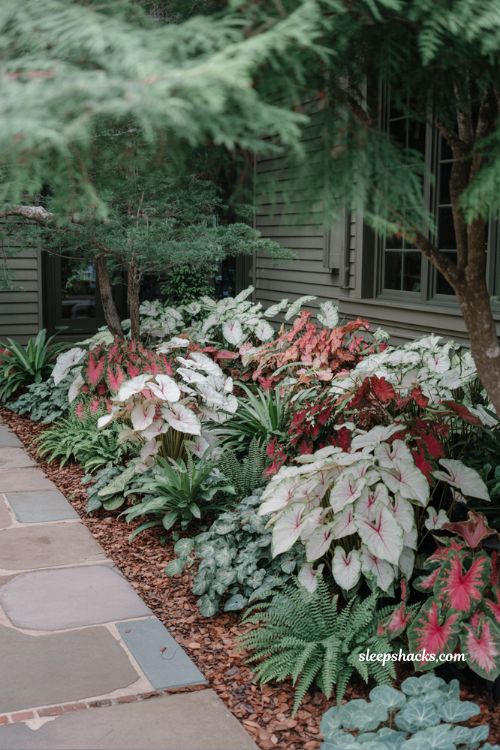
If your front yard leans toward shade, caladiums are your secret weapon. These tuber-grown annuals produce enormous, colorful leaves in combinations of white, pink, red, and green that light up dark beds all season without a single deadhead. They’re easy to grow, require almost no care mid-season, and create the kind of lush, layered look that makes the front of a house look genuinely loved.
- Plant caladium tubers after your last frost date when soil has warmed to at least 65°F.
- Pair white or silver varieties with hostas and ferns for a cool, monochromatic shade garden.
- Dig and store tubers in fall if you’re in a colder climate — they’ll come back every year.
17. Paint the Front Door a Bold Color
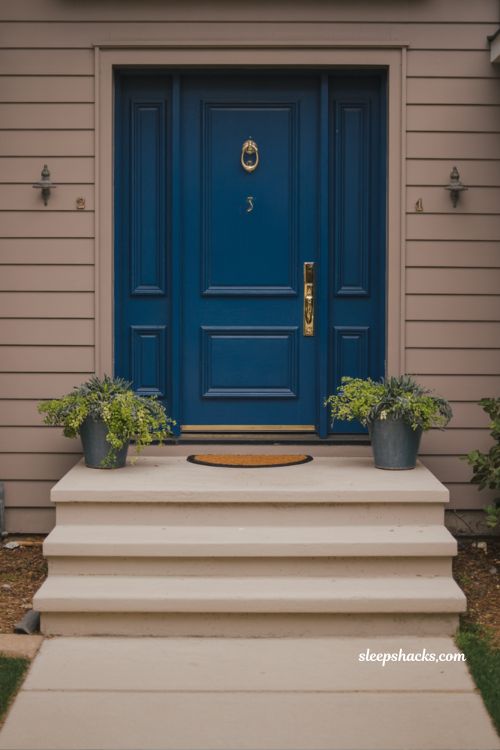
Sometimes the most impactful front yard upgrade costs almost nothing. A freshly painted front door in a bold, unexpected color — deep red, cobalt blue, bright yellow, forest green — changes the entire personality of a home’s exterior. It gives the eye something to travel toward and tells visitors exactly where to arrive. Pair it with simple container plantings on either side and clean, swept steps.
- Test your color in a large sample swatch before committing — front door colors look different in outdoor light.
- Red doors are traditionally associated with good luck and a warm welcome in many cultures.
- Match your door hardware — knob, knocker, and house numbers — to complement the new color.
Front Yard Landscaping Ideas at a Glance
| Idea | Best For | Maintenance Level | Budget Range |
|---|---|---|---|
| Ornamental grasses | Dry or sunny yards | Very low | Low |
| Rose arbor entry | Cottage/traditional homes | Medium | Mid-range |
| Japanese maple | Any style yard | Low | Mid-range |
| Cottage garden path | Colonial, Cape Cod homes | Medium | Low–mid |
| Permeable pavers | Eco-conscious homeowners | Low | Mid–high |
| Retaining walls | Sloped yards | Low (once built) | Mid–high |
| Xeriscape design | Arid or dry climates | Very low | Low–mid |
| Symmetrical foundation | Any home style | Low–medium | Low–mid |
| Window boxes | Small yards, urban homes | Medium | Low |
| Hydrangea hedge | Traditional yards | Low | Mid-range |
| Front yard seating | Social, street-facing yards | Low | Mid-range |
| Clover lawn | Eco-conscious homeowners | Very low | Low |
| Pollinator walkway | Gardens with space | Low | Low–mid |
| Boulder slope design | Hilly or erosion-prone yards | Very low | Mid–high |
| Landscape lighting | Any yard, especially shaded | Low | Mid-range |
| Caladiums (shade) | Shady front beds | Low | Low |
| Bold front door | Any home style | Very low | Very low |
FAQ
What are the best low-maintenance front yard landscaping ideas?
Ornamental grasses, clover lawns, native plant beds, and xeriscape designs are all excellent low-maintenance choices. Once established, these options need minimal watering, no mowing, and only occasional seasonal tidying. The key is choosing plants suited to your climate zone — a native plant in the right region is essentially self-sustaining.
How do I landscape a front yard on a tight budget?
Start with what gives you the most visual impact for the least money: a bold front door color, window boxes with seasonal annuals, and defined bed edges with fresh mulch. Then add perennials that can be divided and spread over time — hostas, daylilies, and heucheras multiply quickly and give you more plants for free within a few seasons.
Does front yard landscaping increase home value?
Yes, consistently. Since potential buyers experience the front yard before they step inside, curb appeal shapes the entire first impression of a home. A well-landscaped front yard signals that the property has been cared for and can set an emotional tone that affects how buyers perceive everything they see inside.
What plants work best for a shady front yard?
Hostas, heucheras, caladiums, ferns, woodland phlox, and oakleaf hydrangeas all perform beautifully in partial to full shade. Japanese maples also tolerate shade well. The trick in shady front yards is layering: tall shrubs at the back, mid-height perennials in the middle, and low ground covers at the front to fill the bed completely.
How do I make my front yard more private without a fence?
A dense hedge of boxwoods, arborvitae, or panicle hydrangeas creates a natural privacy screen without the formality of a solid fence. You can also use a combination of tall ornamental grasses and a low decorative fence for semi-privacy that still feels open and welcoming. Strategic placement of a seating area behind shrubs creates a sheltered pocket without blocking the whole yard from view.
What’s the easiest way to improve front yard curb appeal fast?
Mulch your beds, edge them cleanly, sweep the driveway and path, and add a few seasonal containers near the front door. These four steps take an afternoon and cost relatively little — but the before-and-after difference is dramatic. A freshly painted front door is the fastest single upgrade with the biggest visual payoff.
How do I choose plants that match my home’s style?
Look at your home’s architecture first. Traditional homes (Colonial, Tudor, craftsman) look best with structured plantings — boxwood hedges, climbing roses, classic flowering trees. Contemporary homes suit ornamental grasses, sculptural succulents, and clean geometric hardscaping. Cottage-style homes welcome the slightly wild abundance of perennials, climbing vines, and informal flower borders. When in doubt, keep the palette simple and let one or two plants do the talking.