

It’s a little after dusk, and the street is quiet except for one house. Red, green, blue and gold bulbs trace the roofline, and the front yard glows like a holiday card that stepped into real life. You slow the car without meaning to.
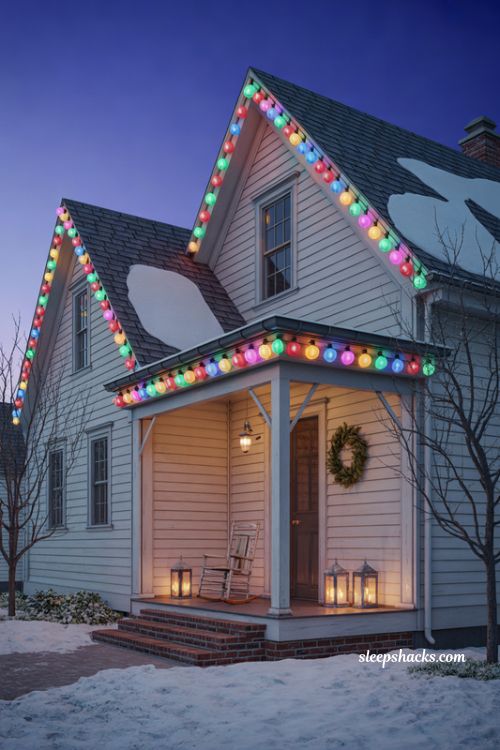
That’s the pull of colored lights, and you don’t need a huge budget or a truck full of gear to get it. These 14 ideas keep things simple, from roofline outlines and porch wraps to the right bulb size for your house type. You’ll see what works on white siding, ranch homes, rustic exteriors and modern fronts, with a decision fact in every section so you only buy once.
1. Simple Multicolor Roofline Outline
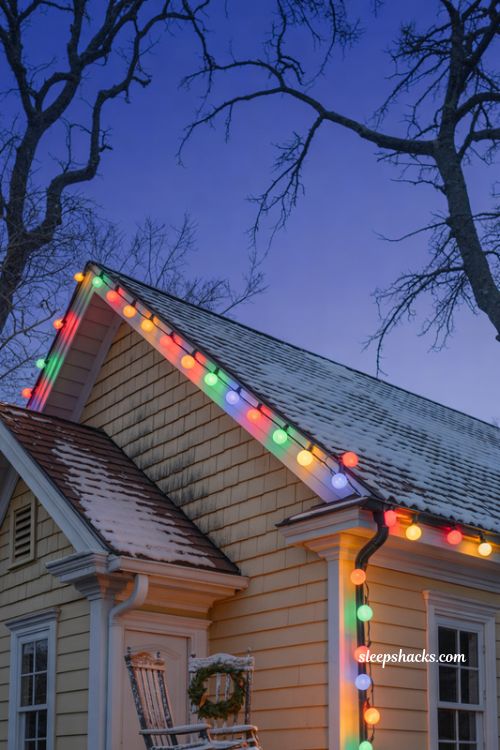
Picture one unbroken line of mini lights clipped along the gutter, with red, green, blue, yellow and orange taking turns from one corner of the house to the other. That’s the whole idea. The roofline gives the eye a clean shape to follow, so the house reads like a glowing sketch of itself from the street.
This is the easiest place to start if you’ve never hung lights before. Measure the roofline first, buy a couple of extra strings, and use clips instead of staples so nothing tears. Colored LEDs look more vibrant than colored incandescent bulbs and tend to last longer, which makes them the smarter pick for a first-timer.
2. Colored Lights on a White House
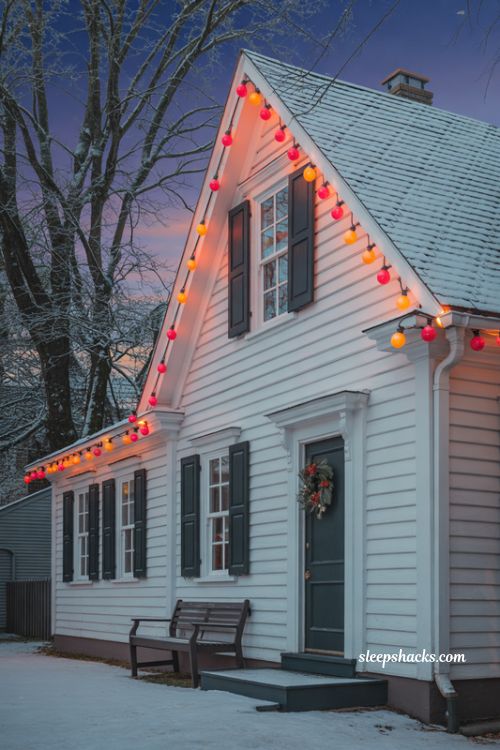
White siding works like a movie screen for color. Run red, blue or multicolor bulbs along the eaves, and the shade bounces off the wall behind it so every bulb looks a little brighter than it would on brick. Dark shutters and a dark front door give those colors something to push against.
Warm white and gold also look rich on a white house. The one thing to skip is cool white on its own, which can wash out against pale siding. For a safe starting point, use warm white on the trim and let one bold color, like red, carry the roofline. It costs the same as any other string, so the choice is all about taste.
3. Rustic Colored Lights on Wood and Stone

Think log siding, a stone chimney and a wooden porch with a hanging lantern. Colored lights look best here when the shades feel like they belong to the materials: deep red, evergreen and plenty of warm white. Run one strand along the porch beam and another across the chimney base, and the house looks lit by a cabin fire instead of a theme park.
Classic red, green and warm white suit rustic homes best, so save the neon-bright blues and purples for another house. Wire color matters, too. Green wire disappears against shrubs and dark wood, while white wire blends into light stone, so check your surface before you buy and spare yourself a lot of visible cord.
4. Colored Lights for a Ranch-Style House
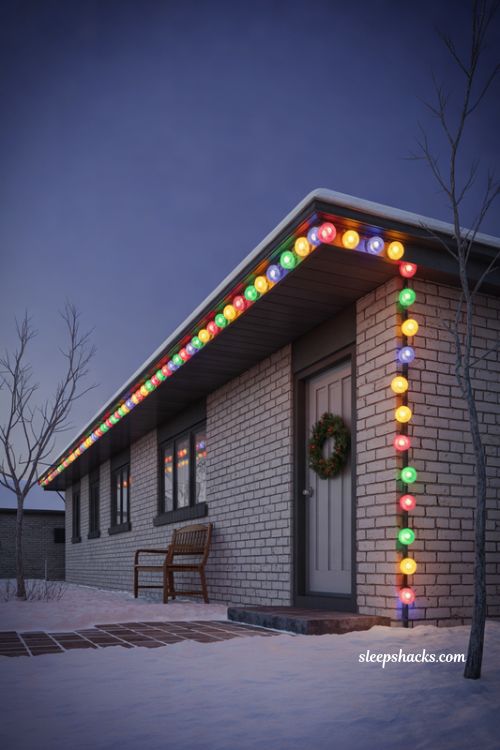
A ranch sits long and low, which makes the roofline the star of the show. One continuous strand of colored bulbs across the full front edge makes the house look wider and more welcoming from the street. Keep it to a single clean line at the eaves, with maybe one short run around the front door.
Single-story homes are a good fit for C7 bulbs, or C9 bulbs if you want a bolder look. Because the roof is within easy reach, you can hang the whole thing from a short ladder in an afternoon. Honestly, that’s the best part of owning a ranch at holiday time: low risk, low effort and fewer feet of wire to buy.
5. Modern Home with Bold Colored Lights
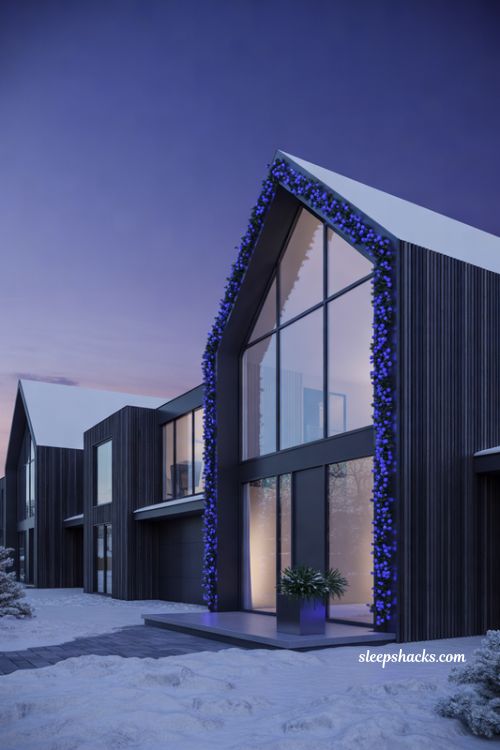
Modern exteriors have flat roofs, big windows and straight edges, and they can look chaotic under a tangle of rainbow bulbs. The trick is restraint. Pick one saturated color, like deep blue or red, and run it in a single crisp line under the roof edge or around one large window frame. Let cool white handle everything else so the color reads as a deliberate accent.
Cool white tends to suit contemporary homes and darker exteriors, while warm white flatters traditional ones. On a black or charcoal facade, one strong color really shows up. You’ll need fewer strands than a full multicolor look, so this is often the cheaper route, though straight, even installation matters a lot here.
6. C7 Colored Bulbs Around Windows and Doors
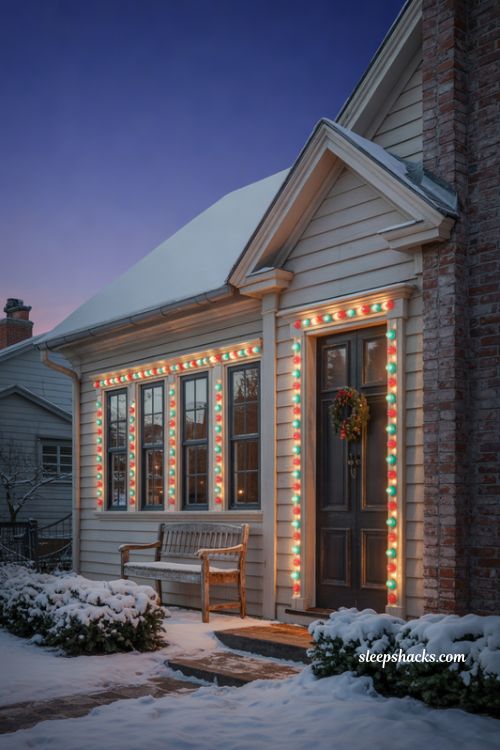
Small, glowing C7 bulbs outlining a front door or the frame of a big window look like jewelry on the house. They’re about two-thirds the size of C9 bulbs, so they hug tight architectural details without overpowering them. Picture a red-and-green strand tracing the door trim, with one short run around each ground-floor window.
C7s work at eye level, where people see them up close, so the quality of the color counts. Many homes use C9 bulbs up top and C7 at eye level, which keeps the scale balanced. Buy clips made for your surface, whether brick, shingle or trim. Also remember that C7 bulbs use the smaller E12 base, so they won’t fit C9 sockets.
7. Multicolor Icicle Lights Under the Gutters

Icicle lights hang down from a strand along the eaves in uneven lengths, like frozen drips of color. A multicolor set under the gutter line gives the house a soft, layered fringe that shows from the street. For the crispest look, run larger bulbs along the top edge and let the smaller icicle strands drip below them.
That pairing gives the roof a finished edge instead of a flat line. Icicle strands take more patience than a basic outline, since each drop needs to hang free of the gutter without tangling. Measure the run first and buy to length so you don’t come up short at the corner. Plan on a longer afternoon than you’d expect.
8. Red, Green and Warm White Classic Mix
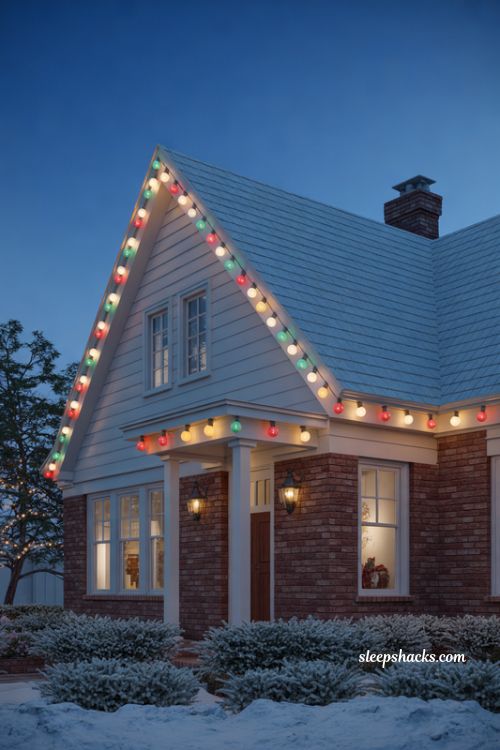
Some years you want the Christmas card version. Red and green bulbs alternate with warm white along the roofline, and maybe a red-and-white rope light traces the porch or a window. It feels familiar and calm, and it suits almost every house type, from brick to siding.
Because the palette is limited, the look stays cohesive without much planning, which makes it a safe pick if the neighbors have opinions. Warm white also keeps the mix from feeling busy, and it means you need fewer colored bulbs to cover the same distance. Test a short strand at dusk before you commit to the whole house.
9. Colored Lights on Porch Columns and Railings
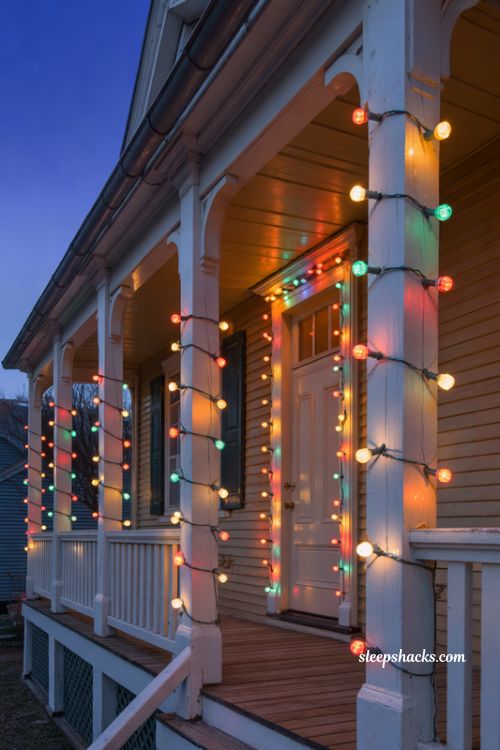
Porch columns wrapped in a spiral of colored lights are one of those details people stop to photograph. Wind a strand or rope light from the base to the top with even spacing between turns so the pattern stays clean. Add a short run along the railing, and the whole entry glows.
Smaller C7 bulbs and mini strings suit railings and tight details, where bigger bulbs would overpower the space. Wrap loosely enough that you can unwind everything next January without a fight. Measure one column, then multiply by the number of columns before you shop, because running out halfway up the last post is a very common mistake.
10. C9 Big Bulbs for a Two-Story House
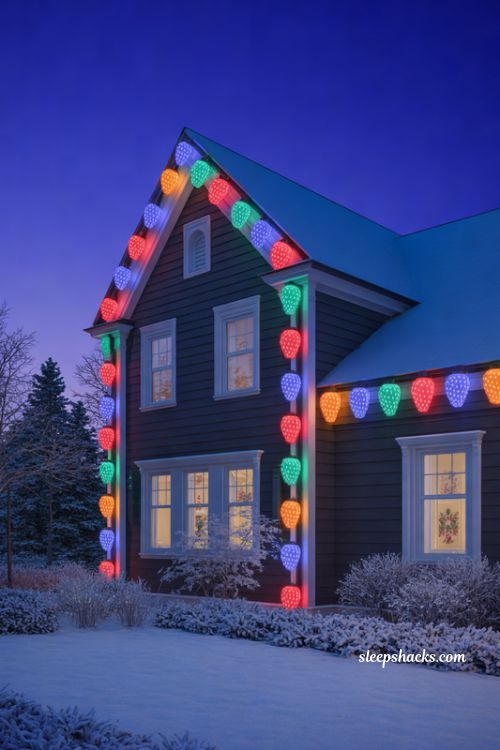
On a taller house, small lights disappear. C9 bulbs are roughly strawberry-sized, and in red, green, blue and orange they read clearly from the street, even on a dark winter night. Picture them lined up along the upper roofline at one-foot spacing, a bold, nostalgic outline that makes the house look bigger.
C9 at 12-inch spacing is the standard roofline look and the safest default. To plan, measure the roofline in feet and count one bulb per foot, so a 60-foot roofline takes about 61 bulbs. Wider spacing, like 18 inches, looks airier and needs fewer bulbs. Check your breaker box for available amperage before you plug in a long run.
11. Colored Net Lights on Bushes and Shrubs
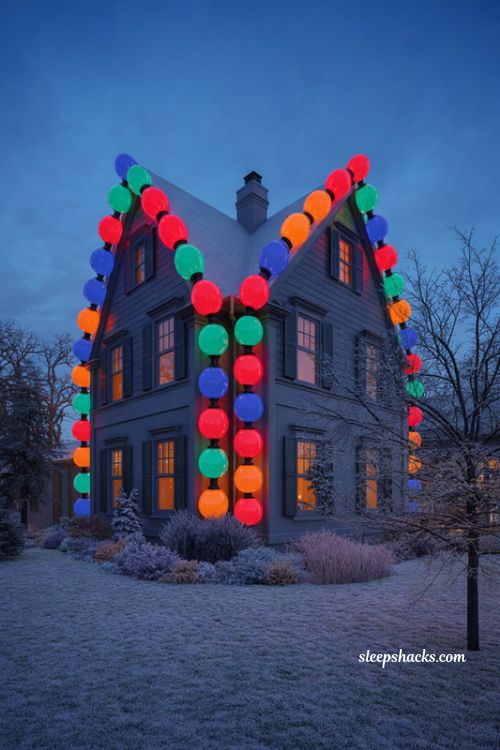
Net lights come as a flat grid that you drape over a shrub like a glowing blanket. A boxwood or foundation bush covered in a net of red or multicolor bulbs turns a dark corner of the front bed into a bright little feature. It’s far quicker than wrapping branch by branch.
Green wire melts into the leaves, so choose it for evergreen shrubs. Cover two or three bushes beside the door instead of every plant along the foundation, or the beds will look crowded and the whole front will feel busy. Net sets come in fixed sizes, so measure the shrub before you buy. They store flat and reuse easily each year, which keeps the cost per season low.
12. Cool Blue and Icy White Winter Look
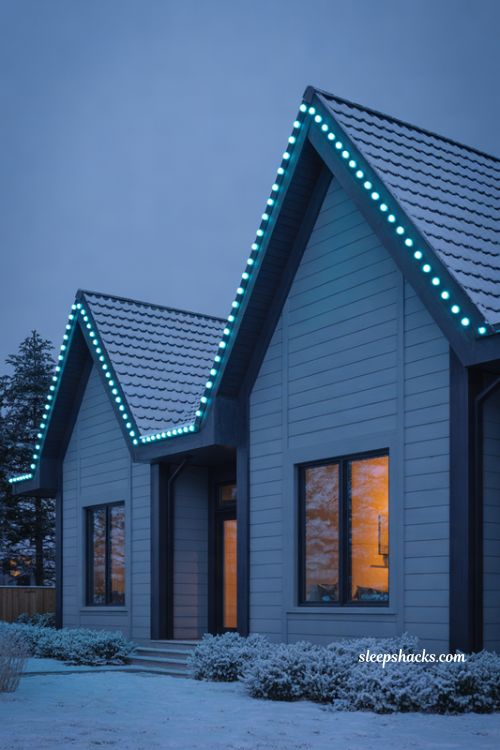
For a winter-wonderland feel, run cool blue bulbs along the roofline and mix them with icy white. The house looks frosted, as if it’s lit by moonlight. Blue also stands out nicely on a street full of warm reds and golds, so it’s a good choice if you want your house to look different.
It works best on gray, white or darker siding, where blue looks crisp instead of dull. Cool white tends to suit modern and darker exteriors in general. It’s a calmer scheme than a full rainbow, so it fits people who love color but want some restraint. Test a strand at night before hanging it, because colors look different outdoors in the dark.
13. Colored Uplights Washing the Facade
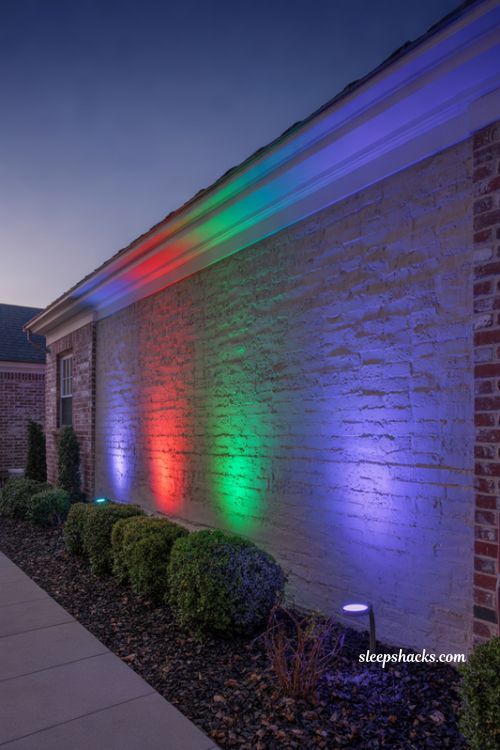
Not every colored display needs a roofline. Uplights tucked along the base of the house, glowing red or green, wash the wall with color so the whole front looks lit from within. Picture a brick or stucco wall with a soft pool of light climbing up from the garden bed.
If you already have uplights, you can often swap in multicolor LED bulbs instead of buying new fixtures, which makes this the cheapest idea on the list. Aim them up and slightly back so they graze the wall instead of staring into the windows. When the holidays are over, switch the bulbs back to white and the fixtures go back to their everyday job.
14. Warm White Trees with a Colored Roofline
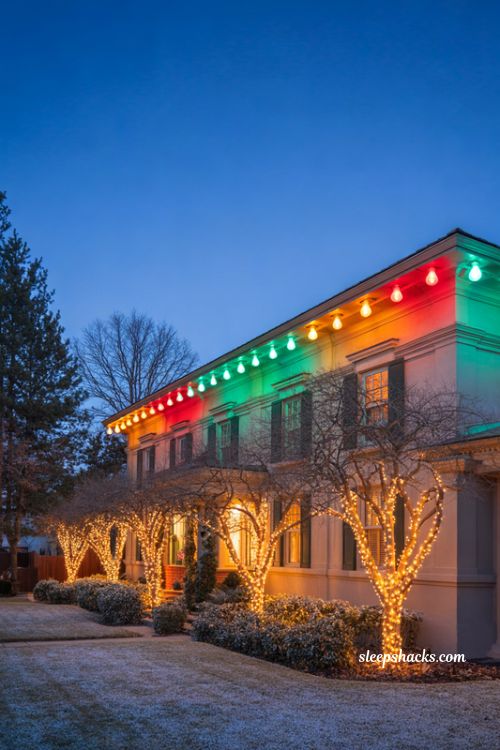
Here’s a trick for people who can’t decide: colored bulbs on the roofline, warm white wrapped around the front-yard trees. The roof gets the party, the trees get the glow, and the whole yard feels layered instead of loud.
Warm white trees with a colored roofline read cleaner than colored trees with a colored roofline, because warm white acts as the connector between the two. It’s also a good compromise if one person in the house wants white and another wants color. To keep the budget in check, wrap just the trunks of one or two trees, and let the roofline do the heavy lifting.
Final Thoughts
You don’t have to light every inch of your house to make colored lights work. Pick one idea from this list, maybe the roofline outline or the porch columns, and do it well. One clean run of color beats ten half-finished ones every time.
So here’s your small next step: walk outside tonight, look at the house from the street, and decide which single feature you’d want people to notice first. Measure that edge, write the number down, and add it to your shopping list. The rest can wait until next weekend, when the first strand is already glowing.
Frequently Asked Questions
Q: What colored Christmas lights look best on a white house?
Warm white and gold look rich against white siding, while red, blue and multicolor lights pop dramatically. Skip cool white on its own, since it can wash out.
Q: How many C9 bulbs do I need for my roofline?
Measure the roofline in feet and plan one bulb per foot at 12-inch spacing, plus one extra at the end. At 18-inch spacing, divide the total inches by 18 instead.
Q: Are LED colored lights better than incandescent ones?
For most houses, yes. Colored LEDs have more vibrant hues and last longer, which suits a display that stays up for weeks.