

Picture it: the overhead lights are off, the tree is glowing in the corner, and every branch carries the soft gray-green of a eucalyptus leaf. Nothing shouts. Nothing clashes. The room just exhales, and so do you. You find yourself standing there a minute longer than you planned, wondering why you waited so long.
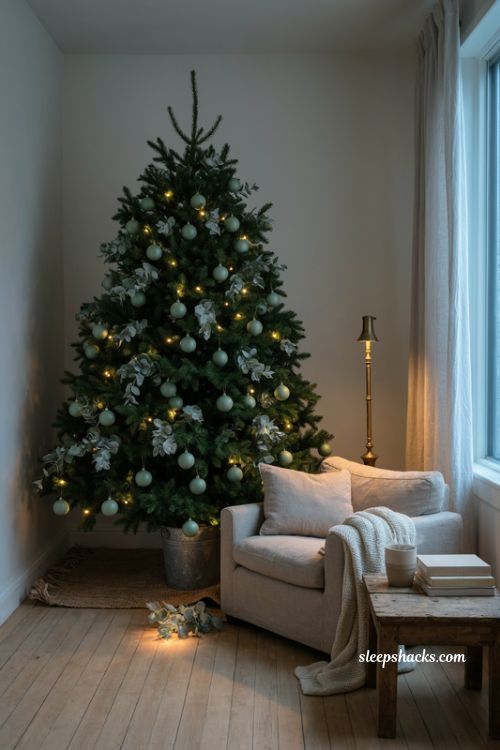
That’s the quiet pull of a sage green Christmas tree. It trades the loud red-and-gold routine for something calmer, and it suits nearly every home, from farmhouse to modern minimal. Here are 14 ways to pull it off, along with the small details that keep a muted palette from turning flat, dull, or washed out.
1. Sage and Pearl for a Soft Glow
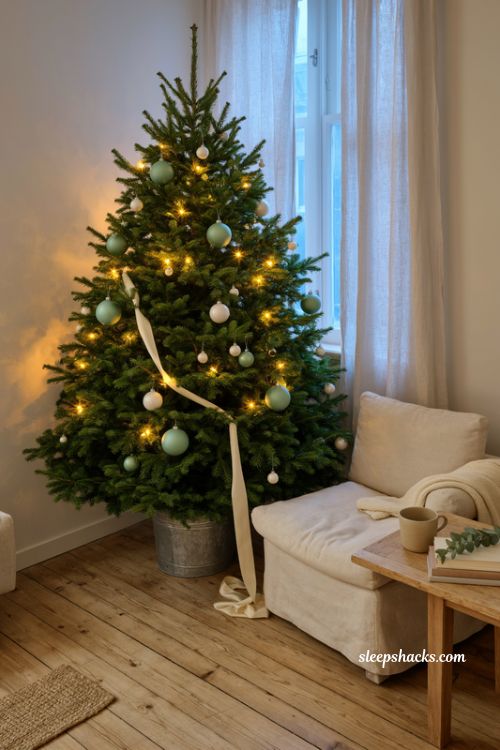
Sage green and pearl might be the most flattering pairing you can hang on a tree this year. The green stays calm and earthy, while pearl ornaments and creamy satin ribbon catch the light and add a gentle shimmer without any harsh sparkle. Think frosted branches, soft curves, and nothing fighting for attention.
Stick to two or three core colors and let the pearl do the heavy lifting. Tuck a few large pearl balls deep into the branches for depth, then scatter smaller ones near the tips so the whole tree looks lit from within. A warm white string of lights ties everything together.
2. A Fully Monochrome Sage Tree

Going all in on one color sounds risky, but a monochrome sage tree turns out surprisingly rich when you vary the shades. Pull in pale mint, dusty olive, and deeper eucalyptus tones so the ornaments read as layers instead of one flat wall of green. It feels bold and quiet at the same time.
The real secret is finish and texture. Mix matte, glossy, and glittered balls, then add velvet bows and a few felt shapes for variety. A matte ornament buried against dark needles can nearly vanish, so keep your lightest sage pieces toward the center of the tree and let the lights do the rest.
3. A White Tree with Sage Ornaments
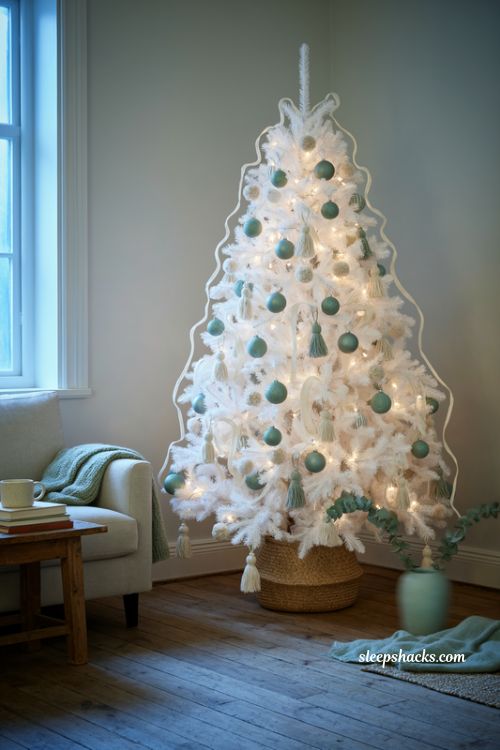
A white tree is the easiest canvas for sage green. The pale branches let every ornament stand out clearly, and the mix of aqua-leaning greens and muted sage looks fresh beside the usual red and green. Add a few loops of cream wired ribbon for a clean, airy shape that doesn’t feel fussy.
If your ornament box is full of old colors, don’t toss them. A light coat of sage spray paint gives them a second life, and a handful of yarn tassels softens the look so it feels handmade without turning too crafty. Paint outdoors on a dry, mild day so the color cures evenly.
4. Sage Green with Burgundy Velvet
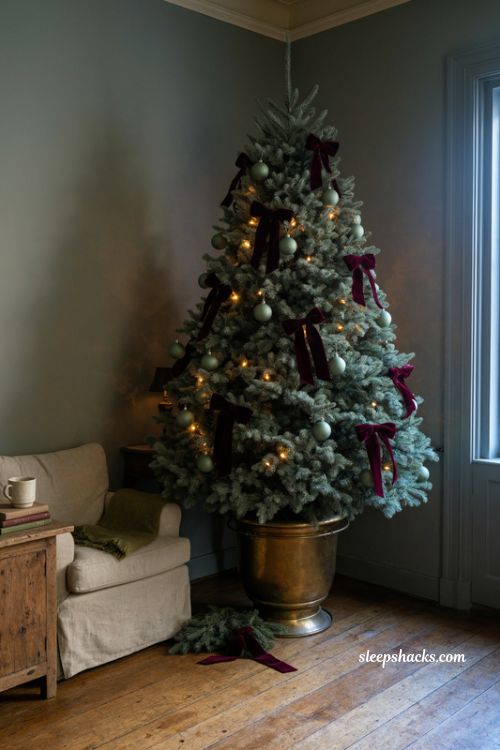
If pure sage feels too gentle, bring in burgundy. Deep red velvet bows against soft green set up a moody, old-world contrast that still feels grown-up and restrained. It reads as Christmas right away without leaning on bright candy red, which is a relief if you’re tired of the usual look.
Use burgundy sparingly, about one ornament in five, so the sage stays in charge. Wide velvet ribbon tied into big, loose bows works best, tucked in at staggered heights down the tree. Repeat the same two colors on your mantel or stair garland, and the whole room feels planned rather than piled on.
5. Earth Tones with Wood and Woven Texture
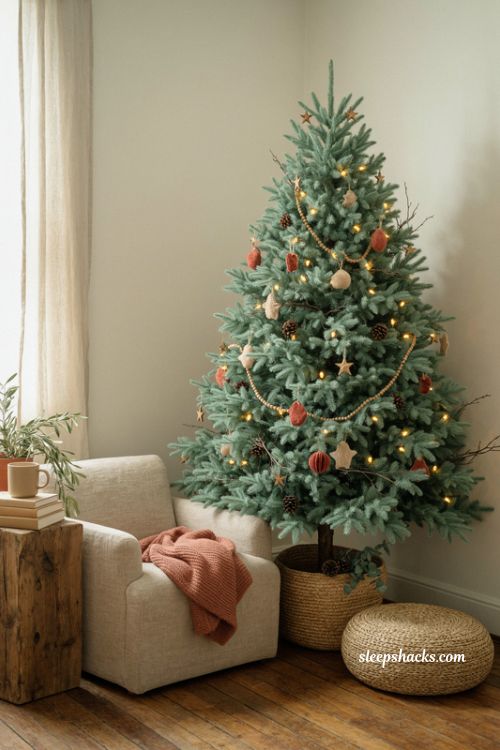
Sage looks right at home next to beige, oatmeal, and natural wood. Think woven garlands, wooden stars, bead strands, and ornaments in felt or velvet. The whole tree feels nature-inspired and modern without a hint of shine, which makes it a good fit for homes that lean calm and minimal.
Bring in pinecones, dried leaves, and a few bare twigs to echo the outdoors, and set a woven basket around the base instead of a standard skirt. Keep the lights warm and low, and let the textures carry the design. It photographs well too, even in dim afternoon light.
6. Cottage Style with Brass Touches
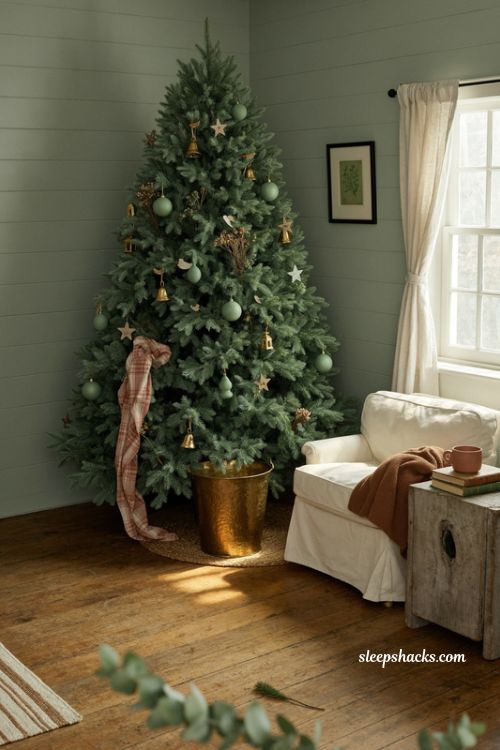
A cottage tree leans on charm rather than polish. Sage ornaments mix with small wooden pieces, a bit of brass, and a few wildflower picks to give a collected, lived-in feel, like a tree that grew into the room over many years. Birds, bells, and tiny lanterns suit this look especially well.
Brass warms sage the way bright gold never quite can, because it’s softer and less showy. Choose aged or brushed finishes over mirror-bright ones, and hang a few handmade-looking pieces near eye level where people stop to look. Finish with a plaid or linen ribbon, loosely draped, to keep the cottage mood going.
7. A Flocked Sage Green Tree
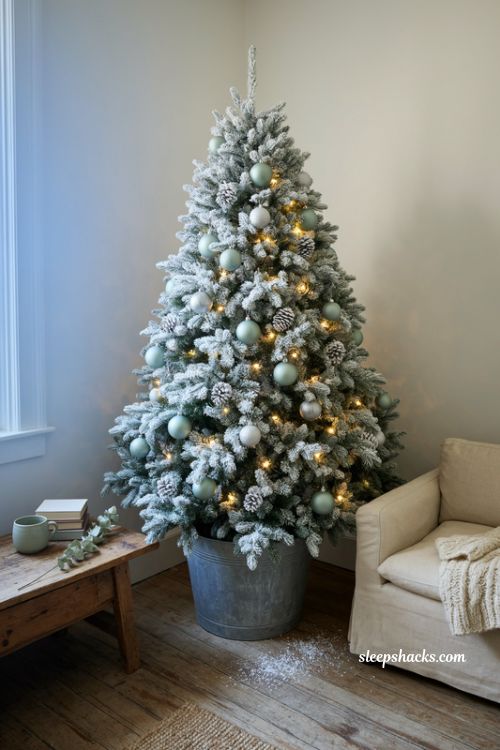
Imagine fresh snow dusted over pale green branches. A flocked tree in a sage or frosted green tone does half the decorating for you, because the branches already read as soft, wintry, and a little dreamy. Even a handful of ornaments looks intentional on it, so you can edit with a light hand.
Keep the palette tight with white, cream, and silver-leaning accents so the tree’s own color stays the star. Large ornaments work best, since small ones get lost in the flocking. Wrap warm white lights deep into the branches, not just across the surface, so the whole tree glows rather than looking like bulbs on a string.
8. A Velvet Ribbon Cascade

Skip the standard bead garland and let wide sage velvet ribbon spill from the top of the tree to the base. Tuck it into the branches in loose waves, and the whole tree takes on a flowing, almost theatrical look. It’s an inexpensive way to give even a basic tree real presence and movement.
Cut the ribbon in long lengths and secure each end with a small piece of floral wire hidden in the needles. Add the ribbon after the lights and before the ornaments so each layer sits naturally on top of the last. A second thread of cream or champagne ribbon keeps the whole thing from feeling heavy.
9. Eucalyptus and Faux Sage Stems
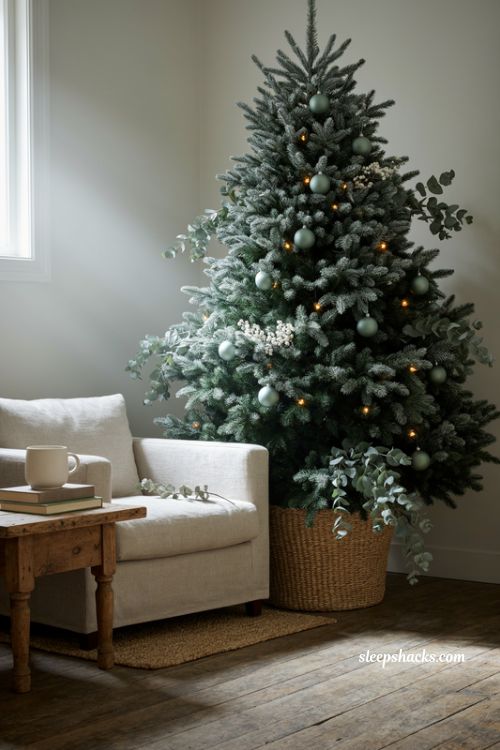
Sage and eucalyptus stems bring an herbal, garden-fresh feel that ornaments alone can’t match. Tuck faux stems into the branches and let a few trail loosely outward, and the tree starts to look gathered rather than bought. The silvery-green leaves echo sage almost perfectly, so the colors blend without any effort.
Place the stems after the lights, angling them up and outward so they catch the glow. A few dried flowers or white berry sprigs add a touch of contrast. Faux stems also last through the whole season and store flat, which makes this the practical pick for anyone who dreads packing away delicate decorations.
10. Sage and Gold, Done Quietly
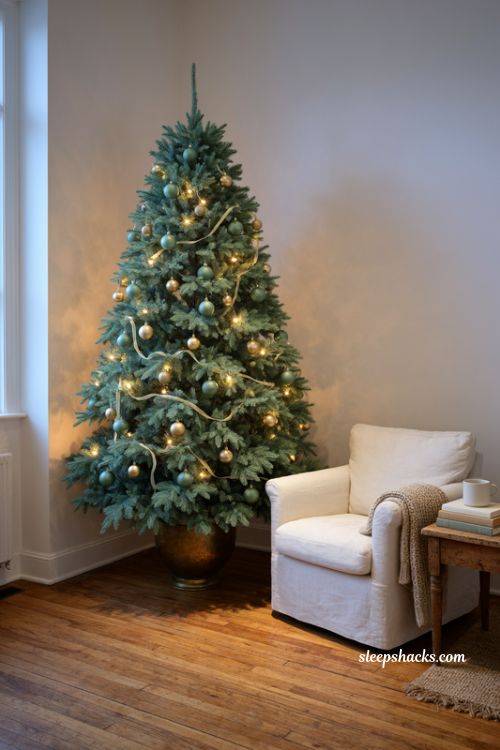
Gold and sage make a classic pair with a calm attitude. The muted green keeps the metallic from looking flashy, while the gold gives the green a gentle lift and a bit of warmth. Matte gold, brushed gold, and a few glittered pieces together give the tree a layered, expensive look without any shouting.
Mix finishes on purpose. If everything is shiny, the tree gets loud, and if everything is matte, it falls flat. A good rhythm is mostly matte sage with gold accents spaced evenly across the tree, plus thin loops of gold ribbon. Warm white bulbs around 2700K make both colors look rich and soft.
11. Boho Cream and Sage
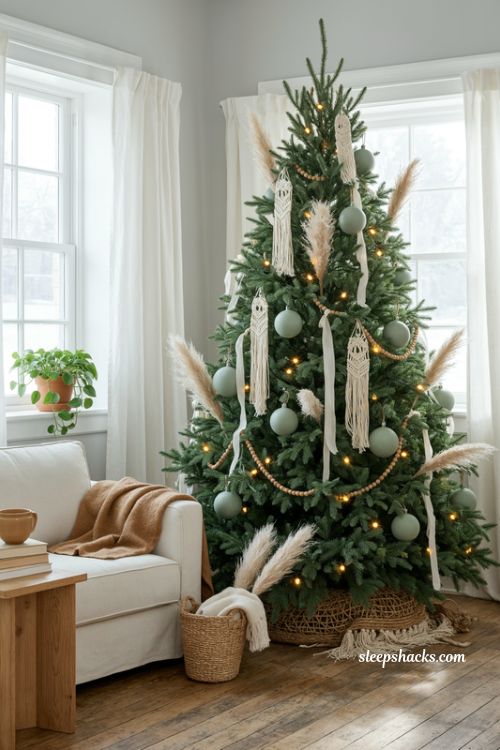
For a relaxed, airy look, pair sage with cream, tan, and natural fiber. Macramé hangers, dried pampas stems, and wood-bead garlands give the tree a laid-back, sun-bleached feel that works well in a bright sunroom or a spare modern apartment. It looks collected, not themed, which is exactly the point.
Keep ornaments simple and slightly oversized so the tree reads clearly from across the room. Hang a few long strands of fringe or ribbon tails near the front for a bit of movement. A rattan or jute tree collar ties the base in with the rest of the look and hides a plain stand.
12. Sage Green with Blush Pink
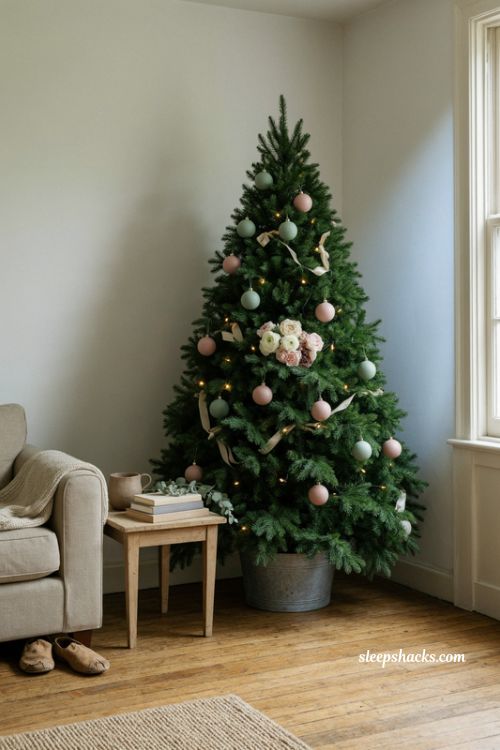
Blush pink and sage are cousins from the same soft, powdery family. Together they feel sweet and slightly vintage, like a pastel postcard from decades ago. A few dusty rose ornaments scattered among the green are enough to make the whole tree feel gentle and a little romantic without tipping into sugary.
Try pink in satin or matte finishes rather than glitter so it stays mellow. Add cream florals, like faux ranunculus or peonies, as picks near the middle of the tree for a garden-party effect. This is a lovely choice for a bedroom or nursery tree, where a calmer mood is always welcome.
13. DIY Painted Ornaments and Yarn Tassels
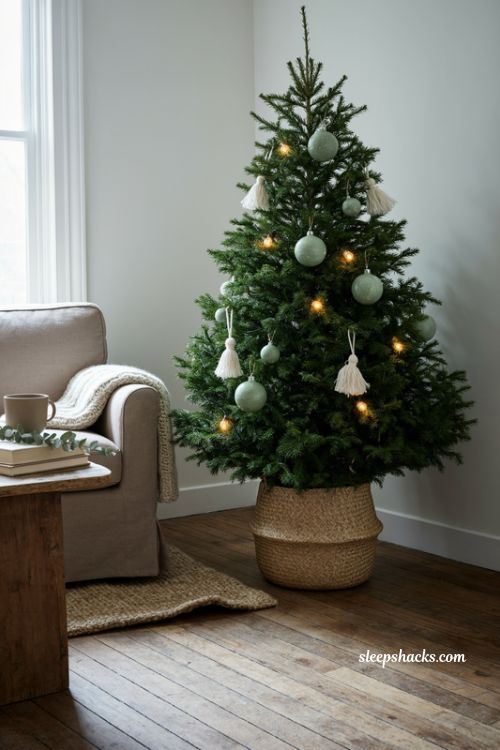
You don’t have to buy a single new ornament. Grab a few old glass balls, give them a light coat of sage spray paint, and let them dry completely. The color shifts depending on the original base, so you end up with a natural range of greens instead of an identical, store-bought set.
Make tassels from yarn scraps wrapped around a small piece of cardboard, tie off the top, and snip the bottom loops. Hang them among the ornaments for added texture. A tree made this way costs very little, and it carries a personal touch that no boxed set can quite match.
14. Sage Wrapped Gifts Under the Tree

The base of the tree matters more than most people expect. A pile of gifts wrapped in sage kraft paper, cream ribbon, and a few sprigs of greenery anchors the whole look and keeps the lower branches from feeling bare. It’s the finishing touch that makes the tree feel like a complete scene.
Vary the sizes, stack a few boxes, and tie some with linen twine instead of shiny bows. Wrap a couple in plain cream paper to give the eye a place to rest. Leave the packages loosely arranged rather than lined up, so the scene feels warm and lived-in, not staged.
Final Thoughts
Before you buy a single ornament, pick one idea from this list and test it on a small scale. Hang three or four ornaments on a bare branch near a window, switch on a warm white string of lights, and see how the color behaves at night. Sage can look gray in daylight and glowing after dark.
Then fix your color count at two or three, choose a mix of matte and shiny finishes, and start with the lights before anything else. One small test tonight will tell you more than an hour of scrolling, and it’ll show you which of these 14 looks already feels like your home.
Frequently Asked Questions
Q: What colors go best with a sage green Christmas tree?
Cream, white, gold, brass, blush pink, and burgundy all pair beautifully with sage. Natural wood and woven textures also work well if you want a calm, earthy feel.
Q: Does sage green look good on a regular green artificial tree?
Yes, but matte sage ornaments can disappear against dark needles, so mix in glossy, pearl, or metallic pieces for contrast. A lighter or frosted tree makes sage stand out more clearly.
Q: What color lights work best with sage green decorations?
Warm white lights, around 2700K, make sage look rich and soft. Cool white tends to make it look gray and flat.