

You love the look of a blue and white tree, but every time you scroll past one, a small worry kicks in. Will it feel too fancy for a family home? Will it look flat without the usual red and green? And where do you even start when the ornaments cost more than the tree?
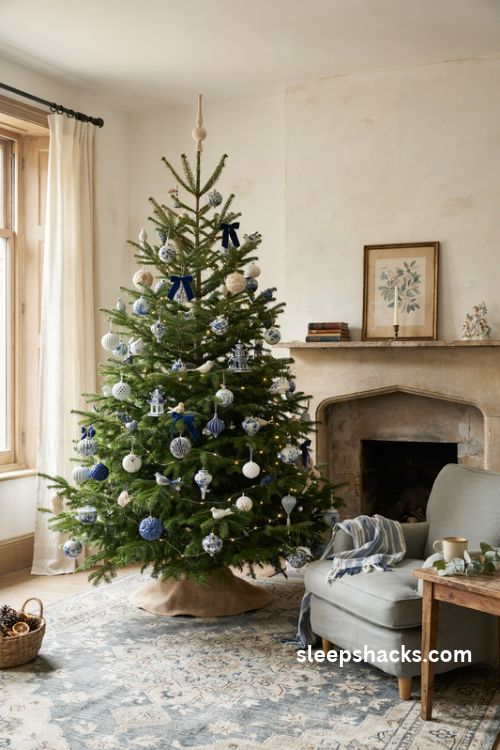
Good news: chinoiserie is far more flexible than it looks. It’s really just a mood, built from porcelain patterns, delicate birds, pagodas, and soft garden scenes, and you can create it with a few smart pieces and some patience. These 16 ideas show how, from budget-friendly to fully dressed up. Pick the ones that fit your budget and your space.
1. Classic Blue and White Tree
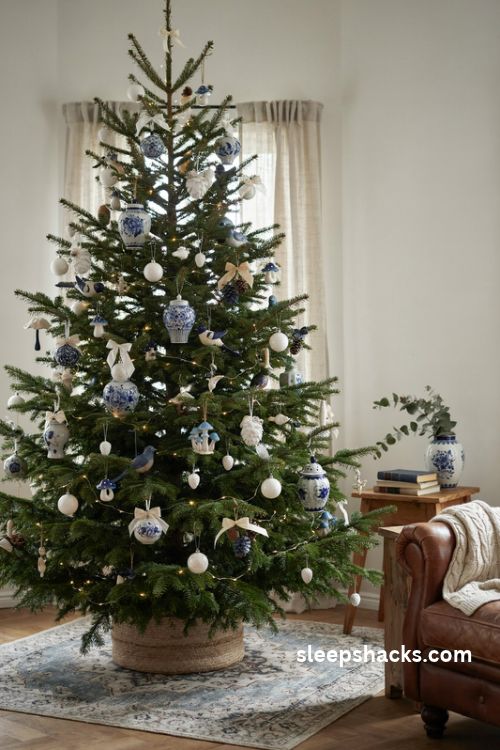
Start with the look everyone pictures first: a full green or flocked tree dressed only in blue and white. Hang ginger jar ornaments, porcelain-style balls, and hand-painted birds evenly through the branches, placing a few deeper into the tree for depth. The restraint is what makes it feel polished.
Aim for three tones of blue, from pale sky to deep navy, so the tree doesn’t look flat. Add white or cream bows to break up the color, and keep the lights warm so the porcelain glows rather than glares. If you only buy one set of ornaments this year, make it a mixed box of 12 to 18 pieces to anchor the tree.
2. Chinoiserie Tree in a Ginger Jar Planter
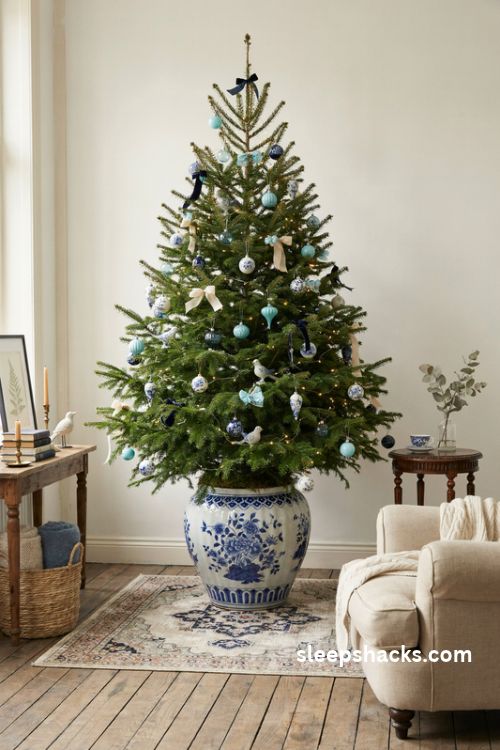
Skip the tree skirt and set your tree in a large blue and white planter instead. The pot becomes part of the decor, echoing the ornaments above and giving the base a sculpted, collected look that a plain stand never could.
To make it stable, wedge the tree stand inside the pot, then fill the gaps with crumpled paper, stones, or floral foam, and cover the top with moss or white fill. Measure the pot opening first, because many tree stands need a wide space to sit comfortably. A 20-inch pot suits a six-foot tree nicely, as long as it’s heavy enough not to tip.
3. Red, Green, and Blue Traditional Mix
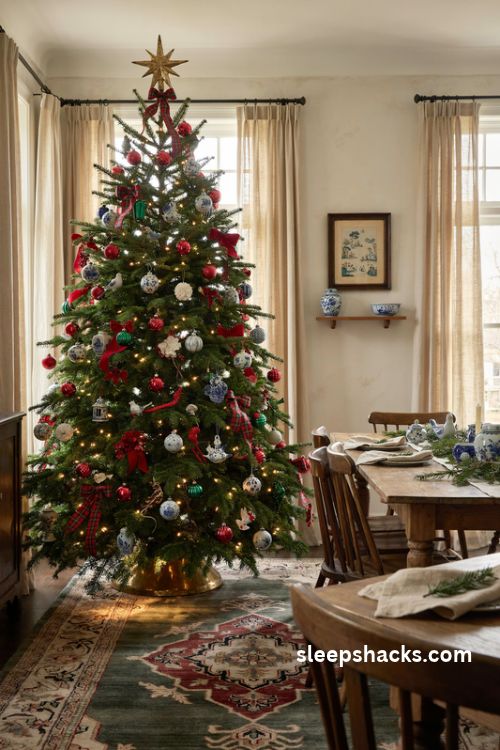
Chinoiserie doesn’t have to be strictly blue and white. Layer porcelain ornaments with classic red velvet bows, deep green picks, and a touch of tartan ribbon, and you get a tree that feels both traditional and fresh. Think of it as Christmas in a well-loved dining room.
The trick is balance. Let blue and white make up about half of the ornaments, then repeat red in ribbon and a few glass balls so the colors feel intentional. A gold topper ties it all together. This approach is wonderful if you share a home with people who insist on red and green, and it’s easy to build from ornaments you already own.
4. Flocked Tree with Navy Velvet Ribbon
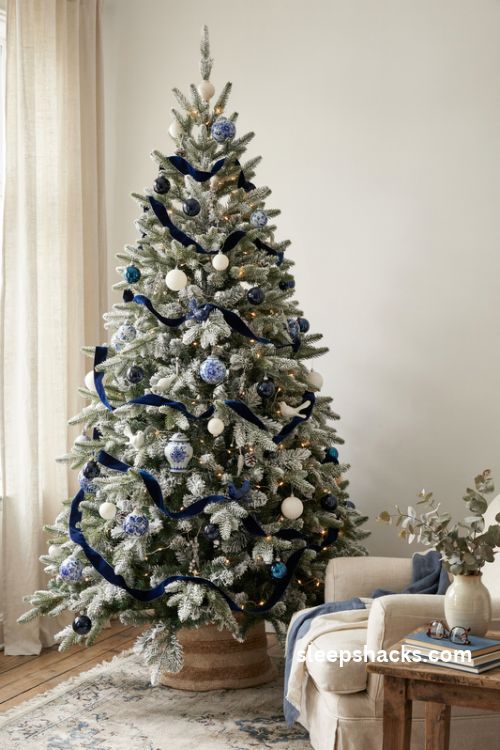
A flocked tree gives you a snowy backdrop that makes porcelain blue look crisp. Weave wide navy velvet ribbon in loose cascades from top to bottom, tucking the ends deep into the branches so the ribbon seems to float.
Cluster blue and white ornaments in groups of three, with a few navy glass balls scattered between them. Silver or pearl accents keep the look wintry rather than heavy. Use wired ribbon for the best shape, and plan on about one yard per foot of tree height for a full, generous drape. Fluff the ribbon after hanging so the folds catch the light.
5. Hand-Painted Bird and Branch Ornaments
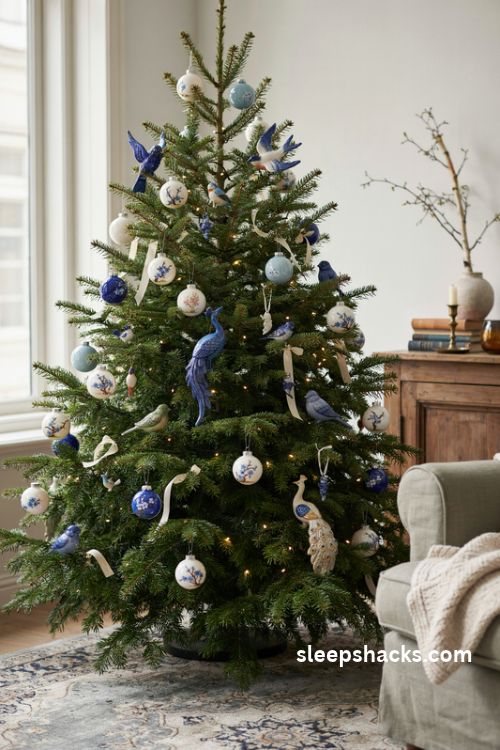
Birds are one of the most recognizable chinoiserie motifs, and they look beautiful perched on a tree. Choose ornaments showing songbirds, cranes, or peacocks in cobalt blue, then tuck them into the branches near the tips so they seem to rest naturally.
Mix in clip-on birds with feathered tails for movement, and pair them with ornaments painted with blossoms or cherry branches. Place the birds at different heights, and angle some outward so they catch the eye from across the room. A half dozen birds is plenty. Painted glass chips easily, so keep the best pieces above the reach of small kids and pets.
6. DIY Decoupage Chinoiserie Ornaments
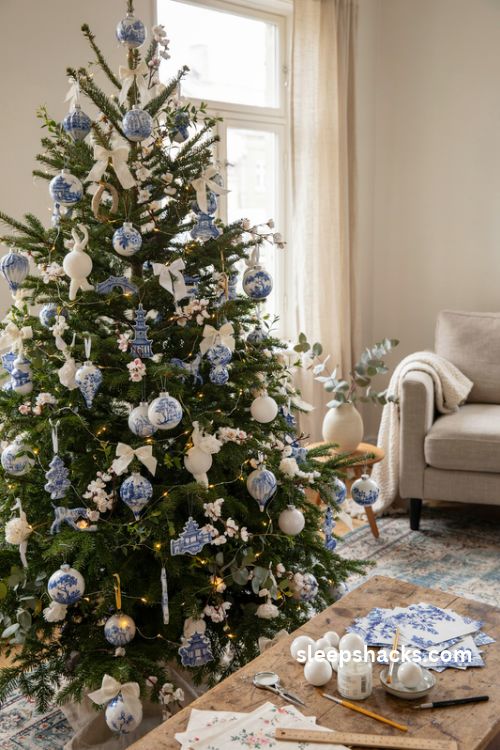
Real chinoiserie ornaments can be pricey, so make your own. Start with plain white shatterproof or papier-mâché ornaments, then decoupage them with cut-out patterns from blue and white napkins or wrapping paper, smoothing out any air bubbles as you go.
Seal each piece with a clear gloss finish, and add a thin gold paint pen line around the cap for a custom touch. Look at a real chinoiserie vase for inspiration, copying scenes of pagodas, bridges, and willow trees. Napkins with large, simple motifs work best on curved surfaces. A batch of six takes about an afternoon, and homemade ornaments make lovely gifts too.
7. Teacups and Saucers on the Tree
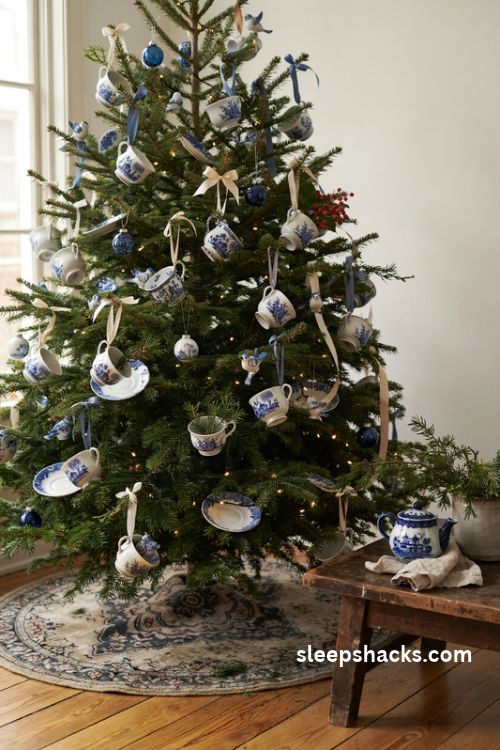
If you collect blue and white china, bring it to the tree. Hang small teacups from their handles with ribbon, and tuck a few saucers into the branches as tiny plates, using wire or floral picks to hold them in place.
Choose lightweight pieces, ideally thrift store finds with a pretty pattern, and keep the heavier cups in the bottom third of the tree near the trunk where the branches are strongest. They add a charming, collected feel that mass-produced ornaments can’t match. Place a small sprig of faux berries or a bow inside each cup for color, and check each piece for chips first.
8. Ginger Jar Ornament Cluster
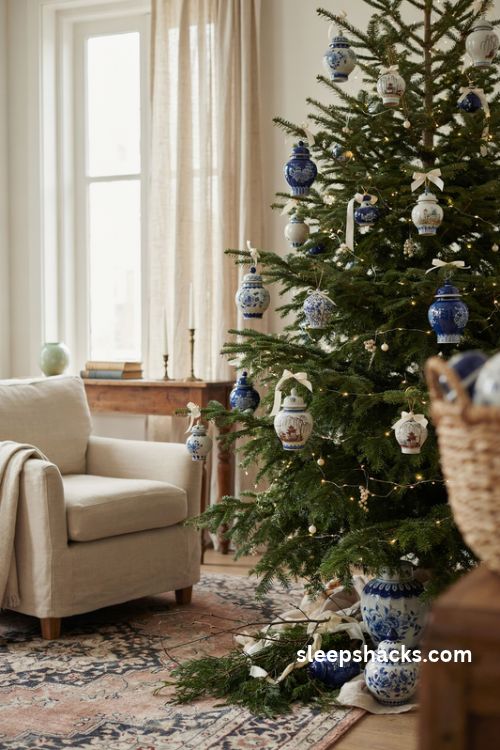
Ginger jars are the heart of chinoiserie, and shrinking them to ornament size is a smart move. Group several in different sizes along one branch, letting them hang just slightly apart so they look like a tiny shelf of porcelain.
Look for ones with lids and a hand-painted pattern, in blue and white or cream. Repeat them in clusters of three at the front, middle, and back of the tree, which pulls the eye around. Reserve the biggest ones for the center. A matching larger jar under the tree, filled with extra ribbon or branches, completes the story. Hang them from sturdy branches so the weight doesn’t droop the limb.
9. Delft and Willow Pattern Tree
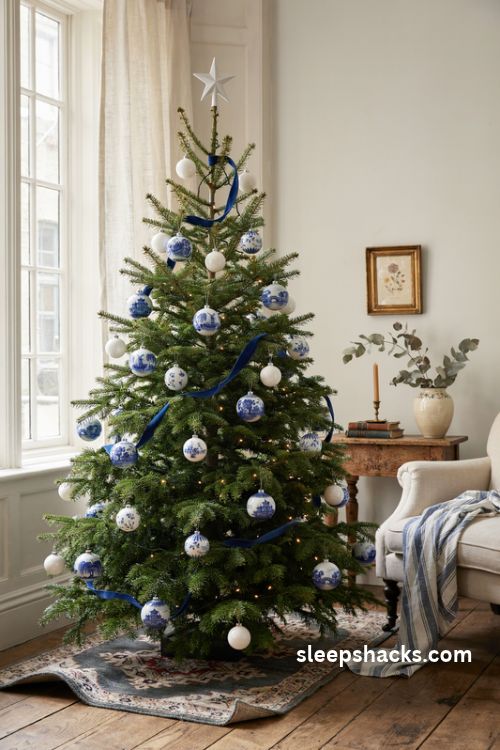
Chinoiserie shares roots with Delft and willow pattern china, so use those motifs for a slightly more storybook look. Ornaments featuring tiny bridges, windmills, and floating boats feel nostalgic, almost like a plate you’d find at a grandparent’s house. Think quiet, handsome, and a little old-world.
Pair them with plain white matte balls so the patterns stand out rather than crowd each other. A cobalt blue ribbon and a white star topper keep things simple. Spacing matters here: leave a small gap of bare green between each patterned piece so the details have room to be noticed. On a slim tree, choose ornaments around two to three inches wide for the right scale.
10. Pagoda and Nutcracker Accents
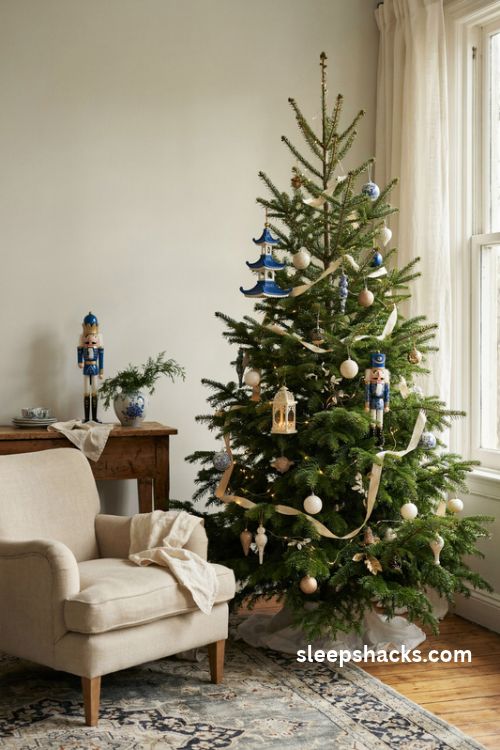
Add a bit of storytelling with chinoiserie nutcrackers, pagoda ornaments, and tiny lantern shapes. These pieces bring in the architecture and figures of the style, and they give the tree a focal point beyond the usual glass balls.
Place the figures at eye level where they can be admired, and keep the surrounding ornaments quiet so they stand out. Three or four accents are enough. A wooden nutcracker on a nearby console or mantel repeats the theme without crowding the branches. Stick with a blue, white, and gold palette so the figures don’t feel random, and rotate them each year for freshness.
11. Gold and Cream Chinoiserie Tree
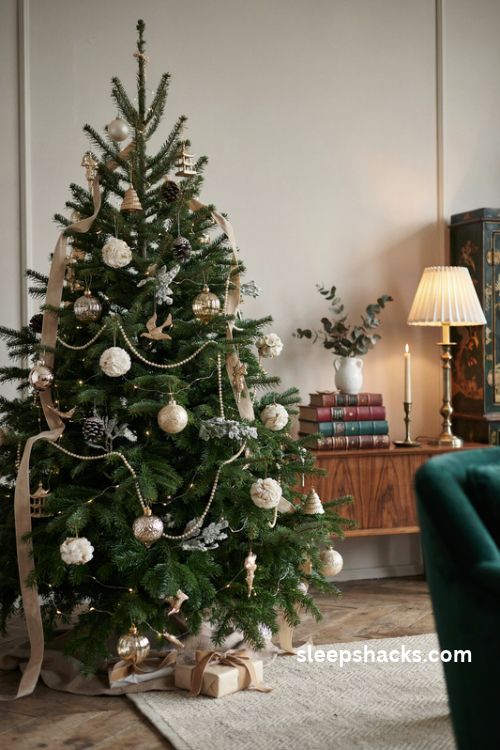
For a softer, warmer approach, swap the blue for gold and cream. Look for ornaments with gold pagodas, ivory florals, and metallic bird silhouettes, and pair them with champagne ribbon and pearl garland for a glowing, antique-looking tree.
This palette suits rooms with warm wood tones, brass lamps, and neutral walls, where cobalt might feel too bold. Use warm white lights, and tuck in a few frosted pinecones for texture. Matte and shiny finishes together keep it from looking flat, and gold-leaf accents on glass balls catch every flicker. The result feels like old lacquer cabinets, glossy and golden, and it photographs beautifully in the evening.
12. Pink and Blue Chinoiserie Tree
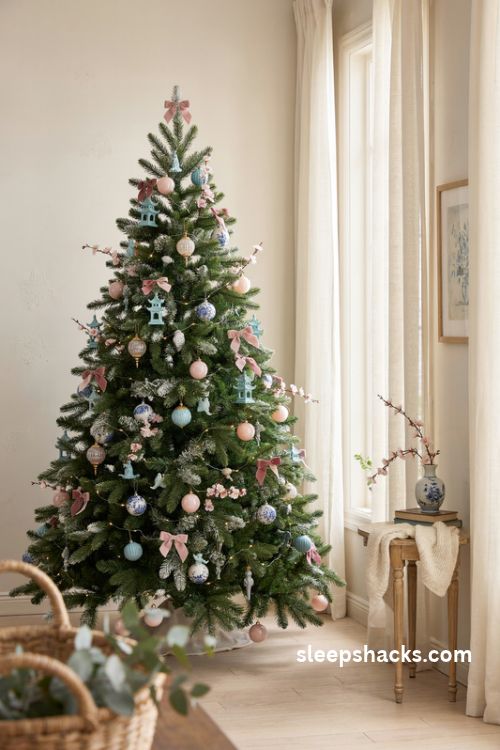
Pink and blue is a lovely pairing that feels youthful and a little whimsical. Blush ornaments, soft pink velvet bows, and pale blue porcelain pieces sit together in a dreamy palette, especially on a white or flocked tree.
Keep the pink soft rather than hot, and let the blue lead so the tree still reads as chinoiserie. Pick a single pink shade and repeat it, perhaps with a pale pink bow at the top. Add a few cherry blossom sprays for a natural, garden-like finish. It’s a great choice for a nursery, bedroom, or sunroom, and gold accents help ground the colors so they don’t veer into candy territory.
13. Tabletop Chinoiserie Tree

Short on space? A small tabletop tree dressed in chinoiserie works just as well. Set a two-foot tree on a console or side table, and decorate it with miniature blue and white ornaments, a delicate ribbon, and a small bird topper.
Place it on a porcelain tray or inside a small ginger jar planter so it feels intentional. Add a matching pair of lamps or a stack of blue and white books nearby to build a little vignette. Place a mirror behind it to double the sparkle. Choose ornaments around an inch to an inch and a half wide so they stay in proportion, and use battery lights with a timer to skip the cords.
14. Chinoiserie Wallpaper Backdrop Tree
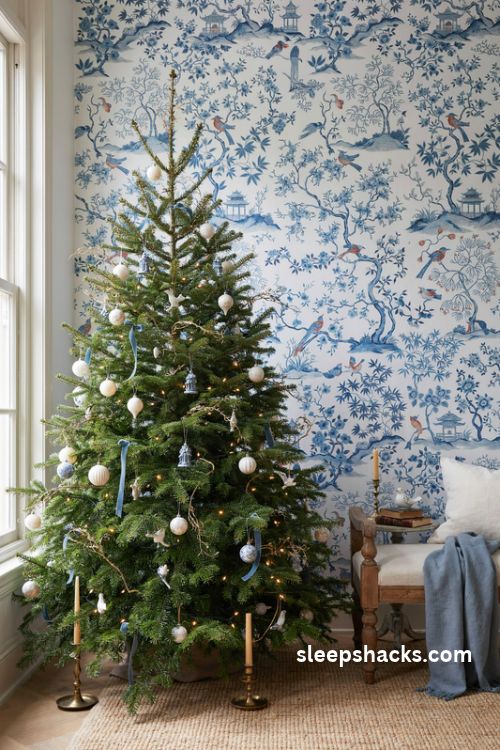
Sometimes the tree isn’t the only star. Set a simple tree in front of chinoiserie wallpaper, a painted screen, or a large panel of framed prints, and the whole corner reads as a scene from a garden pavilion.
Renting? Peel-and-stick panels or a folding screen in a chinoiserie print work without touching your walls. Keep the tree itself in a calm palette of white, cream, and blue so it doesn’t compete with the pattern, and test your wallpaper samples against the tree color first. Place a small bench or side chair next to it, and the nook feels designed. Warm bulbs soften the colors behind the branches.
15. Ribbon-Heavy Bow Tree
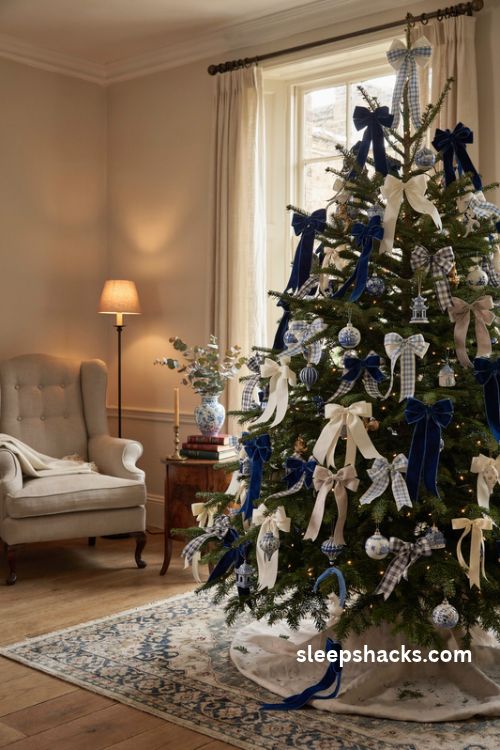
If ornaments feel too busy, let ribbon do the work. Tie dozens of bows in blue and white striped, plaid, and solid velvet, and place them across the branches in an even, layered pattern, with only a few porcelain ornaments among them.
Cut ribbon to about 24 inches for bows that look full but not floppy, and wire each one to the branch so it holds through the season. Press out wrinkles before you tie, and add long tails that trail down for movement. Mix widths for variety. This approach is gentle on the budget, because ribbon costs far less than glass ornaments, and it suits large trees that need plenty of volume.
16. Statement Topper Finish
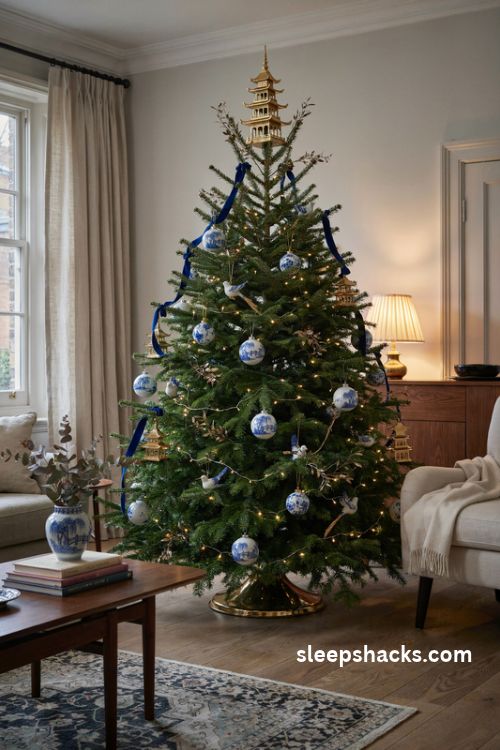
A good topper changes the whole tree. Try a gold pagoda finial, a porcelain-style bird, or a big bow in blue velvet with long tails, and fix it firmly to the top branch with floral wire so it stays upright.
Make sure the topper matches the tone of the ornaments, so it feels like part of the family rather than an afterthought. A slightly oversized finial looks more expensive than a tiny one. Then step back about ten feet, squint, and check that the top feels balanced against the base. Small tweaks here, such as shifting a ribbon or adding a few stems below, finish the look nicely.
Final Thoughts
Here’s what I hope you take from all this: a chinoiserie tree isn’t a test of taste. It’s just a way of surrounding yourself with something you find lovely, one small piece at a time. Nobody walking in will count your ornaments or check your patterns. A single hand-painted bird is enough to start.
So pour a cup of tea, pull out that old blue bowl, and let the tree grow slowly through the season. Years from now, you’ll remember the afternoon you spent tying ribbon more than the ornaments themselves, and honestly, that’s what makes a tree feel like yours. Enjoy every glittering, porcelain-bright minute of it.
Frequently Asked Questions
Q: What is a chinoiserie Christmas tree?
It’s a tree decorated in a Chinese-inspired art style, usually with blue and white porcelain patterns, birds, pagodas, and ginger jar ornaments. The look is often blue and white, but gold, pink, and red can also work.
Q: What colors go with a chinoiserie Christmas tree?
Blue and white is the classic pairing, and navy, cream, gold, and soft pink all blend well with it. Red and green also work if you want a more traditional feel.
Q: Where can I buy or make chinoiserie ornaments?
Home decor stores and online shops carry them, though prices can run high. You can also make your own by decoupaging white ornaments with blue and white napkin patterns.