

Walk into almost any room with a king-size bed and you’ll notice the same thing: the bed does all the talking, and everything else mumbles. The nightstands look tiny, the rug looks lost, and the walls just sort of stand there.
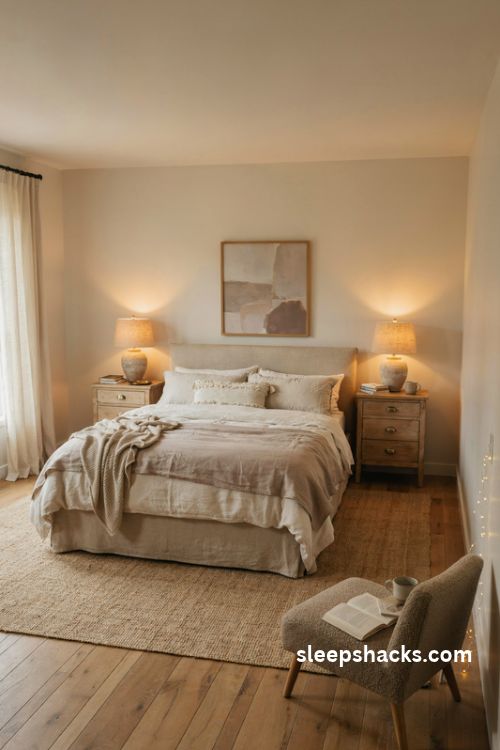
A king bed is a big, beautiful anchor, but it needs a supporting cast that matches its scale. That’s the secret behind the bedrooms you save on Pinterest. The 14 ideas below cover headboards, lighting, rugs, and layouts, so your room feels balanced and calm instead of crowded, whether you have a generous master suite or a more modest space.
1. An Upholstered Headboard That Makes a Statement
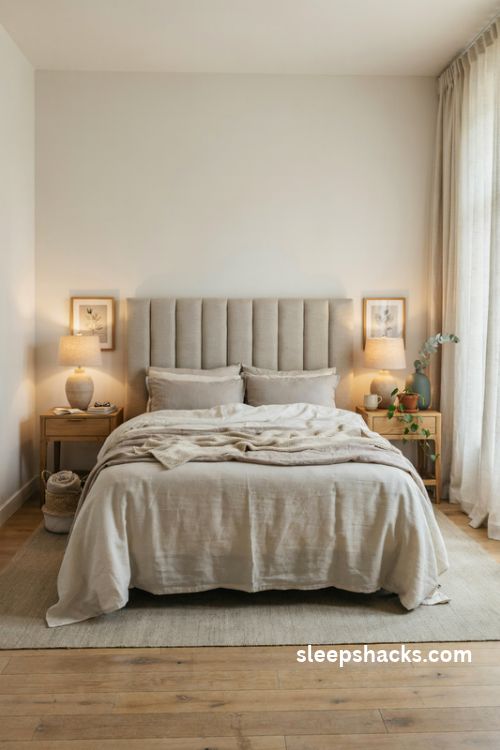
A king bed is wide, so the headboard has a lot of visual territory to cover. A tall upholstered one in linen, boucle, or soft velvet turns that width into a feature and gives the whole room a softer, more finished feel.
Choose a headboard that extends a few inches beyond the mattress on each side, and at least 12 inches above the pillows. Channel tufting adds a hotel-style look, while a plain panel feels more modern. Gray, oatmeal, and deep green are forgiving shades that blend with almost any bedding you might switch to later.
2. Board and Batten Behind the Bed
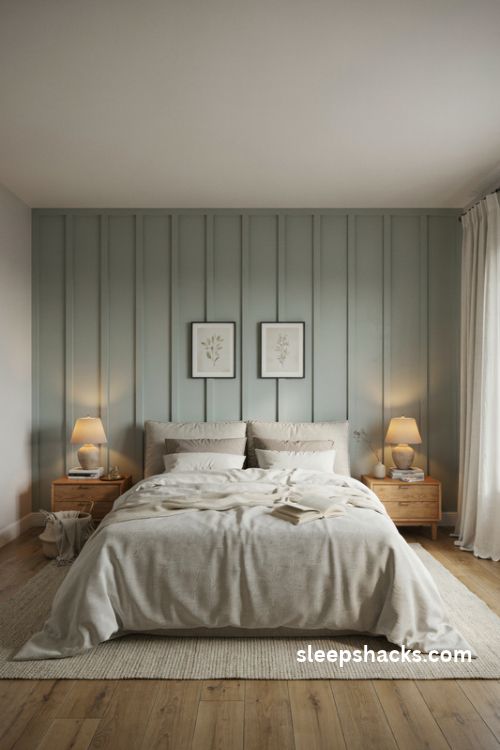
Vertical wood panels painted a single color give the wall behind your bed texture and architectural interest. They also help fill a big wall, which can look empty and awkward above a wide headboard.
Paint the panels and the wall in the same shade, ideally a soft greige or deep sage, so the effect stays subtle and sophisticated. Extend the panels at least two-thirds of the way up the wall for a proportionate look. It’s a weekend project, and the shadows between the boards add depth that flat paint just can’t match.
3. Oversized Nightstands and Lamps
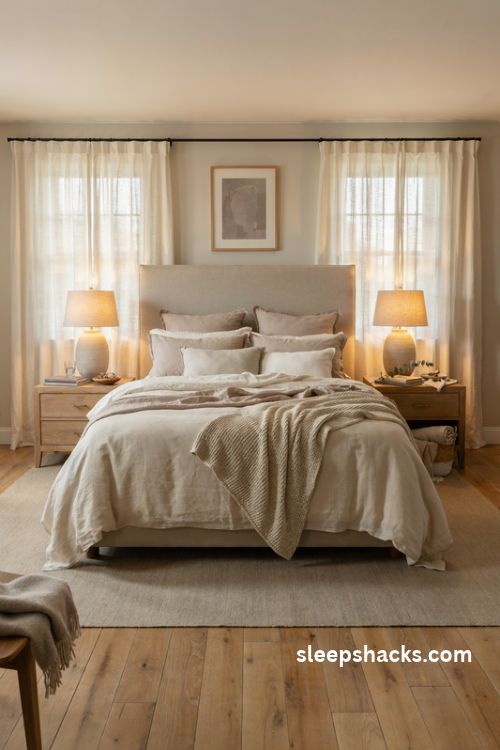
Standard nightstands can look shrunken next to a king bed, which is one of those small mistakes that makes the entire room feel off. Pick wider ones, around 24 to 30 inches, with enough surface for a lamp, a book, and a glass of water.
Pair them with lamps that have some height, so the shade sits roughly at shoulder level when you’re sitting up in bed. Matching pairs create a calm, symmetrical look, but mismatched ones in similar tones feel more relaxed and collected. If space is tight, wall-mounted floating shelves work well and free up floor space.
4. Layered Bedding in Soft Neutrals
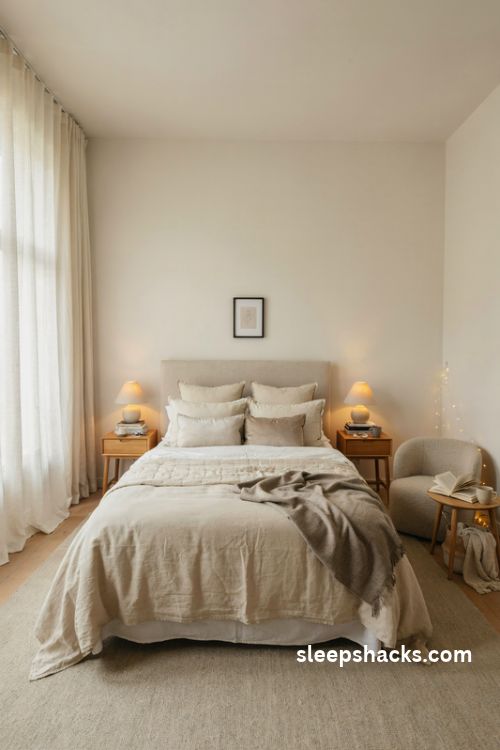
A king bed is a big canvas, and layers are what keep it from looking flat. Start with a crisp white or cream sheet, add a quilted coverlet, and finish with a chunky knit or linen throw folded across the foot.
Use a mix of textures instead of mixing colors. Linen, cotton, wool, and velvet in similar tones feel rich without feeling busy. Stick to five or six pillows at most, with two large sleeping pillows, two euro shams, and one or two small accents. More than that, and you’ll spend every morning moving them off the bed.
5. A Moody, Dark Accent Wall
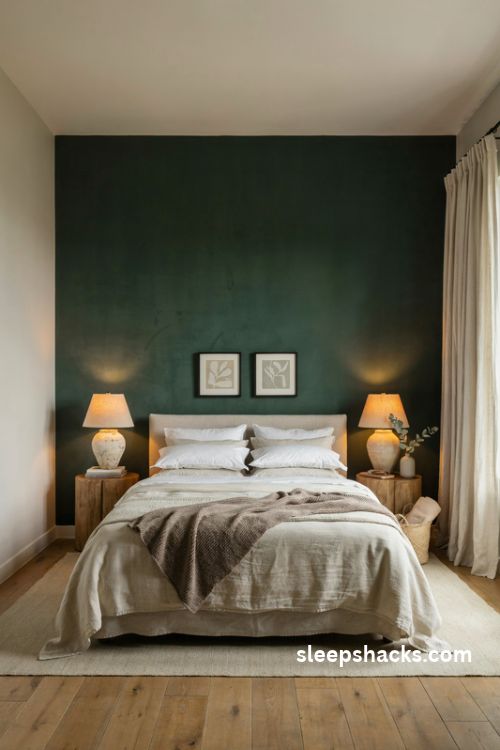
Dark colors can be surprisingly cozy in a bedroom, especially with a big bed anchoring the room. Deep navy, charcoal, or forest green on the wall behind the headboard creates a cocoon-like feel that’s perfect for sleeping.
Choose a matte finish to absorb light and avoid harsh reflections. Keep the other walls lighter, so the room doesn’t feel closed in, and use warm bulbs to bring out the richness of the paint. White or cream bedding stands out dramatically against a dark wall, giving the bed an elegant, high-contrast look.
6. A Large Rug That Actually Fits
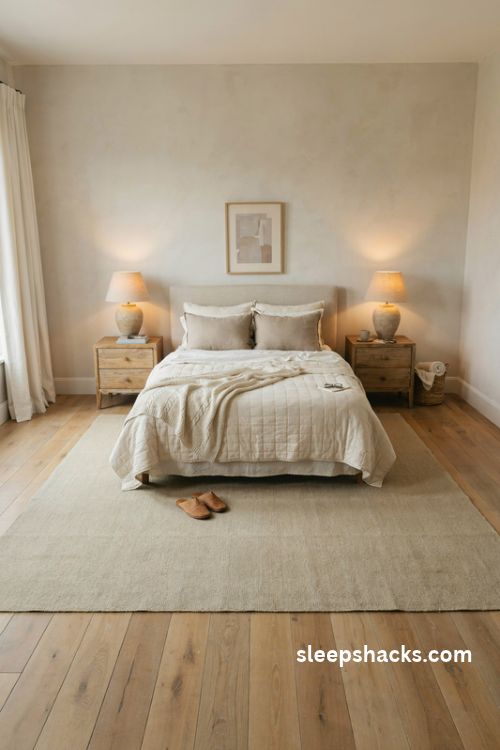
The most common king bedroom mistake is a rug that’s too small. A tiny rug floating at the foot of the bed makes the whole room feel unfinished, while a properly sized one ties everything together.
Look for a 9 by 12 or 10 by 14 rug, and place it so at least 24 inches show on both sides and at the foot. Place it beneath the bottom two-thirds of the bed so the nightstands sit partly on it. A flat-weave or low-pile style is easier to keep clean, and a neutral color keeps the focus on the bed.
7. Wall Sconces Instead of Table Lamps
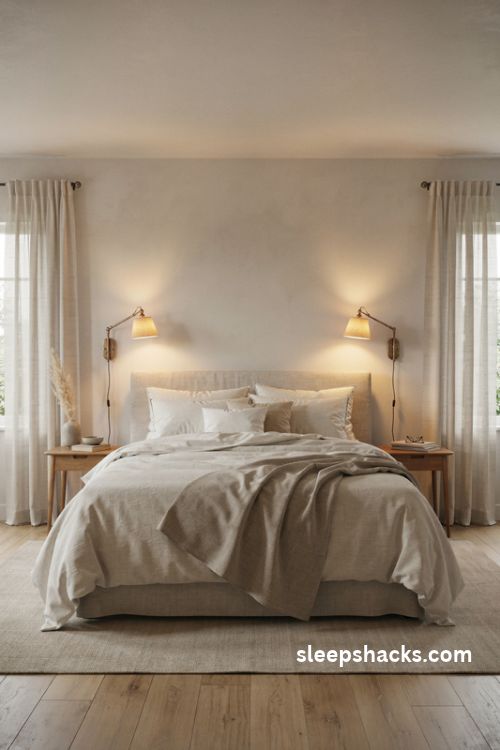
Wall-mounted sconces free up nightstand space and make a king bedroom feel more streamlined. They also add a boutique-hotel feel, with soft pools of light on each side of the bed.
Choose plug-in styles if you don’t want to hire an electrician, and tuck the cords behind the headboard or use a cord cover painted to match the wall. Mount them about 60 inches off the floor, a little above shoulder height. Swing-arm models work well for reading, and a warm bulb keeps the glow soft and flattering.
8. A Bench at the Foot of the Bed
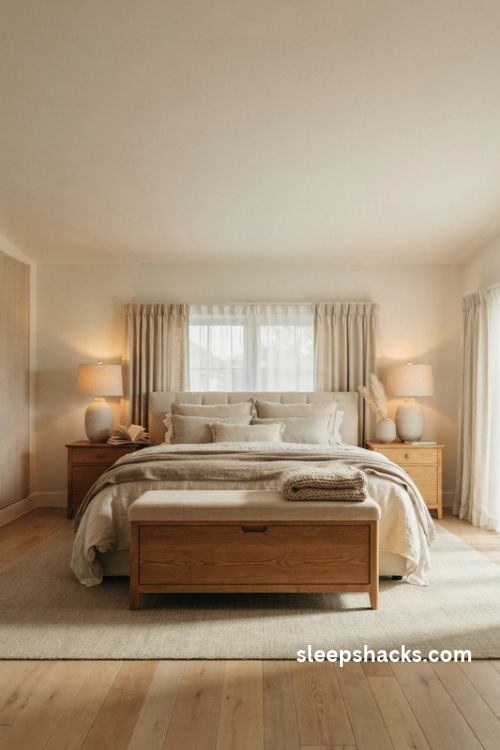
A bench gives a king bed a polished finish and a handy spot to sit while putting on shoes or to stash an extra blanket. It also helps visually cut off the long expanse of the mattress.
Choose one that’s a little narrower than the bed, roughly two-thirds of its width, so it doesn’t compete with the frame. Upholstered styles feel soft and luxurious, while wood or rattan ones feel lighter. A storage bench is a smart upgrade, because it hides spare pillows and winter bedding without taking up extra floor space.
9. A Cozy Reading Nook by the Window
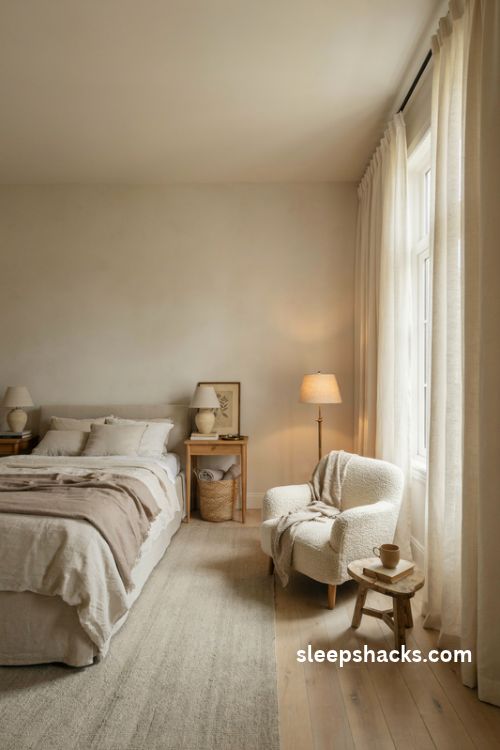
If your bedroom has some extra room, a reading corner makes it feel more like a true retreat. A comfortable armchair, a small side table, and a floor lamp turn an empty corner into your favorite spot in the house.
Pick a chair that’s deep enough to curl up in, in a durable fabric like performance linen or boucle. Place it near a window so you get natural light during the day, and add a throw blanket for chilly mornings. Even a small chaise works well, as long as you leave a clear path around the bed.
10. A Statement Mirror for Depth
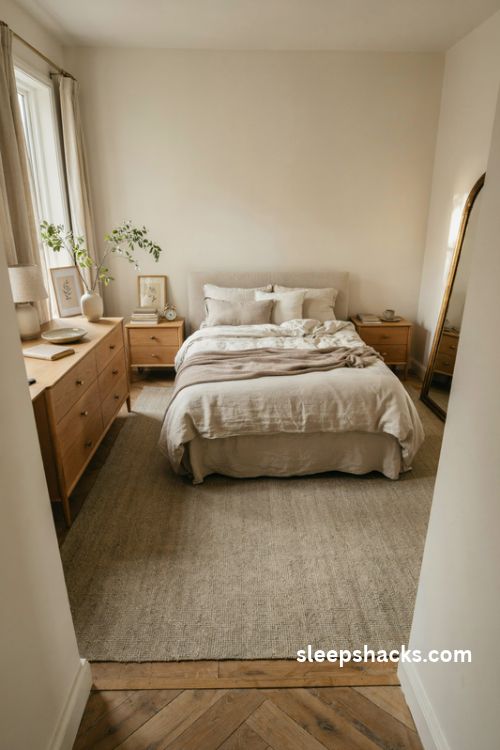
Mirrors do wonders in bedrooms, especially large ones. A big, well-placed mirror reflects light, adds depth, and keeps a large room from feeling too heavy with furniture.
Try a floor-length leaning mirror in a slim wood or black frame, or an oversized round mirror above a dresser. Place it where it bounces natural light around, ideally across from a window, rather than directly facing the bed. Arched shapes add a soft, modern touch, and a brass or antique frame brings a bit of warmth and character.
11. A Low Platform Frame for Smaller Rooms
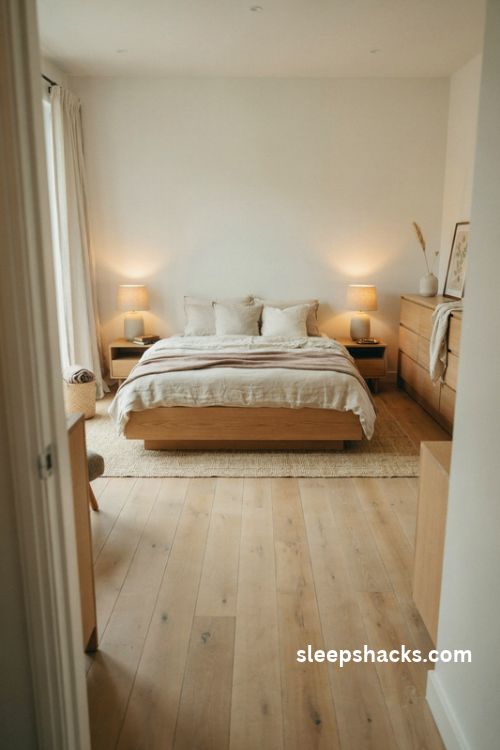
A king bed doesn’t need a huge room, but it does need smart choices. A low platform bed with clean lines keeps the room feeling open, since there’s no bulky footboard or tall posts to block the view.
Standard king dimensions are about 76 by 80 inches, so measure carefully and leave at least 24 inches of walking space on each side. A floating frame creates the illusion of extra floor space, and a style with built-in drawers handles storage. Keep the mattress height moderate, because a thick one can make a small room feel crowded.
12. Layered Lighting with Dimmers
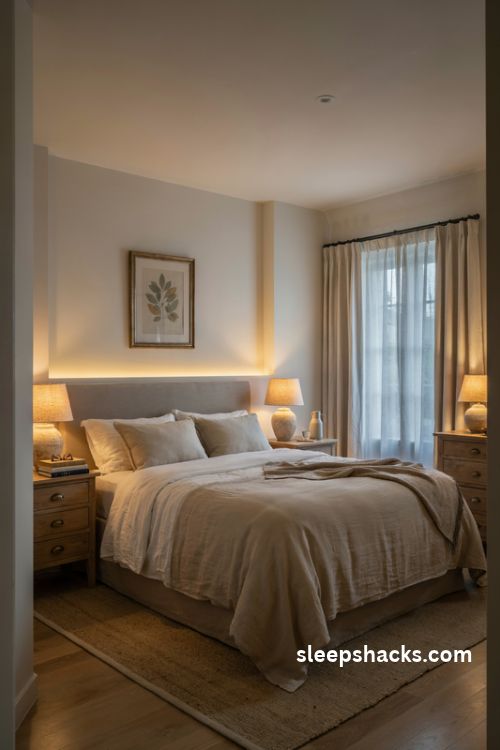
One overhead light is rarely enough for a king bedroom. Layering different sources, such as ambient, task, and accent lighting, lets you change the mood throughout the day and creates a much more relaxing atmosphere.
Combine a ceiling fixture on a dimmer, bedside lamps for reading, and a soft accent like a string of warm LEDs behind the headboard or a small lamp on the dresser. Choose bulbs around 2700K for a cozy glow. Smart bulbs can be programmed to dim in the evening, which helps your body wind down naturally.
13. An Earthy Retreat with Natural Wood and Texture
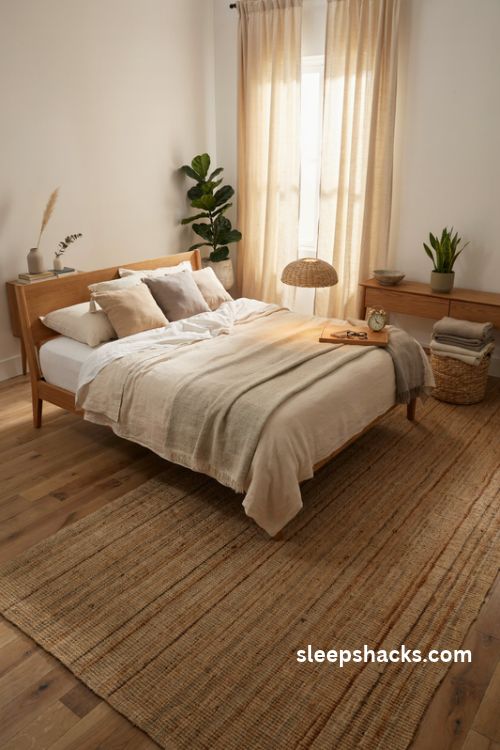
Wood, rattan, linen, and wool bring warmth to a large bedroom and keep it from feeling cold or showroom-like. A natural wood bed frame or headboard sets the tone, and woven accents carry it through the room.
Mix a few different wood tones, like oak and walnut, as long as they share a similar undertone. Add a jute rug, a rattan pendant light, and linen curtains in a warm cream. A few plants, such as a fiddle-leaf fig or a snake plant in a ceramic pot, finish the look and add some life to the corners.
14. Curtains Hung High and Wide
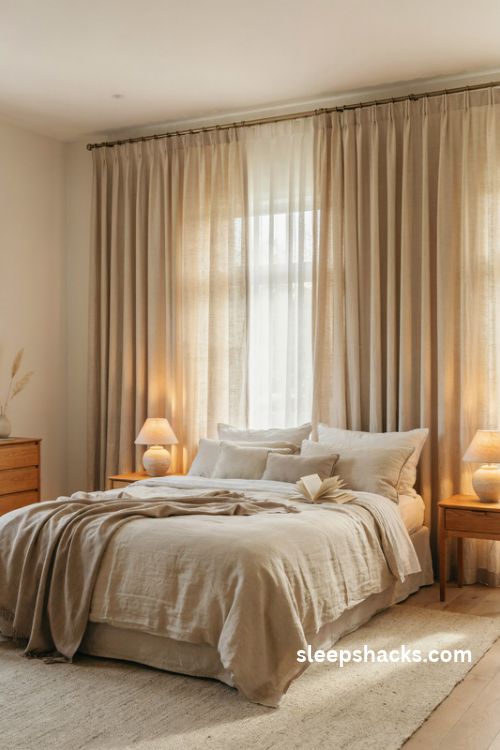
Curtains can transform a bedroom, and with a king bed, they matter even more. Hanging the rod close to the ceiling and extending it past the window frame makes the windows look larger and the room feel taller.
Choose floor-length panels in a heavy fabric like linen or velvet for a luxurious drape, and consider a blackout liner for better sleep. Let the curtains just kiss the floor or puddle slightly for a plush look. Soft, light-filtering sheers underneath add a second layer, so you can have privacy during the day without losing sunlight.
Final Thoughts
Here’s the honest truth about a king bedroom: the bed will take up most of your budget, and the rest of the room still has to earn its place. You don’t need to do all 14 of these. Pick two or three that solve problems you actually have.
If the room echoes, add a rug and curtains. If it feels flat, try a headboard or paneling. If it feels dark and cramped at night, fix the lighting. Small, practical changes will make the room feel better than a complete overhaul that stalls halfway through. Start with what bugs you most, and let the rest wait.
Frequently Asked Questions
Q: How big is a standard king bed?
A standard king mattress measures about 76 by 80 inches, while a California king is about 72 by 84 inches. Leave at least 24 inches of walking space around the bed if you can.
Q: What size rug works best under a king bed?
A 9 by 12 or 10 by 14 rug usually fits well, placed so it extends about two feet beyond the sides and foot of the bed. Placing it under the lower two-thirds of the bed keeps it balanced.
Q: How can I make a king bedroom feel cozy and not empty?
Layer textures with bedding, rugs, and curtains, and add warm lighting at different heights. Furniture in the right scale, like wider nightstands and a bench at the foot of the bed, also helps fill the space.