

Walk into almost any antique shop in December and watch what happens. People drift toward the little glass boxes of old ornaments, lean in close, and go quiet. Nobody checks a price tag first. They just look at the silvered fruit, the tiny lace cones, the faded gold, and something in their face softens.
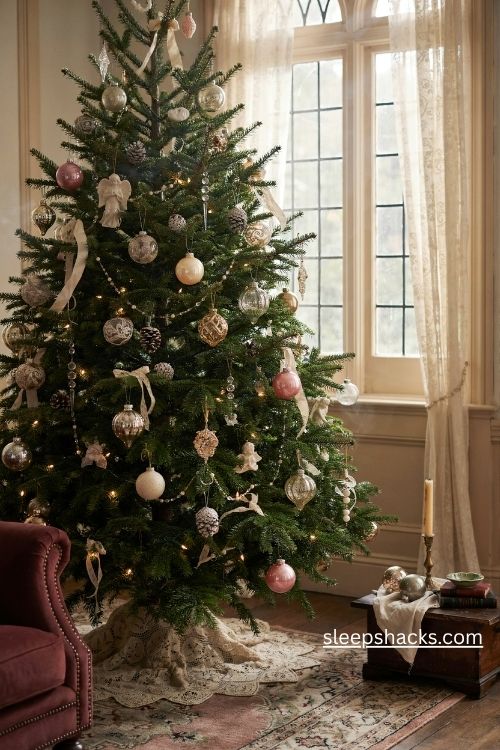
That pull is no accident. The Victorians were the ones who turned the Christmas tree into a family event, and they filled it with handmade, shimmering, slightly over-the-top treasures. Here are 13 Victorian Christmas ornaments you can collect, copy, or craft yourself to bring that same glow to your tree.
1. Kugel-Style Heavy Glass Baubles
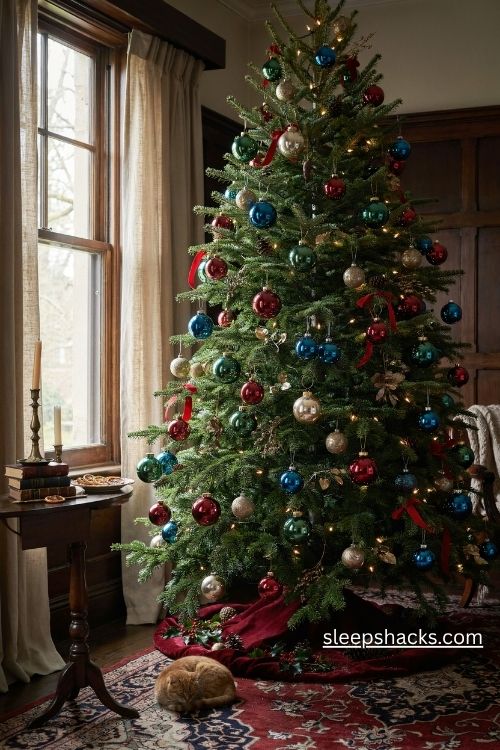
Kugels are the grand old ladies of the ornament world. These thick-walled glass balls have mirrored silver interiors and sturdy brass caps, and they come in deep jewel shades like emerald, cobalt, and ruby. They catch tree lights and throw them back in rich, moody sparkles.
Reproductions are easy to find, and a few go a long way. Hang them close to the trunk, where the shadows are deeper, so their reflections look like pools of color. Use thick wire or ribbon loops, since the weight can bend a delicate branch. Mix two or three sizes and keep the palette tight for a luxurious look.
2. Thin Blown Glass Fruit and Vegetable Shapes
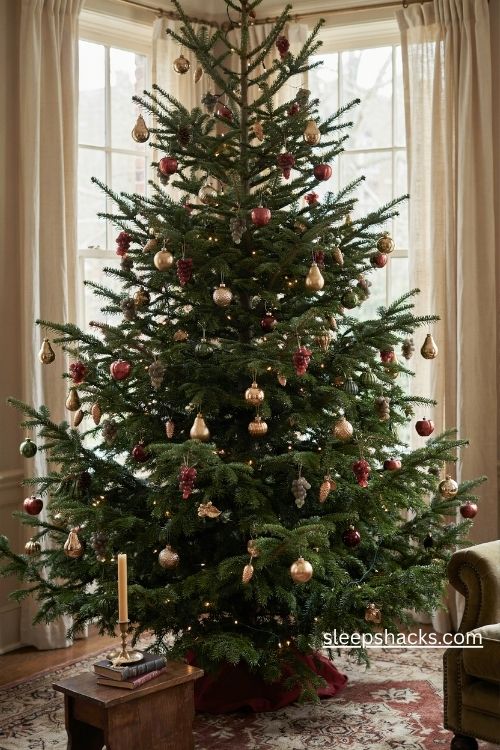
The earliest glass ornaments copied what people already hung on trees, so you’ll find tiny pears, grapes, pinecones, and apples. Their fine glass walls and delicate metal caps give them a jewel-like look, and every shape feels like a small, sweet surprise tucked between the branches.
Place them in clusters of three on the same branch, so they look like fruit growing from the tree. Choose muted colors like soft red, gold, and a smoky green, rather than bright, shiny ones. Because the glass is thin, hang them near the middle of each branch where they’re sheltered from bumps by pets or small children.
3. Wire-Wrapped Glass Ornaments
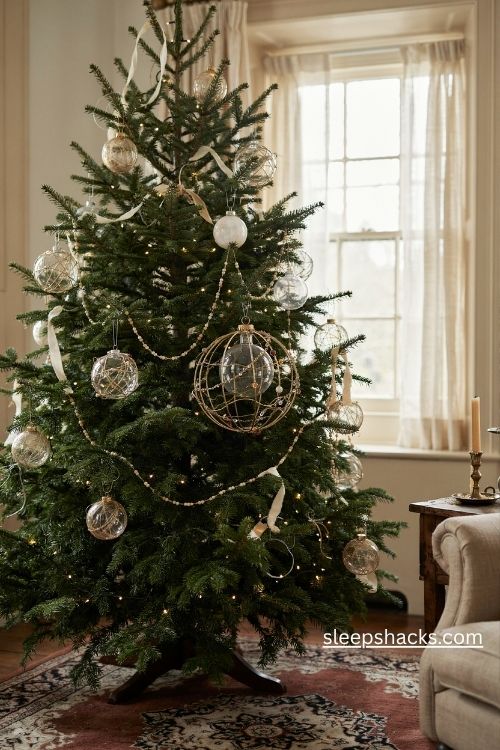
Silver or gold wire wrapped around a glass ball makes a delicate cage of light. Victorian versions often added small beads, fabric trim, or metal accents, and some were surprisingly large, which made them showpieces on the tree. The wire catches the lights and breaks them into little sparks.
Look for versions with a simple spiral wrap if you want a subtle look, or a fully caged design if you want drama. Hang one big wire-wrapped ornament near the center, then repeat smaller ones around the outer branches. They pair beautifully with plain glass balls because they add texture without adding color.
4. Spun Cotton Fruit and Vegetables
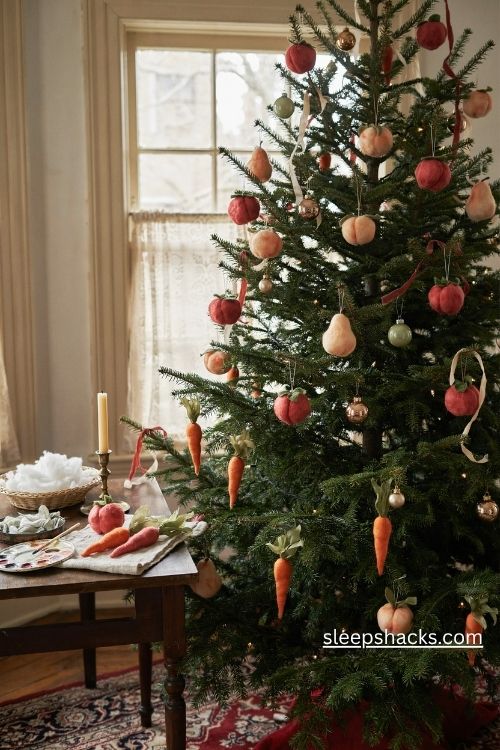
Spun cotton ornaments look soft and slightly dusty, like tiny sculptures made from clouds. Victorian crafters shaped cotton into strawberries, carrots, peaches, and little pears, and often added silk leaves to finish them. Their muted colors and gentle texture feel warm and old-fashioned in a way glass never can.
You can make your own with cotton batting, a little diluted glue, and watercolor paint. Shape each fruit around a wire loop, let it dry, then add a leaf or stem cut from felt or silk. Hang them near the tips of the branches where the light is softer, and they’ll look like tiny harvest treats.
5. Paper Cornucopias and Cones
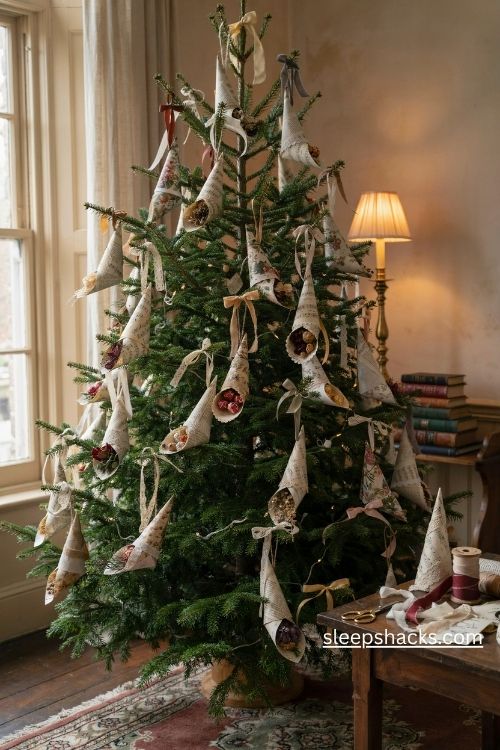
Paper cones filled with sweets were among the most beloved Victorian tree decorations, and they still look charming today. Roll a sheet of decorative paper into a cone, finish it with a ribbon loop, and fill it with small candies, dried flowers, or a bit of greenery. They feel playful and a little bit romantic.
Use scraps of old sheet music, lace paper, or patterned wrapping for a vintage look. Cut a scalloped edge along the top, then glue on a printed scrap or a tiny bow for detail. Hang them in a staggered pattern so the tree looks full, and avoid heavy fillings that could tip them forward.
6. Embossed Gold and Silver Cardboard Shapes
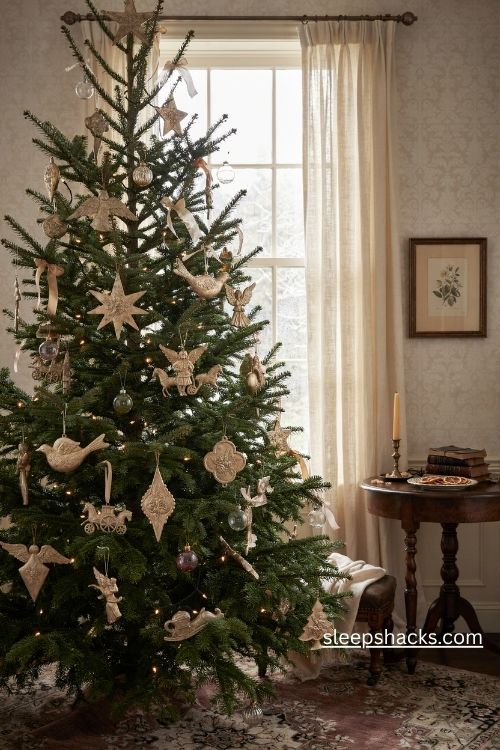
Flat embossed cardboard ornaments, finished in metallic gold or silver, were a favorite on Victorian trees. Think stars, little carriages, birds, and angels, each pressed with fine, detailed patterns. They have a gentle shine that looks warm rather than flashy, which helps them blend into a layered tree.
Modern reproductions are inexpensive and surprisingly good. Hang them in the middle of the branches, with the light shining on their front, and the embossing will pick up tiny shadows. They’re also light enough to hang on a feather tree or a tabletop tree without bending any of the branches.
7. Victorian Scrap Angels and Cherubs
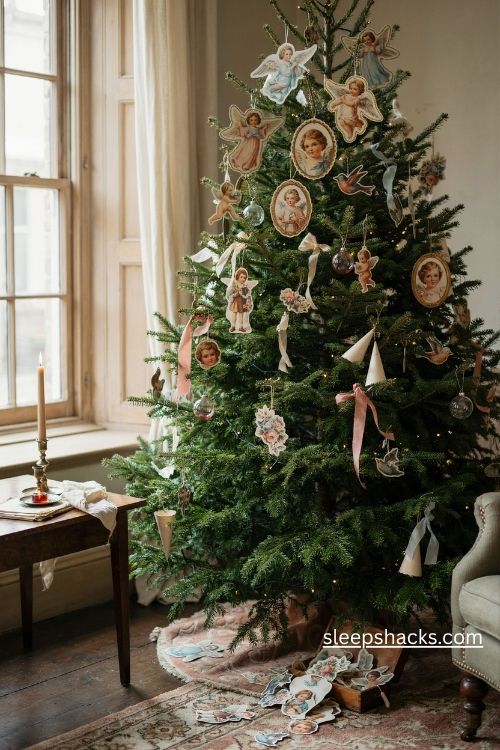
Paper scraps, those small glossy die-cut pictures of angels, children, flowers, and birds, were the sticker books of their day. The Victorians glued them onto cards, cones, and cardboard backs to make dainty ornaments. Their rosy colors and soft faces feel sentimental and sweet, like a family keepsake.
Find vintage-style scrap sheets online, then glue each picture onto a thin piece of card and trim the edge neatly. Add a loop of ribbon or fine thread at the top and a bit of gold paint around the border. A cluster of angels near the tree’s top gives a quiet, heavenly look.
8. Silk and Bead Crazy Quilt Ornaments
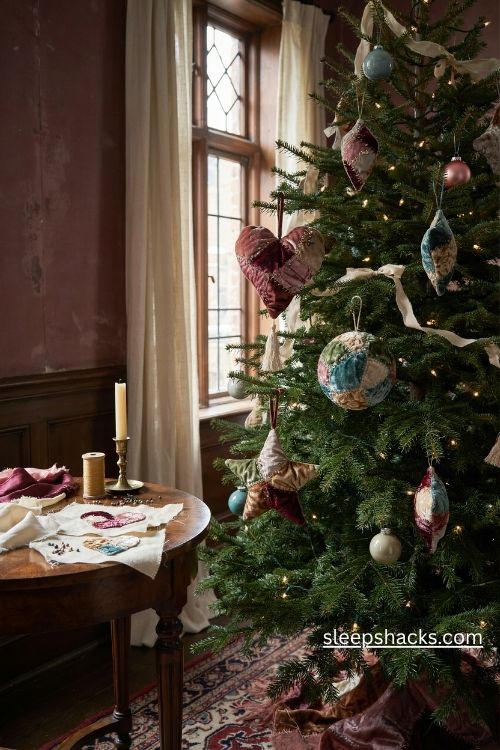
Crazy quilting was all the rage in the late 1800s, and its patchwork of silk, velvet, and embroidery spilled into Christmas ornaments. Small hearts, balls, and stars were stitched from rich scraps and covered in tiny beads and decorative stitches. The result is a jewel box of color and texture.
Start with scraps of velvet and silk in deep tones like burgundy, teal, and gold. Stitch them onto a small cardboard or felt form, then decorate the seams with embroidery thread and a few seed beads. Finish with a ribbon loop and a tassel. Each one takes an evening but will last for decades.
9. Lace and Ribbon Fans and Cones
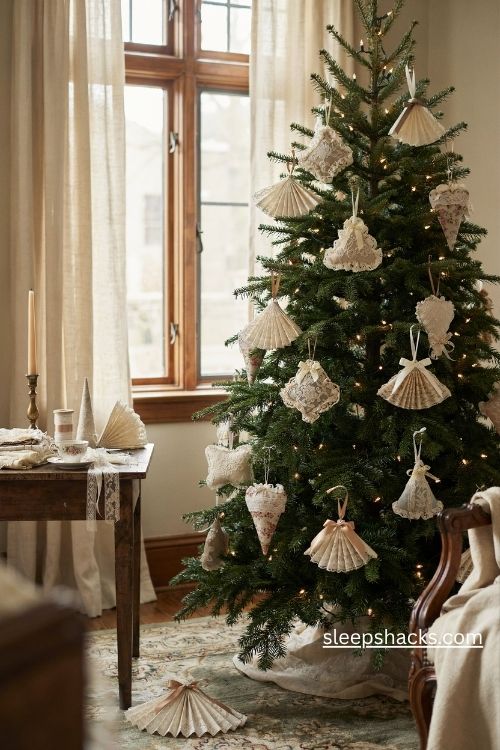
Lace was everywhere in Victorian homes, and it found its way onto the tree as little fans, cones, and tiny pillows. White and cream lace looks especially lovely against dark green branches, giving the whole tree a soft, romantic glow. It feels delicate yet hardy, like the best heirloom pieces.
Make a simple fan by folding a strip of lace in an accordion pattern, pinching it at the base, and tying it with narrow ribbon. For cones, wrap lace around a paper cone and finish with a bow. Use a bit of fabric stiffener to help the lace keep its shape throughout the season.
10. Gingerbread and Sugar Cookie Ornaments
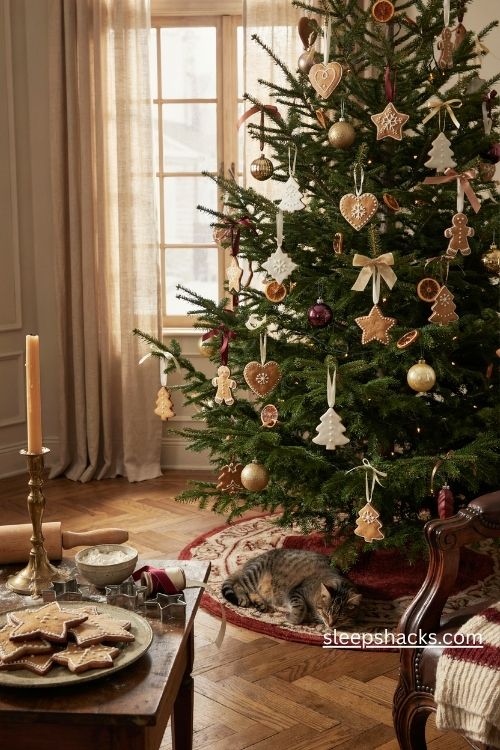
Edible decorations were part of the original charm of the Christmas tree, and Victorian families hung gingerbread shapes, candies, and even small cakes on the branches. They filled the room with a spicy scent and gave children something to look forward to once the holidays arrived.
Bake a sturdy gingerbread dough, cut out hearts, stars, and little figures, and poke a hole near the top before baking. Decorate with simple white icing, and thread each cookie with a thin ribbon. If you plan to keep them as decorations rather than treats, brush them with clear varnish to preserve them.
11. Clip-On Glass Birds
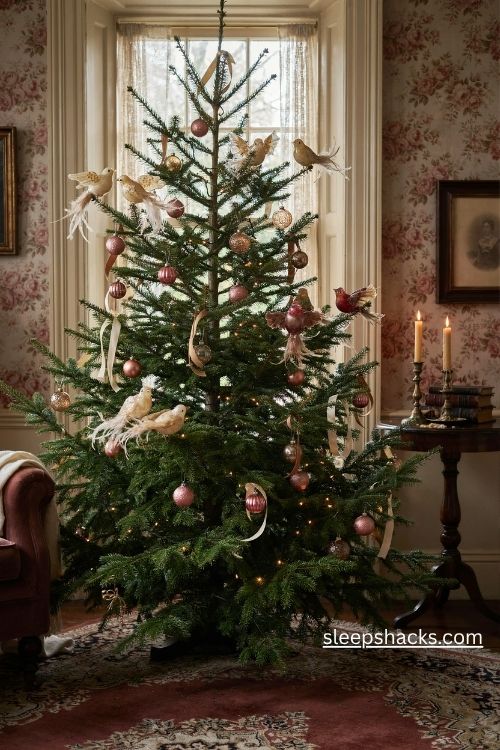
A tiny bird perched on a branch, with a tail of spun glass, brings a bit of magic to any tree. Clip-on birds were popular on old trees, and their colorful feathers and delicate wings look fresh and lifelike even now. They add a sense of movement and a little bit of whimsy.
Clip them to the sturdiest branches, where the weight won’t pull them down, and angle each one slightly so it looks like it’s about to take flight. Choose colors that fit your palette, like soft red, cream, or gold. A group of three or five spread across the tree feels natural and charming.
12. Candle Clip Lanterns
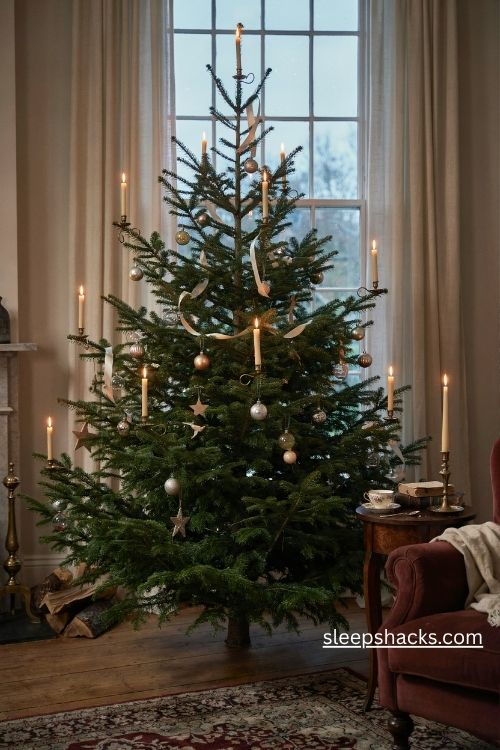
Real candles lit the Victorian tree, and while that’s not something to try today, the look is easy to copy safely. Small metal clip holders with battery candles recreate the soft, flickering glow, and the little brass or tin clips are part of the charm even when the lights are off.
Choose flameless candles with warm white bulbs and a gentle flicker effect. Clip them to the ends of sturdy branches, spaced evenly around the tree, so the glow spreads. Add a few small glass balls near each candle so the light reflects in them. The whole scene feels quiet, cozy, and a little bit magical.
13. Tinsel and Glass Bead Garlands
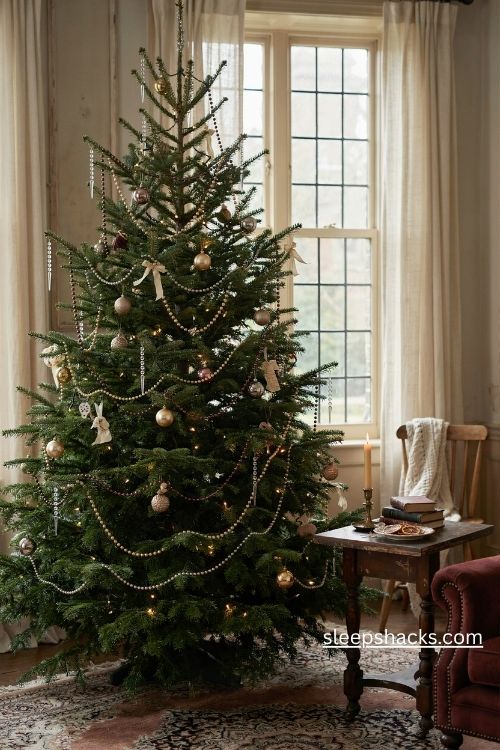
The finishing touch on a Victorian tree was often a shimmer of tinsel and long strands of glass beads. Thin silver tinsel hung in tiny strands looks like icicles, while bead garlands in gold, silver, or deep red wrap the tree in a soft shine. Together they tie every other ornament into one picture.
Drape the beads loosely in wide, swooping arcs, working from the top down and letting each loop dip a little lower than the last. Add tinsel last, hanging it in thin strands near the tips of the branches. Choose real metallic tinsel if you can find it, because it moves and reflects light beautifully.
Final Thoughts
Real talk: you don’t need an antique collection, and you don’t need a house that looks like a museum. Most genuine Victorian ornaments are fragile, expensive, and honestly not very practical with pets or kids around. Reproductions and handmade versions give you the same look without the heartbreak when something falls.
Start with two or three pieces that make you pause when you see them, and build from there. A tree full of mismatched, imperfect, slightly crooked ornaments will always feel warmer than a perfect one. If you only manage a handful this year, that’s still a good start, and the tree won’t care.
Frequently Asked Questions
Q: What colors are traditional for Victorian Christmas ornaments?
A: Deep red, forest green, gold, and cream were the most common shades, often with touches of burgundy, silver, and soft pink. Rich jewel tones appear on glass pieces.
Q: What materials were Victorian Christmas ornaments made from?
A: They were made from blown glass, spun cotton, paper, cardboard, lace, silk, beads, and metal wire. Many were handmade at home, and edible treats like gingerbread were also common.
Q: Are Victorian Christmas ornaments valuable?
A: Genuine antique ornaments, especially kugels and unusual glass shapes, can be valuable to collectors. Reproductions are affordable and give you a similar look without the cost or fragility.