

If you love the smell and glow of a real tree but worry about what it costs the planet, you’re not alone. Most of us want a holiday that feels warm and generous without a pile of guilt sitting under the branches. The good news is that a kinder tree is easier to find than it sounds.
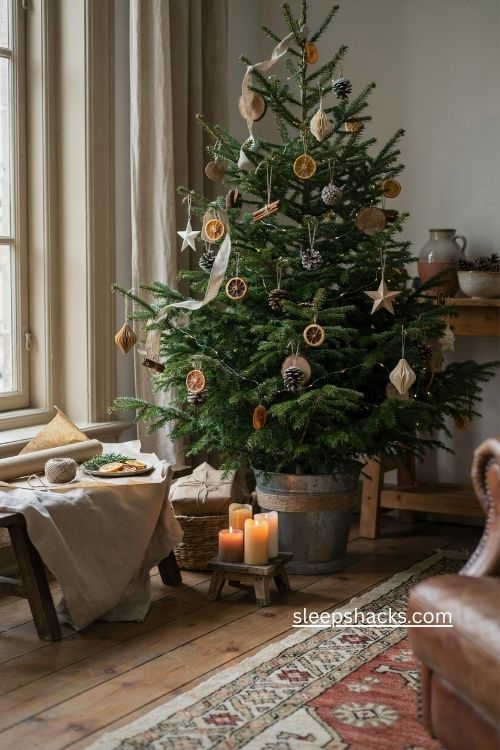
From farms that grow without chemical sprays to living trees you can plant in spring, there are plenty of ways to do this well. Here are fourteen ideas for choosing, caring for, decorating, and saying goodbye to an organic Christmas tree, so you can enjoy the season knowing you made a thoughtful choice.
1. Buy From a Certified Organic Farm
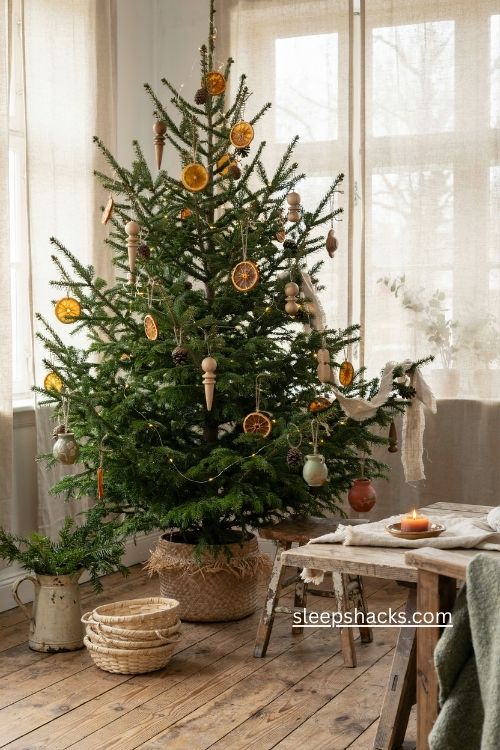
A certified organic tree is grown without synthetic pesticides, and the farm is inspected every year to keep its certification. Growing this way is harder, since the trees mature more slowly and have to compete with grass and weeds. That extra effort shows in a tree that’s been raised with real care.
Look for a recognized organic symbol on the tag or the farm’s website, such as the Soil Association mark in the UK. Then ask the grower how they manage weeds and soil. Many organic farms use mowing, biodegradable mats, or even sheep rather than chemical sprays, and they’re usually happy to explain.
2. Check for Trusted Certification Labels
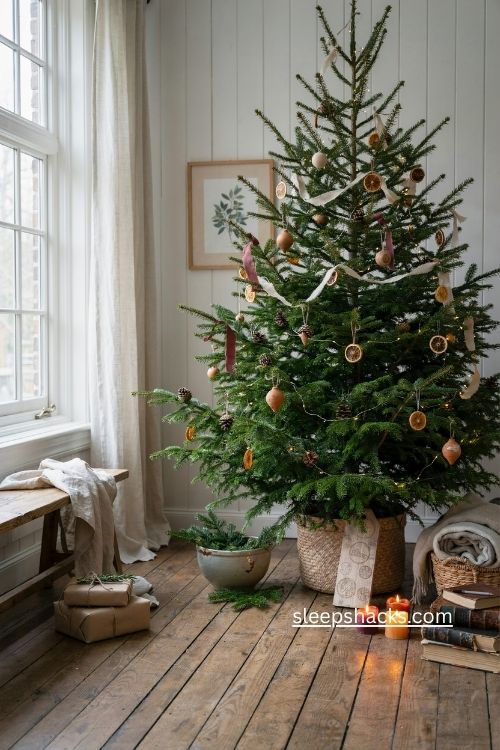
Labels make it easier to shop with confidence. Organic certification, FSC, and PEFC all point to growers who meet outside standards for how trees and land are managed. Think of them like the labels you’d look for on food at the grocery store.
If a seller doesn’t mention any certification, just ask where the trees come from and how they were grown. A good grower will answer plainly. Take a moment to compare two or three local sellers before you buy, since the best tree is often the one from the farm that’s proud to show its methods.
3. Shop Local to Cut Down on Miles
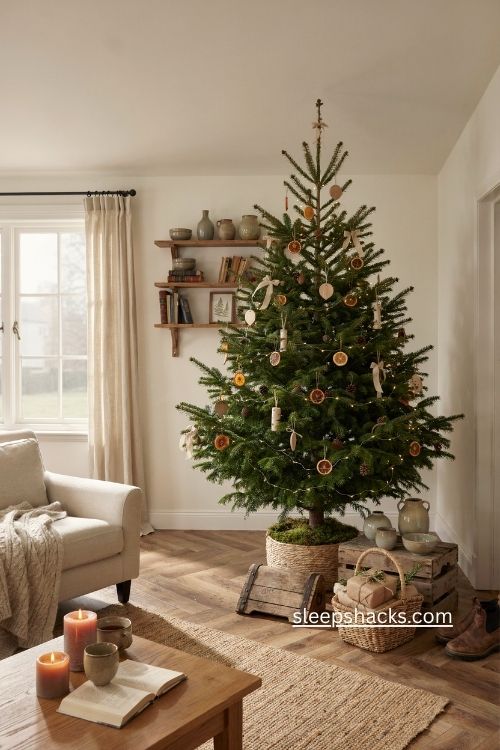
Even a very green tree loses some of its shine after traveling hundreds of miles on a truck. Tree lots in towns often get their stock from distant farms, so buying from a nearby grower keeps the journey short and supports someone in your own community.
One organic farm in Devon stopped its nationwide delivery altogether because of the extra carbon and plastic wrap couriers required. That’s a good model to look for: a farm that sells close to home. Search for organic or sustainable growers within a short drive and plan a family trip to pick one out in person.
4. Choose a Living Potted Tree
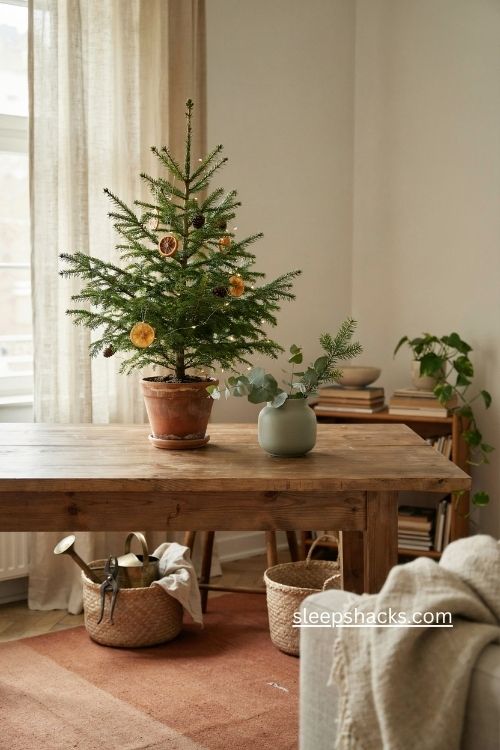
A potted tree can come back year after year, which is why it’s often called the most sustainable way to bring the look and scent of a Christmas tree indoors. Between holidays, it can live happily outside, then return when winter arrives.
Pick a species that suits your local climate and buy it from a nearby nursery, since a tree grown far away may struggle. Expect it to be smaller than a cut tree, and remember it will eventually need a bigger pot or a spot in the ground. A small living tree on a sturdy table looks lovely with soft lights.
5. Rent a Living Tree
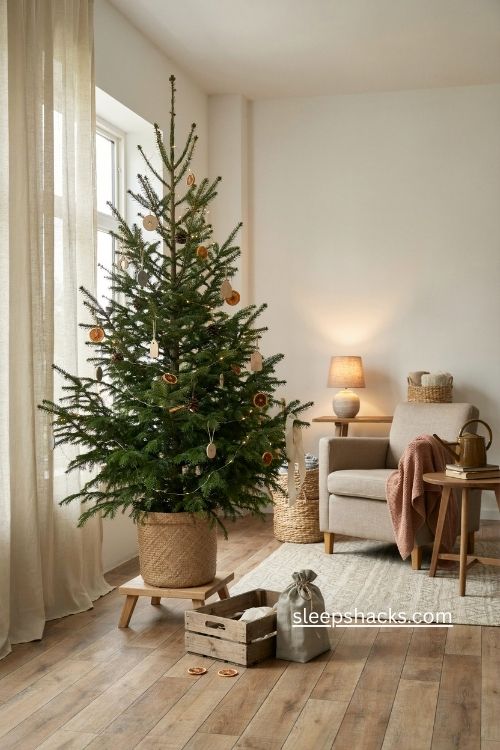
Renting is a clever option if you love the idea of a living tree but have no garden. A local company delivers the tree to your door, then picks it up after the holidays to care for it until next year. It’s a nice way to enjoy the season without the commitment.
Rental usually costs more than buying because the company takes on the maintenance, so compare a few local services before you decide. Ask how long they keep the trees and what happens when one is too big. Order early, since popular delivery slots tend to fill up quickly.
6. Try an Indoor Norfolk Island Pine
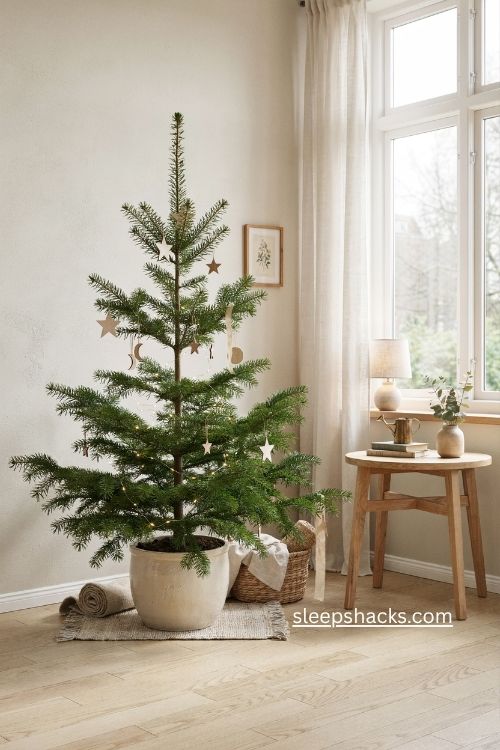
Norfolk Island pines are a lovely choice for small spaces. Because they’re meant to live indoors, you can keep one in your home or office all year and simply dress it up for the holidays. It has the soft, tiered branches of a miniature evergreen.
Choose a lightweight set of ornaments, like paper stars or tiny wooden shapes, since the branches are delicate. Place the plant near a bright window and water it when the top of the soil feels dry. After the holidays, remove the decorations and let it go back to being a houseplant.
7. Plant a Christmas Tree Forest
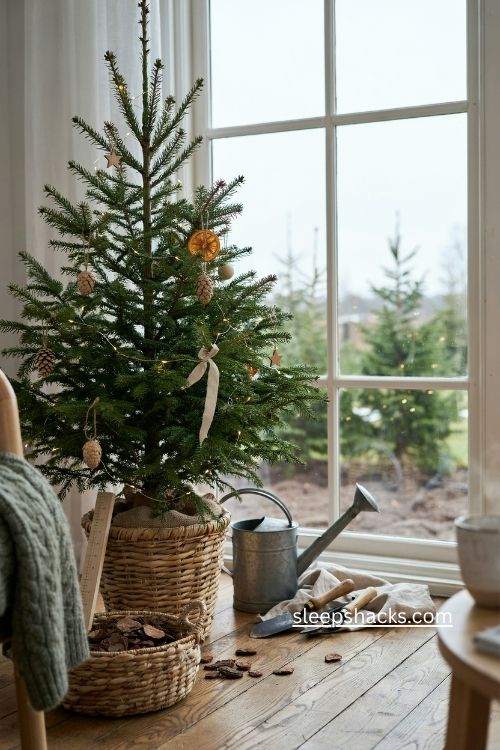
If you have a yard, a potted tree can become the start of your own little forest. The trick is to keep it indoors for only a week or two, water it generously, then move it outside until the soil softens in spring and you can plant it.
Pick a species suited to your area, and choose a tree with a decent-sized root ball that isn’t frozen. Plant it no deeper than it grew in the pot, mulch around it, and stake it against strong winds. It’s a beautiful tradition to measure how much it has grown each December.
8. Care for Your Cut Tree Properly
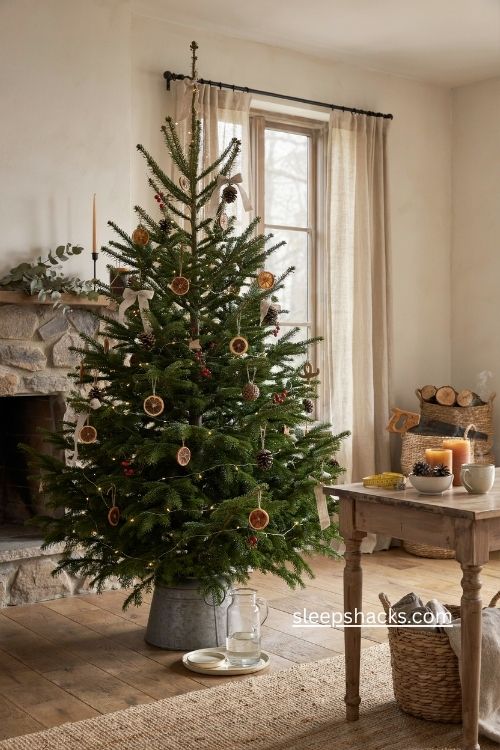
A cut tree stays fresh longer when you treat it well from the first day. Make a fresh cut at the base of the trunk before you put it in water, and fill the stand right away. Then keep checking the water every day, since trees can drink a surprising amount.
Place the tree away from heating vents, fireplaces, and radiators so it doesn’t dry out. A tree that stays hydrated holds its needles and its scent for much longer. Decide before you buy where it will go, and measure the space so you don’t have to trim it twice.
9. Make a DIY Tree From What You Own
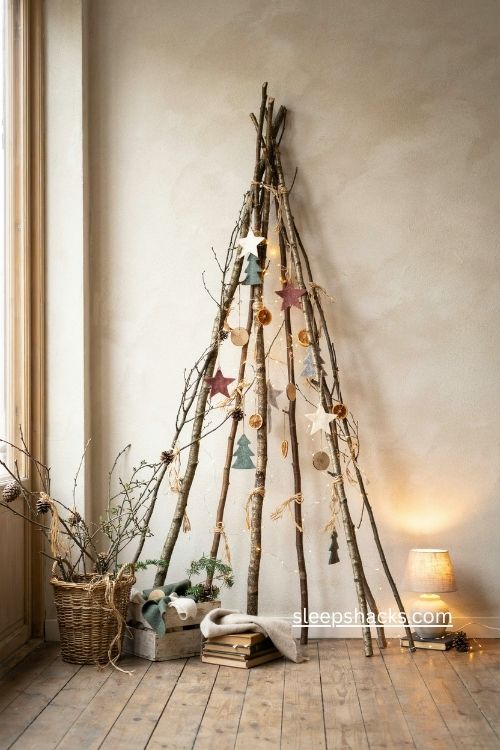
A homemade tree can be just as charming as a real one. People build them from stacked books, scrap paper, felt, metal coat hangers, or even a collection of sticks tied together. The best part is that it costs almost nothing and creates no waste.
A stick tree leaning against a wall, hung with a few small ornaments and a string of lights, looks surprisingly elegant. Gather branches you find on a walk, or save the trimmings from your own garden. Take it apart in January and store the pieces for next year.
10. Let Houseplants and Wreaths Take the Spotlight
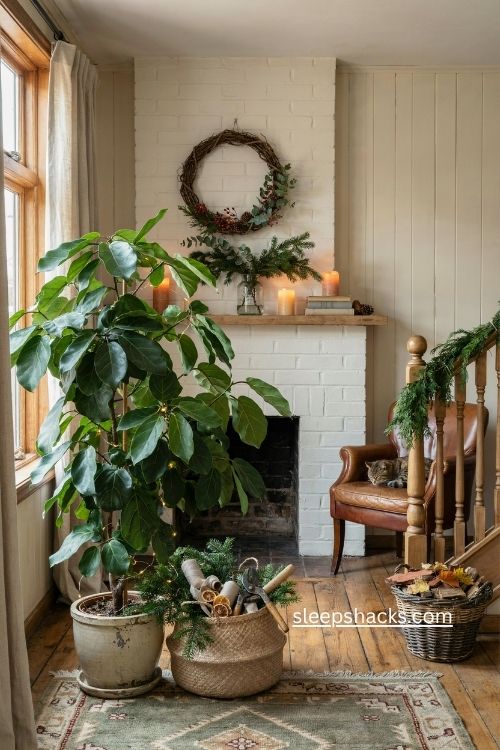
You don’t always need a tree to feel festive. A large houseplant wrapped in warm white lights and a few ornaments can fill the same corner. Wreaths, branches, and simple cuttings bring in the same fresh scent and holiday feeling with much less fuss.
Foraging for greenery on a short walk is a lovely way to gather materials for a DIY wreath. Tuck a few sprigs into a vase on the mantel, or weave them through a staircase banister. Everything you use can go straight back to the compost when the season ends.
11. Decorate With Natural Materials

Natural decorations suit an organic tree perfectly. One organic farm decorates its display trees with wood, glass, feathers, and paper chains, and the result feels soft and handmade. Garlands of popcorn, cranberries, and dried orange slices add color and can be composted later.
Thread them onto cotton cord or hemp twine with a needle, and keep them dry between seasons if you plan to reuse them. Tie a few pinecones and cinnamon sticks to the branches with jute string. Stick to a simple palette of cream, red, and green for a polished look.
12. Make Your Own Tinsel and Ornaments

Glitter and plastic tinsel look sparkly, but they’re a lasting problem. Glitter is a microplastic that can take about 1,000 years to break down, so it’s best to skip it. Handmade options are kinder and far more personal.
Cut tinsel from paper or old fabric and fringe the edges by hand. Fold origami stars from recycled paper, or sew small ornaments from worn denim. Make a few every year and soon your tree will be full of keepsakes. Store them in a shoebox with tissue between layers.
13. Switch to LED Lights
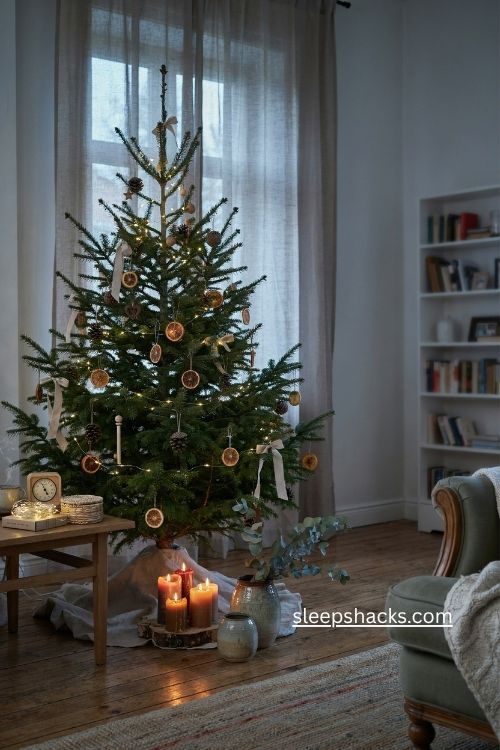
Lights are one of the easiest places to save energy. LED strings use up to 95 percent less electricity than traditional bulbs, and they last far longer, so you’ll replace them less often. Warm white LEDs also give a soft, candlelike glow.
Put your lights on a timer so they switch off at bedtime. Wrap them from the trunk outward along each branch for an even look, and test each strand before you hang it. Store them wound around a piece of cardboard so they don’t tangle.
14. Give Your Tree a Second Life
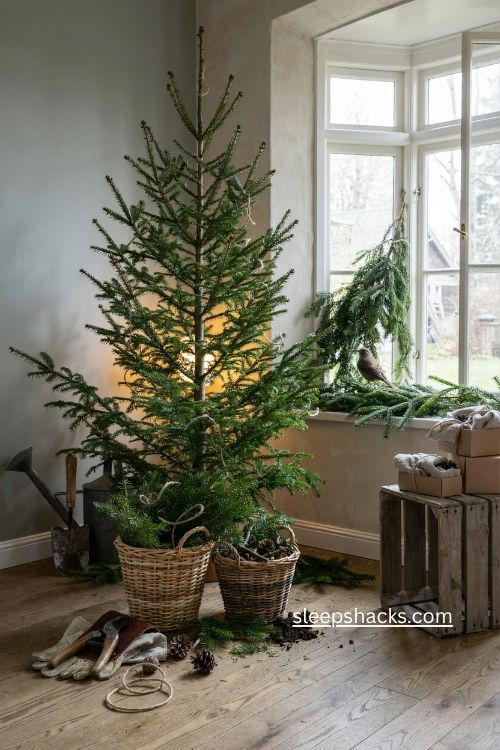
When the holidays are over, a real tree can keep being useful. Many towns offer curbside pickup or drop-off points that turn trees into mulch for parks and trails. You can also chop it up for the compost heap, use the branches to protect garden beds from frost, or lay them in a quiet corner as shelter for small animals.
Only repurpose a tree that is certified organic, and make sure every bit of decoration is removed first. Check your local rules before you set it out, and never leave it on the roadside outside of collection days.
Final Thoughts
A Christmas tree is easy to think of as a decoration, something that sits in the corner and gets taken away. But every tree has a story, from the soil it grew in to the hands that tended it to the place it ends up afterward.
Seen that way, choosing an organic tree is less about perfection and more about paying attention. One tree is a small vote for the kind of farming, community, and holiday you’d like to see more of. And the best part is that it still smells wonderful.
Frequently Asked Questions
Q: What makes a Christmas tree organic?
An organic tree is grown without synthetic pesticides, and the farm is inspected each year by a certification body. Weeds are usually managed by mowing, mats, or grazing animals instead of chemical sprays.
Q: Is a real Christmas tree better than an artificial one?
Sources generally say a real tree is the eco-friendlier choice, and a living tree is better still. An artificial tree can become the greener option only if you reuse it for many years.
Q: What should I do with my organic Christmas tree after the holidays?
Check for local curbside collection or drop-off points, or chop it up for compost, mulch, or garden frost protection. Remove every decoration first, and avoid dumping it in the woods.