

If your kitchen feels a little too polished and not quite lived-in, you’re not alone — a lot of homes end up with cook spaces that look great in photos but never quite feel like the heart of the house.
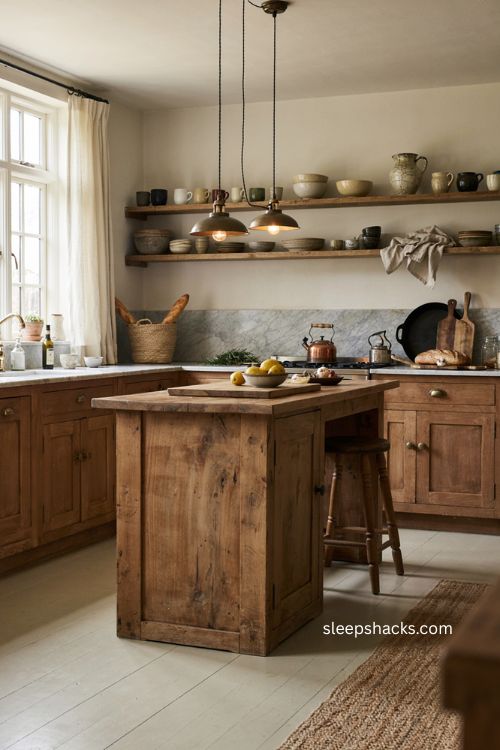
Rustic kitchens solve that problem by leaning into natural materials, a bit of imperfection, and details that feel collected over time rather than bought all at once. This style works whether you’re in a countryside cottage, a mountain cabin, or a regular suburban house, since the key elements — wood, stone, and a warm neutral palette — adapt to almost any setting. Here are 15 rustic kitchen ideas to bring that cozy, welcoming charm into your own space.
1. Layer in Reclaimed Wood
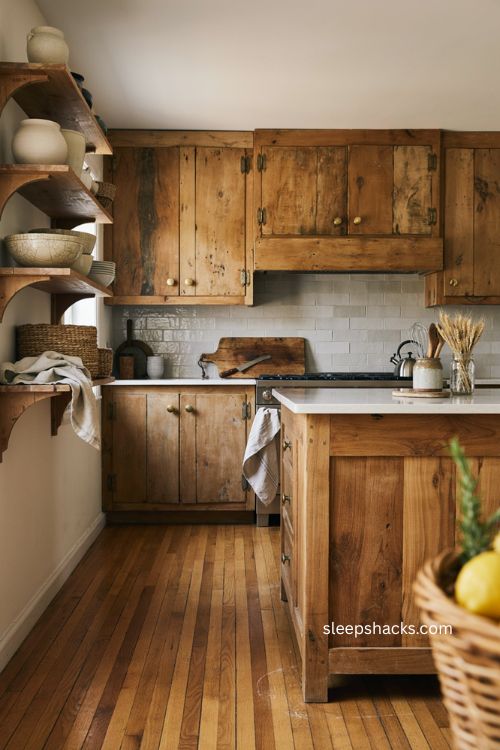
Reclaimed wood brings instant character to a kitchen, whether it’s used for cabinetry, open shelving, or a statement island. The nicks, grain variations, and slightly weathered look are exactly what make reclaimed pieces feel more interesting than brand-new lumber. Pairing it with a lighter countertop, like white marble or quartz, keeps the wood from making the whole room feel too dark or heavy. This is a great option if you want a kitchen that feels like it has real history, even in a newer build.
2. Wrap the Range Hood in Wood
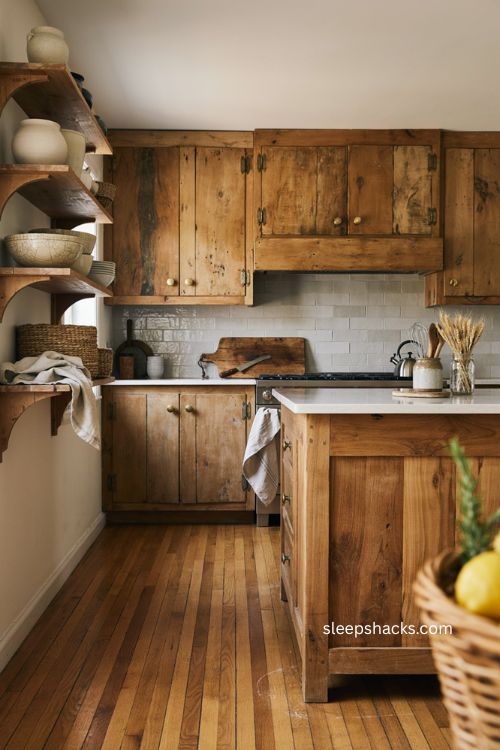
A wood-wrapped range hood turns a purely functional appliance into a real design feature. This detail pairs beautifully with painted cabinets in soft greens or blues, since the wood adds warmth against the cooler cabinet color. It also works well in a more modern rustic kitchen, where sleek marble countertops balance out the rougher wood texture. This is one of those details that photographs beautifully and tends to become the visual anchor of the whole room.
3. Add Exposed Ceiling Beams
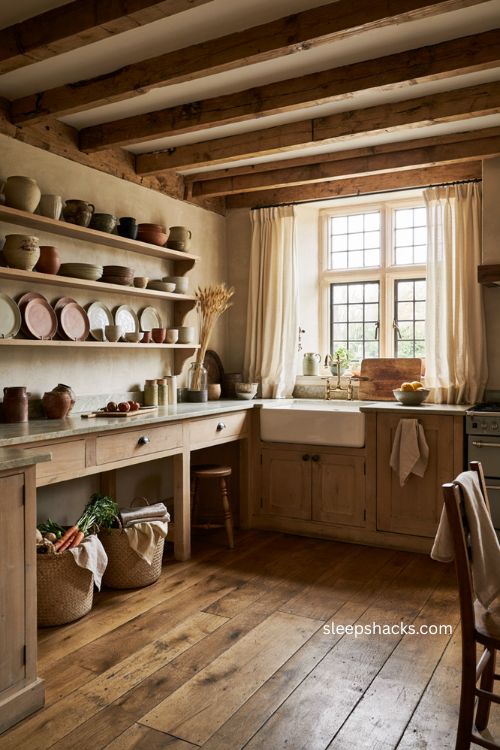
Exposed wooden beams overhead bring rustic charm to a kitchen without requiring any change to the cabinets or countertops below. This detail works especially well in a kitchen with higher ceilings, since the beams add architectural interest without making the space feel lower or more closed in. Pairing beams with a farmhouse sink and open shelving completes the cozy, cabin-inspired look. It’s a strong choice if you’re doing a larger renovation and want the ceiling to contribute to the overall style.
4. Install a Farmhouse Sink
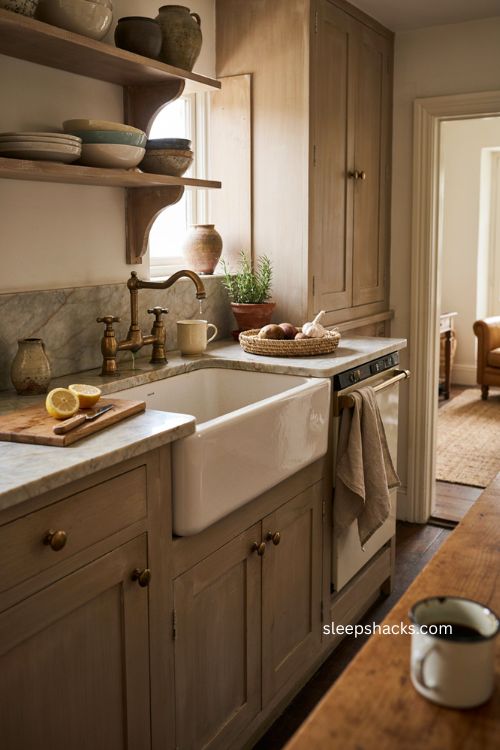
A classic apron-front farmhouse sink is one of the most recognizable elements of rustic kitchen design, and it holds up well to daily use like washing dishes or rinsing produce. Pairing it with an unlacquered brass or bronze faucet adds a bit of shine that only gets prettier as it develops a natural patina over time. This detail works in nearly any rustic sub-style, from cottage to mountain lodge to modern farmhouse. It’s a worthwhile investment if you’re already updating your kitchen’s plumbing and fixtures.
5. Choose Shaker-Style Cabinets
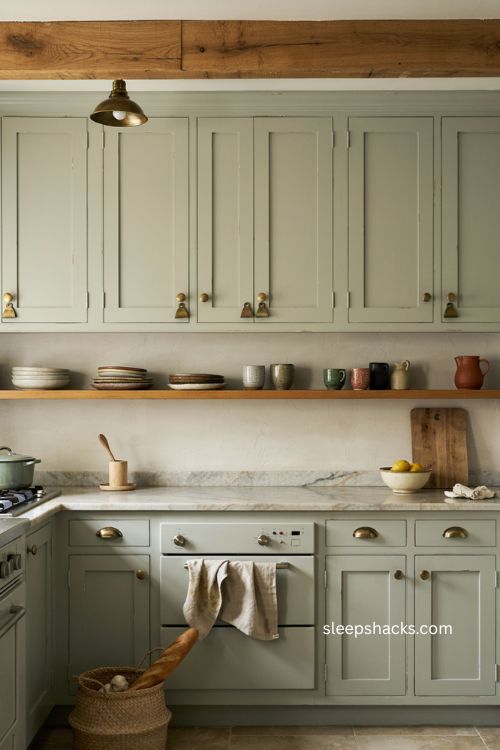
Shaker cabinet doors bring a classic, understated look that pairs naturally with rustic elements like wood beams or stone countertops. Painting them in a soft, earthy shade — sage green, muted blue, or warm gray — keeps the overall look feeling calm rather than busy. This style tends to age well since it doesn’t lean too hard into any particular design trend. It’s a strong foundation to build the rest of your rustic kitchen around, whether you go more countryside or more modern with the details.
6. Add Open Shelving for Display
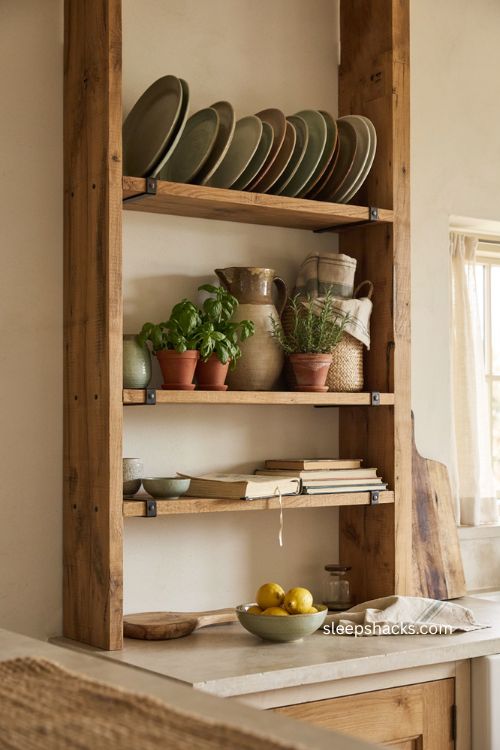
Open shelving lets you display dishware, pitchers, and collected ceramics instead of hiding everything behind cabinet doors. This detail is especially effective in a rustic kitchen, since the slightly imperfect, personal arrangement of items adds to the collected-over-time feel the style is known for. Measuring your tallest pieces before installing the shelves ensures everything fits without needing to rearrange later. A few plants or a stack of well-worn cookbooks round out the display nic.
7. Bring In Natural Stelyone
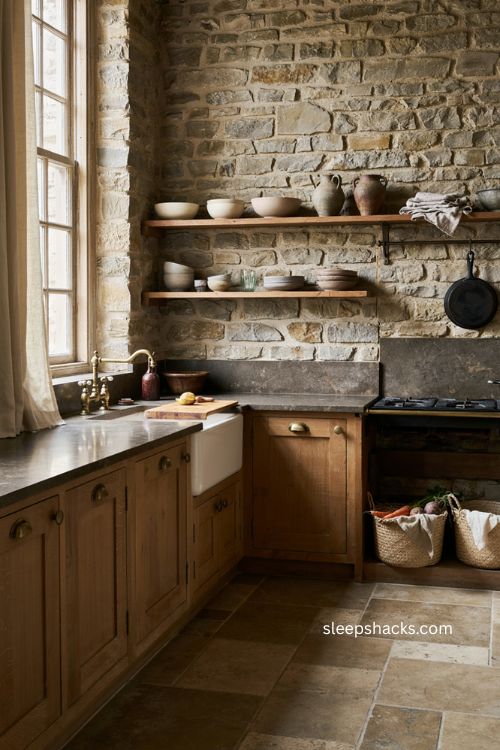
Natural stone countertops or backsplash tile add texture and an organic, earthy quality that pairs beautifully with wood cabinetry. Soapstone in particular develops a rich patina over time, which only adds to the rustic charm rather than detracting from it. Stone flooring, whether flagstone or a more rustic tile, works especially well in a kitchen with a countryside or cabin theme. This material choice tends to be a bigger investment, but it adds real longevity and character to the space.
8. Go Bold With a Statement Backsplash
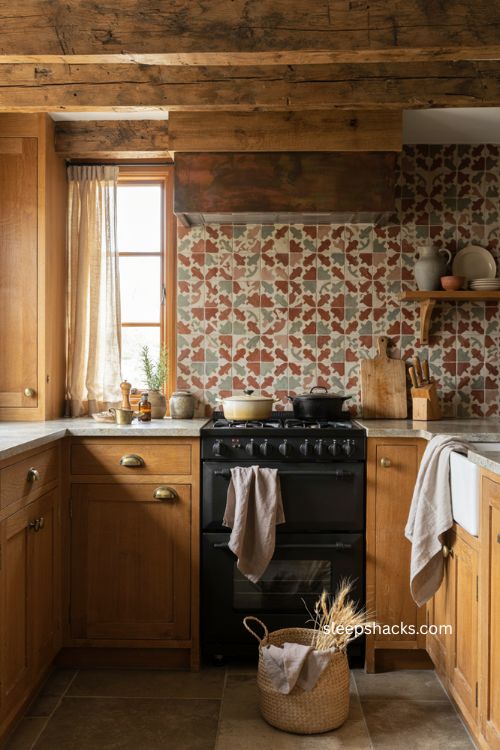
A patterned or graphic tile backsplash gives a rustic kitchen a bit of unexpected personality without straying from the overall style. Choosing a design with earthy or muted tones keeps the pattern from clashing with wood cabinetry or stone countertops nearby. This detail works particularly well behind a stove or range, where it becomes a natural focal point. It’s a good way to add visual interest to an otherwise simple, neutral kitchen.
9. Add a Wooden Dining Table as an Island
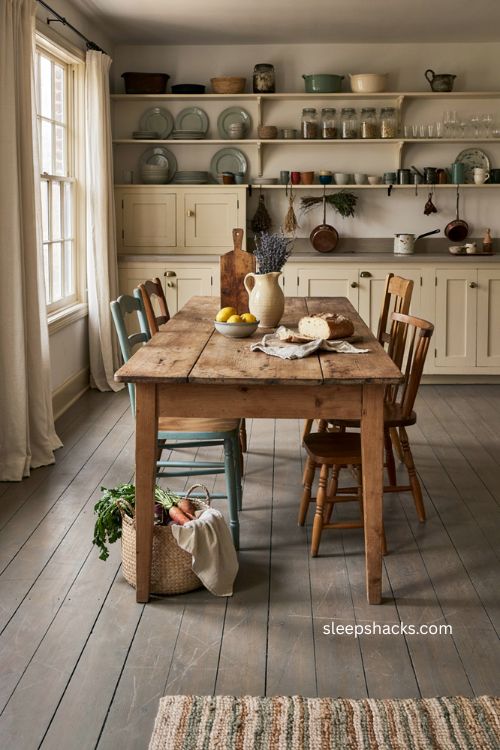
Instead of a built-in island, consider using a wooden farmhouse table as a freestanding, movable alternative. This approach fits the unfitted kitchen trend, which leans into a collected, non-matching look rather than a single cohesive set of cabinetry. A table like this also gives you more flexibility, since it can be moved or repurposed if your needs change down the line. Pairing it with mismatched or vintage-style chairs adds even more personality to the space.
10. Mix Metal Finishes
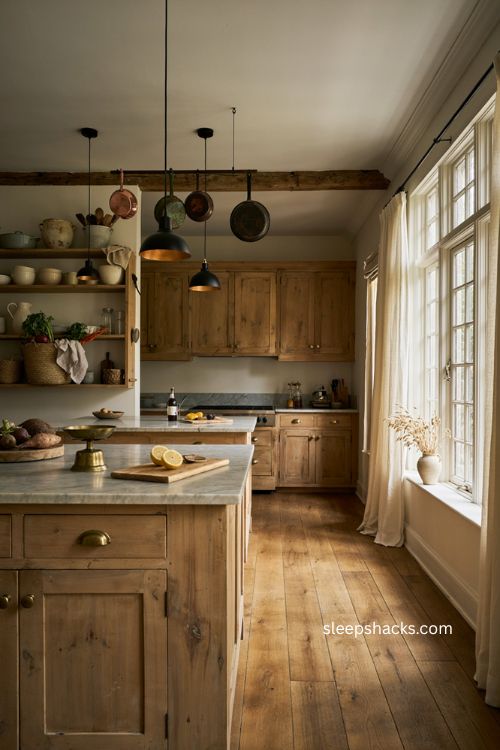
Combining a few different metal finishes, like brass hardware with black light fixtures, adds depth and prevents a rustic kitchen from feeling too uniform. This works especially well when paired with reclaimed wood and natural stone, since the mixed metals echo the same “collected over time” feeling. A hanging pot rack in aged copper or wrought iron is a classic rustic detail that also adds function. Just keep the palette limited to two or three finishes so it doesn’t start to feel scattered.
11. Choose Wide-Plank or Reclaimed Flooring
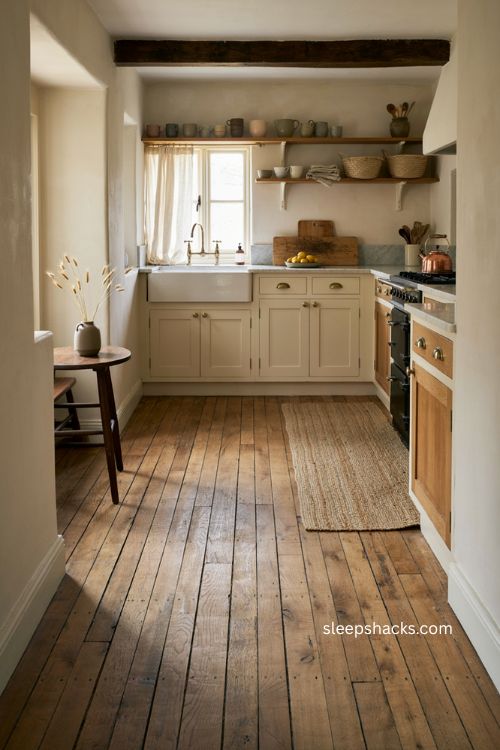
Wide-plank hardwood floors, especially ones with visible grain, nicks, or a slightly weathered finish, ground a rustic kitchen in warmth and texture. Original or reclaimed flooring adds the most authentic character, though newer engineered wood designed to mimic that aged look works well too. This flooring choice pairs naturally with wood cabinetry, though it also looks great as a contrast against painted white or pale gray cabinets. It’s one of the foundational choices that sets the tone for the whole kitchen.
12. Add a Statement Pendant Light
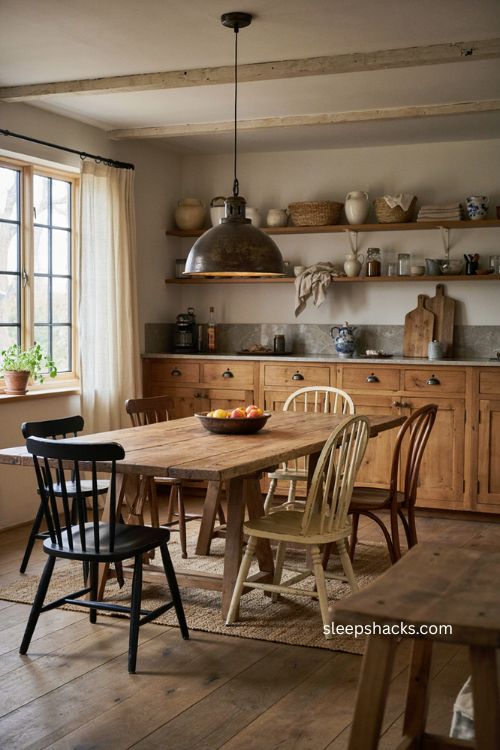
A dramatic pendant light or a pair of lanterns over the island brings both function and personality to a rustic kitchen. Choosing a fixture in aged metal, wrought iron, or a woven material like rattan reinforces the natural, textural feel the style is known for. This detail works especially well over a farmhouse table or kitchen island, where it becomes a natural visual anchor. It’s a relatively small investment that makes a noticeable difference in how finished the space feels.
13. Skirt Your Cabinets Instead of Using Doors
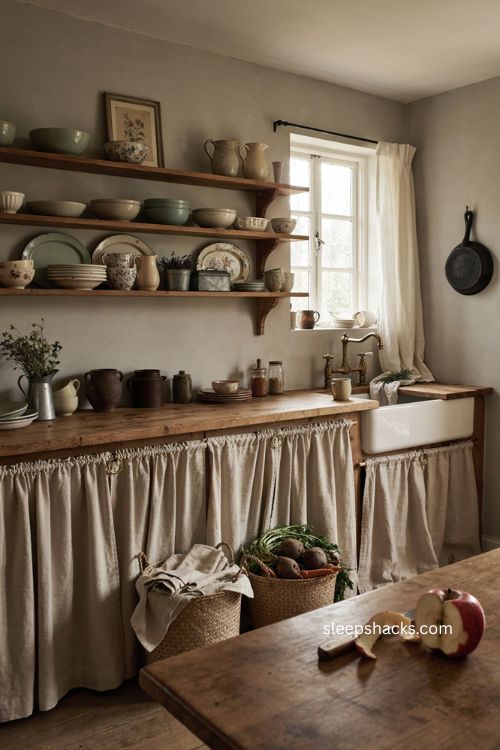
Fabric skirting in place of lower cabinet doors brings a soft, cottage-inspired touch to a rustic kitchen. Burlap gives a more farmhouse feel, while a floral or gingham pattern leans slightly more feminine and cozy. This detail is also a practical option if you’re working with an older kitchen and don’t want to replace the cabinetry itself. It’s an easy, budget-friendly way to add texture and personality without a full renovation.
14. Display Kitchenware Instead of Hiding It
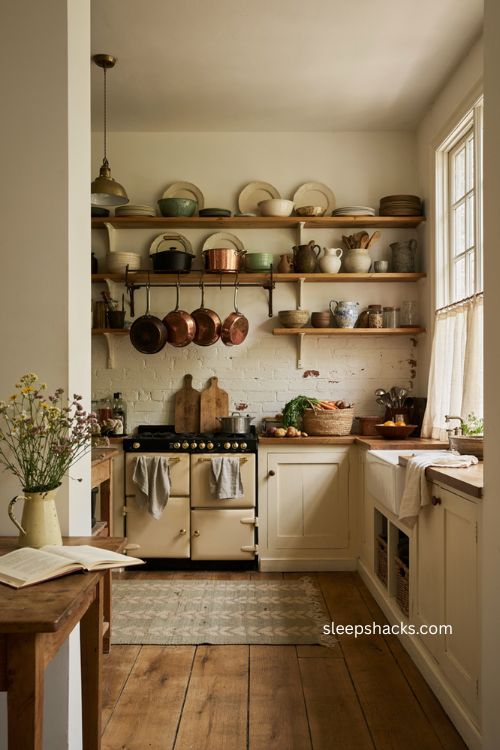
Rather than tucking everything into closed cabinets, hang pots on a rack, prop chopping boards against the wall, or fill open shelves with everyday dishware. This approach is central to rustic style, since the visible, slightly imperfect arrangement of tools and dishes adds to the lived-in feel. A collection of vintage pitchers or ironstone pieces displayed on open shelving turns practical storage into a decorative feature. It’s a good way to add personality to a kitchen without buying anything new — just rearranging what you already have.
15. Contrast Wood Tones for Depth
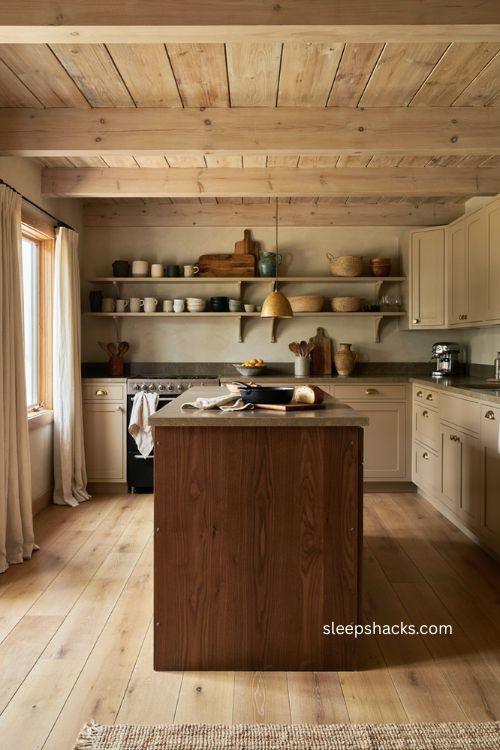
Pairing a lighter wood ceiling or flooring with a darker stained island, or vice versa, adds depth and visual interest to a rustic kitchen without introducing an entirely new material. This contrast keeps the space from feeling monotonous, especially in kitchens with a lot of wood throughout. A concrete or stone countertop bridges the two wood tones nicely, adding a modern touch to an otherwise traditional palette. This detail works well in mountain or cabin-style kitchens where wood tends to dominate the overall look.
Final Thoughts
Honestly, the beauty of rustic kitchen design is that it doesn’t demand perfection — a few nicks in the wood, some mismatched dishware, and a slightly uneven stone counter are all part of the charm. Start with one or two foundational choices, like a farmhouse sink or reclaimed flooring, and build the rest of your details around them. Whether you’re renovating from scratch or just adding a few rustic touches to an existing kitchen, the goal is a space that feels warm, welcoming, and a little bit collected over time. Give it a try, and your kitchen might just become the room everyone gathers in.
Frequently Asked Questions
Q: What makes a kitchen look rustic?
Natural materials like wood and stone, a neutral or earthy color palette, and details like exposed beams, open shelving, and a farmhouse sink all contribute to a rustic look.
Q: Can a modern kitchen still feel rustic?
Yes, pairing rustic elements like reclaimed wood or stone with sleek finishes, like stainless steel appliances or minimalist hardware, creates a modern rustic blend that feels current but still warm.
Q: What colors work best in a rustic kitchen?
Earthy neutrals, warm wood tones, and muted greens or blues are all popular choices that complement the natural materials rustic kitchens are known for.