

Boho thanksgiving table décor sounds simple until you actually sit down to plan one, and then it gets confusing fast. Pinterest shows you macramé runners next to gold chargers next to dried pampas grass, and none of it tells you how those pieces are supposed to work together on an actual dinner table.
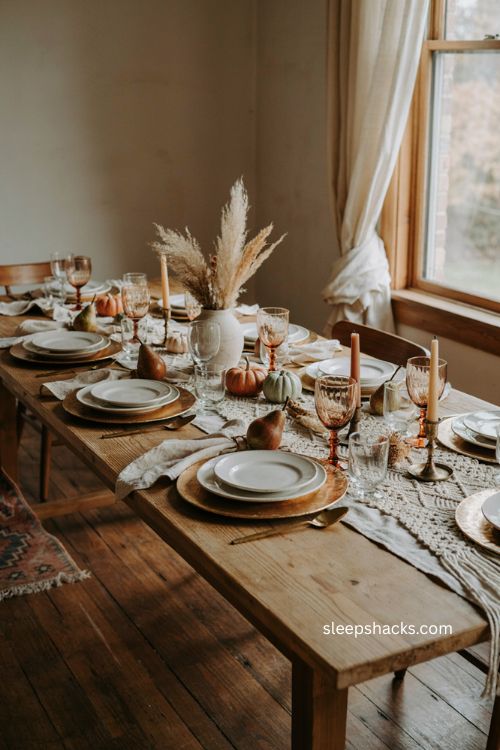
The boho style thrives on mixing, but mixing without any structure just looks cluttered instead of curated. The good news is that a boho Thanksgiving table follows a pretty simple internal logic once you see it: earthy neutrals as the base, natural textures layered on top, and one or two organic centerpiece elements doing most of the visual work. Here are fifteen ideas that make that mix feel intentional instead of chaotic.
1. Start with a Macramé or Woven Table Runner
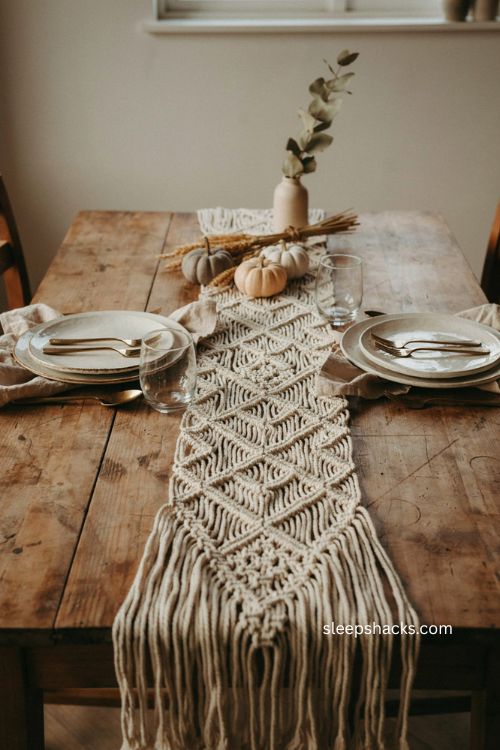
A macramé table runner is basically the boho thanksgiving table starter kit, since one piece instantly signals the style before you add anything else. Choose one in a natural cream or beige tone rather than anything dyed, so it reads as textural rather than colorful. Let the fringe hang loosely off the edge of the table instead of tucking it under, which is part of what gives macramé its relaxed, undone feel. If you don’t own one, a chunky woven table scarf works the same way and is easier to find secondhand. Either option replaces a traditional linear runner and immediately loosens up the whole table’s structure.
2. Layer in Wooden or Gold Chargers
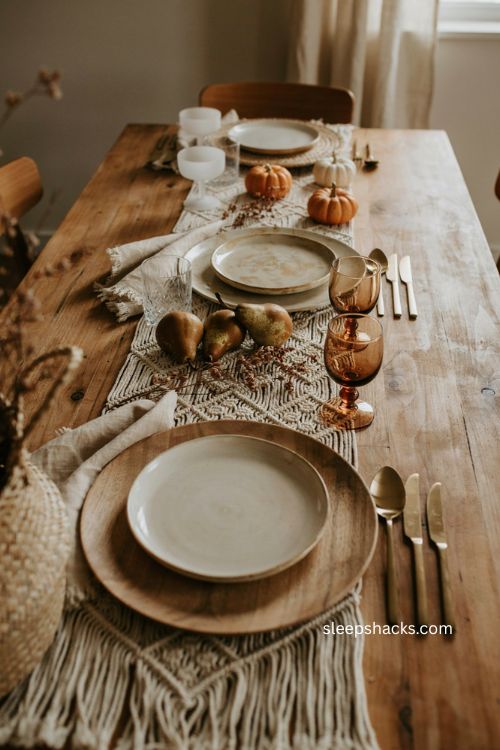
Chargers do more for a boho table than people expect, since they add a warm base layer under every plate without adding another pattern to keep track of. Wooden chargers lean rustic, while antique gold ones add a bit of shine against all the natural texture surrounding them — either works, and you can even alternate the two down the table for a mismatched effect. Set the charger down first, then build the rest of the place setting on top of it, so it reads as a foundation rather than an afterthought. A rattan charger is a nice middle ground if you want warmth without committing to solid wood.
3. Mix Mismatched Vintage Glassware
One matched set of glasses is the fastest way to make a boho table look stiff, so let the glassware be intentionally mismatched instead. Pair a vintage coupe glass at one setting with a simple stemmed wine glass at the next, mixing shapes and even slight color tints across the table. Thrift stores and estate sales are the easiest source for this, since nobody needs six of the same glass to pull it off — three or four different styles repeated in pairs looks more collected than chaotic. The slight imperfection is the point here; a boho table setting is supposed to look gathered over time, not bought in one trip.
4. Bring in Dried Pampas Grass
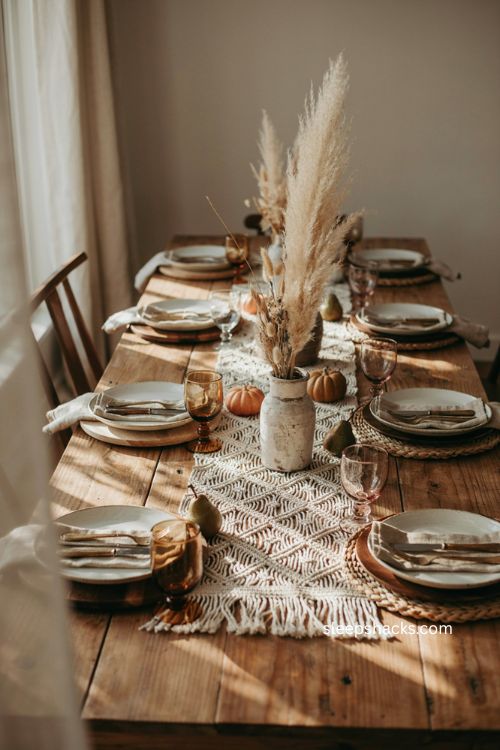
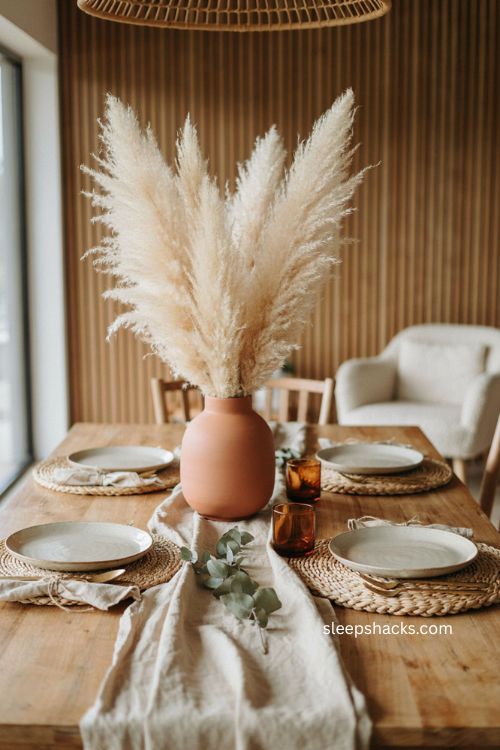
Pampas grass is close to a signature plant for boho decor, and a few tall stems in a simple vase instantly read as bohemian without any extra styling. Its height works in your favor here, since the wispy plumes stay thin enough not to block sightlines across the table the way a dense floral arrangement would. Place it slightly off to one side rather than dead center, which keeps the whole look feeling relaxed instead of formal. If pampas isn’t available locally, dried wheat or bunny tail grass gives a similar airy texture and holds up just as well through a long dinner.
5. Add White or Velvet Pumpkins
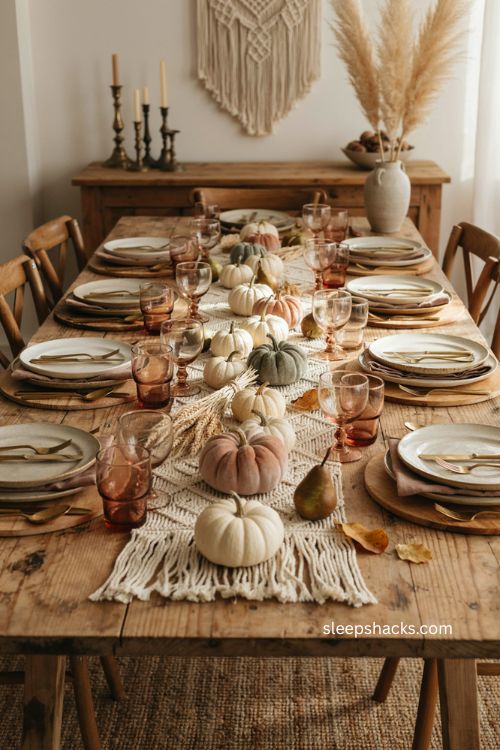
White pumpkins are the boho answer to the usual orange ones, since their neutral color fits the earthy palette without pulling focus from anything else on the table. Velvet pumpkins in cream, blush, or sage add a bit more texture if you want something softer than a smooth painted surface. Scatter a few different sizes along the runner rather than lining them up evenly, which keeps the arrangement feeling natural rather than staged. They also double easily as place card holders — just tuck a small folded card into the pumpkin’s stem for a detail that costs nothing extra.
6. Choose an Earthy, Neutral Color Palette
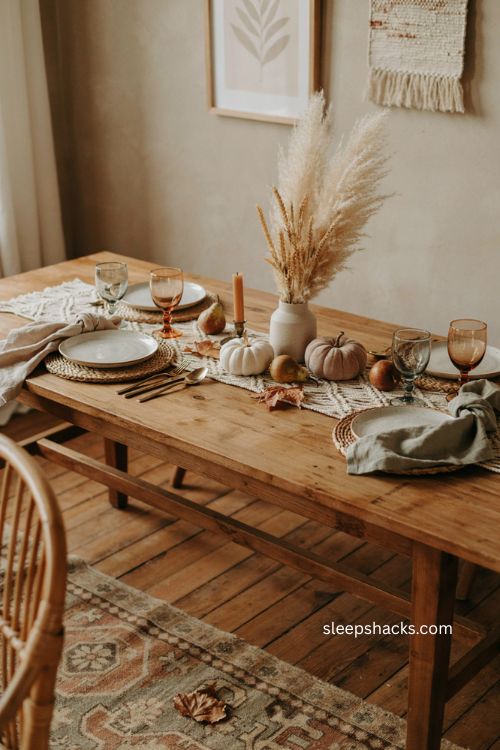
The easiest way to keep a boho table from feeling busy is to commit to one earthy palette before choosing a single item — think beige, ivory, rust, and soft green rather than five unrelated colors. Every piece you add, from napkins to florals, should pull from that same limited range, which is what lets you mix so many different textures without the table looking cluttered. A small pop of color, like a mustard candle or a blush pumpkin, still works as long as it’s the exception rather than the rule. Write your palette down before you shop, since it’s easy to get pulled toward whatever looks pretty in the store.
7. Incorporate Feathers for Texture
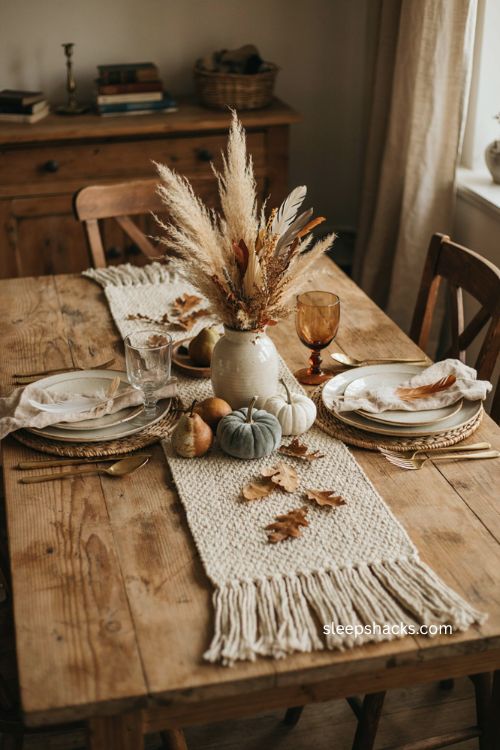
Feathers show up a lot in boho styling because they add movement and softness that hard materials like wood and ceramic can’t. A few tucked into the centerpiece, or laid loosely near each place setting, bring a natural texture that still feels appropriate for Thanksgiving’s harvest theme. Neutral tones — cream, tan, or soft grey — blend in more naturally than bright dyed feathers, which can tip the look toward costume rather than decor. They’re also inexpensive and easy to find at any craft store, making them one of the lowest-effort ways to add another layer to the table without much planning.
8. Use Woven Placemats Under Everything
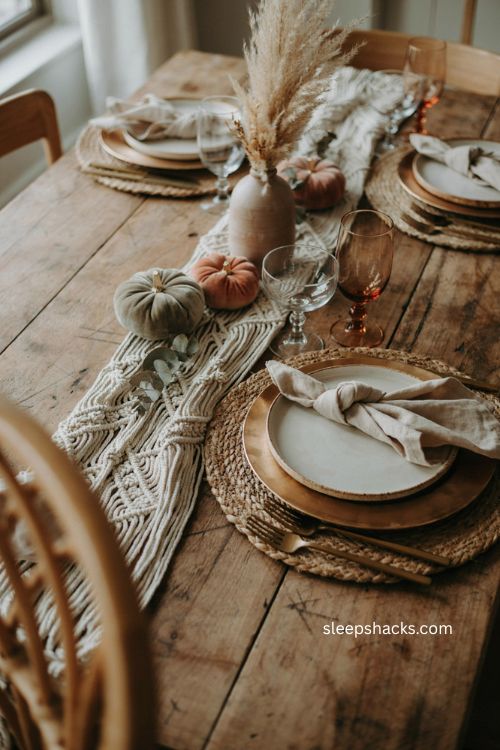
A woven placemat under each setting does the same job the runner does, just at a smaller scale — it adds texture and warmth without introducing a new color. Round woven placemats in a natural rattan or jute tone work especially well layered under a charger, giving the whole stack a slightly rustic, handmade look. If your table doesn’t have room for both a runner and individual placemats, choose one or the other rather than layering every texture at once. The goal is depth, not clutter, so let each element earn its spot instead of adding texture just because it’s available.
9. Skip the Symmetrical Centerpiece
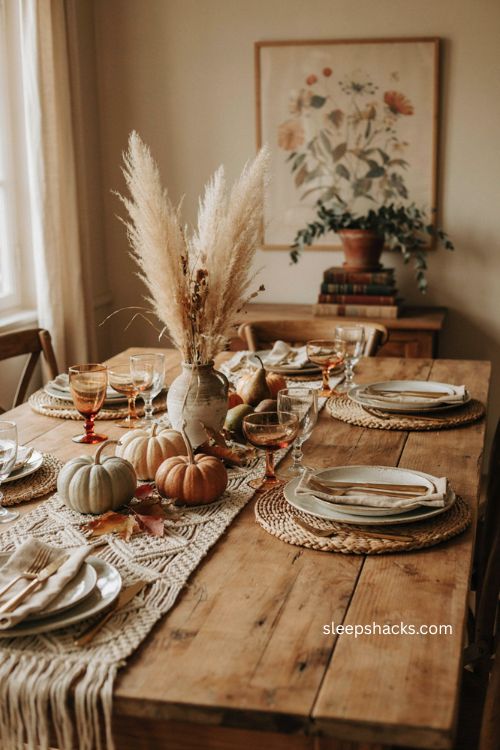
Boho design resists anything too matched or evenly spaced, so resist the urge to build one tidy centerpiece dead center on the table. Instead, cluster a few different elements — a vase of pampas, a couple of pumpkins, a scattering of dried leaves — slightly off to one side or spread loosely down the length of the table. This asymmetry is what makes a boho table feel gathered rather than arranged, like it came together naturally instead of from a diagram. If you’re used to formal centerpieces, this takes a bit of practice, but stepping back and adjusting by eye works better than measuring anything.
10. Add Dried or Wildflower Florals
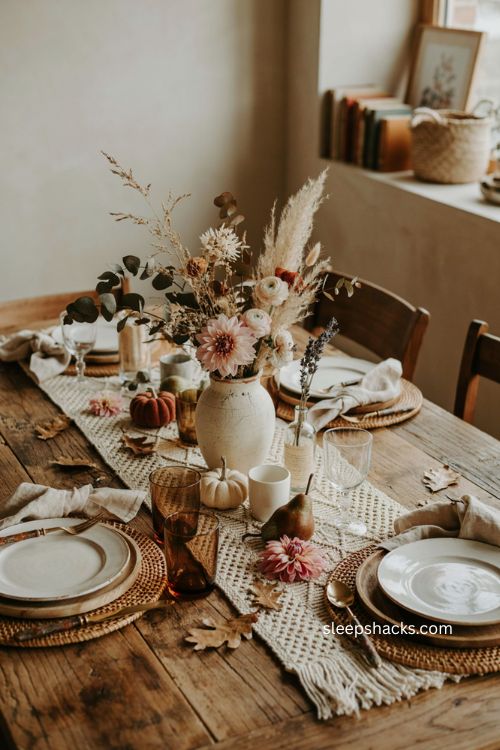
Skip anything that looks too polished or florist-perfect and reach for florals with a wilder, looser shape instead — dahlias, ranunculus, or dried eucalyptus all read as more boho than a tight rose bouquet. Mixing a few fresh stems with dried ones gives the arrangement more texture and also means it holds up longer if the dinner runs late. Display them in a vintage vase or even a repurposed bottle rather than anything too formal, since the container matters as much as the flowers themselves. Let a few stems fall loosely to the side instead of standing perfectly upright for a more natural finish.
11. Bring In Natural Wood Elements
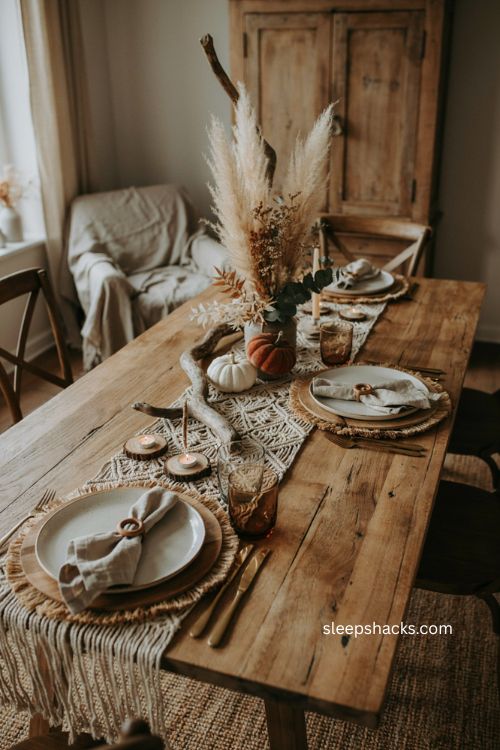
Wood grounds a boho table in a way that fabric and glass can’t, so look for opportunities to bring it in beyond just the table itself — a wooden charger, a small wood-slice place card holder, or a simple wooden napkin ring all do the job. Raw or lightly finished wood works better here than anything glossy or stained dark, since the natural grain is part of the appeal. If you have driftwood or a fallen branch from your yard, laying a piece down the center of the table alongside the other centerpiece elements adds height and texture for free.
12. Layer Linen Napkins in Earthy Tones
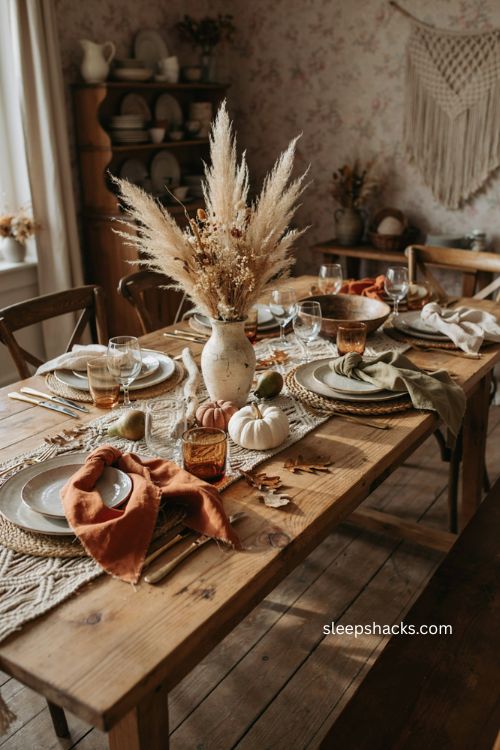
Skip white napkins here and reach for something in rust, olive, or warm beige instead, since a plain white napkin can look out of place against all the natural texture surrounding it. Linen with a slightly rough, unpolished texture fits the boho aesthetic better than anything crisp or heavily starched. Fold them simply and drape them over the plate rather than folding into a tight shape, which keeps the relaxed feeling going all the way down to the smallest detail. Mixing two or three different earthy tones across the table, rather than one uniform color, adds even more of that collected-over-time look.
13. Use Ceramic or Ribbed Vases
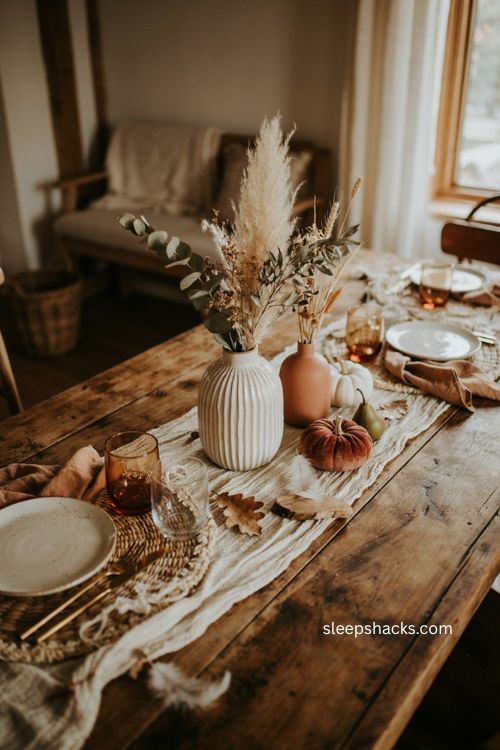
A textured ceramic vase — ribbed, hand-painted, or slightly irregular in shape — does more for a boho table than a plain glass one, since the vase itself becomes part of the decor rather than just a container. Look for warm white or terracotta finishes that match the rest of the palette, and don’t worry about finding a perfectly matched pair if you’re using more than one. Fill it with whatever florals or dried stems you’ve chosen and let a few stems spill slightly over the edge rather than standing at attention. A slightly imperfect, handmade-looking vase always reads more boho than anything mass-produced and flawless.
14. Light the Table with Warm, Unscented Candles
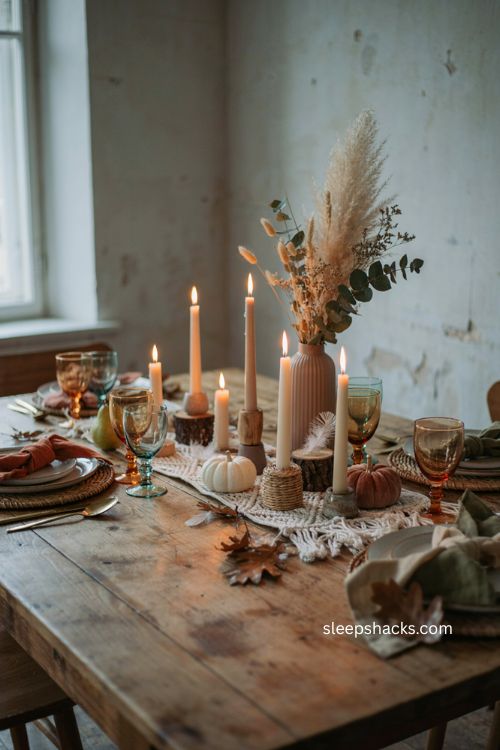
Candlelight matters just as much on a boho table as anywhere else, but the holders matter too — wood, glass, and wicker fit the aesthetic far better than anything sleek or metallic. Cluster a few candles of varying heights near the center rather than spacing them out evenly, which adds to the same asymmetrical feeling the rest of the table is going for. Keep them unscented so they don’t compete with dinner, and light them right before guests sit down so the wax has time to settle. A soft, warm glow is really what ties every other texture on the table together once the sun goes down.
15. Personalize with Handwritten Place Cards
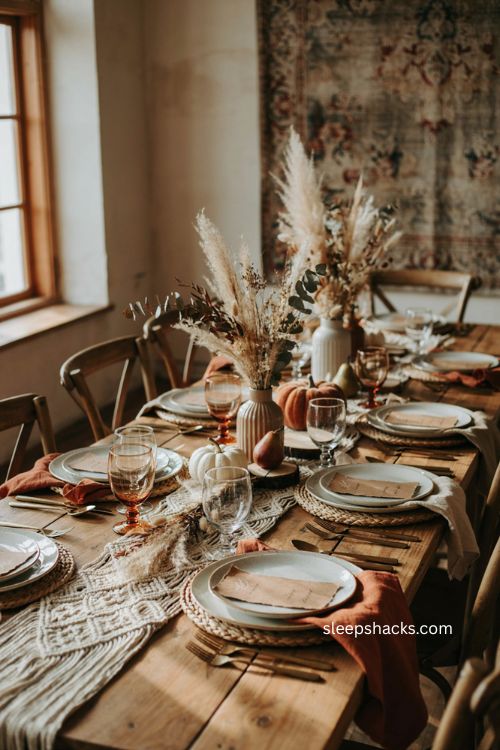
A handwritten place card is a small detail, but it fits the boho spirit of a table that feels personal rather than store-bought. Skip printed cards in favor of simple kraft paper or a small wood slice, with names written in a loose, casual script rather than anything formal. Tuck each one into a napkin fold, a mini pumpkin, or a sprig of dried grass instead of propping it flat against the plate. For larger gatherings this also solves a practical seating problem, while for smaller ones it’s an easy way to add one more layer of warmth without much extra effort.
Final Thoughts
However your boho thanksgiving table comes together, the goal was never perfection — it’s a style built on gathered, mismatched, slightly imperfect pieces, so give yourself permission to skip anything that feels forced. Start with the runner and one centerpiece element, then add texture from there until it feels right for your own table. What I love most about this style is how personal it ends up looking, since no two boho tables ever turn out quite the same. Whatever mix of macramé, pampas grass, and mismatched glass you land on, it’ll feel like yours. Here’s to a warm table and a house full of people glad to be sitting around it.
Frequently Asked Questions
Q: What colors work best for a boho thanksgiving table?
Earthy neutrals like beige, ivory, rust, and soft green form the base, with small pops of mustard or blush as accents. Sticking to one limited palette keeps all the mixed textures from feeling cluttered.
Q: What can I use instead of a traditional table runner for a boho look?
A macramé runner or a woven table scarf works well, since traditional linear runners can feel too structured for the style. Leaving the fringe loose adds to the relaxed, undone feel that defines boho decor.
Q: Do boho thanksgiving tables need fresh flowers?
Not at all — dried pampas grass, wildflowers, or a mix of fresh and dried stems all fit the aesthetic and last much longer through a long dinner. The looser, wilder shape matters more than whether the flowers are fresh.