

There’s a certain calm that comes from an all white Christmas tree — no clashing colors to balance, no theme to overthink, just layers of texture doing all the visual work.
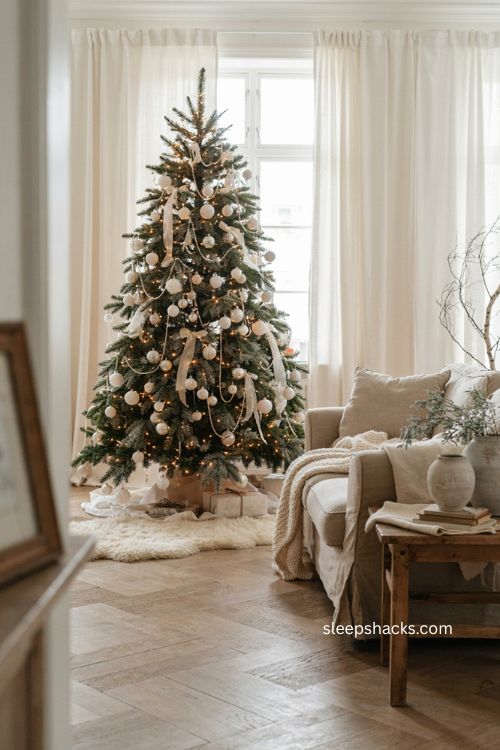
It’s proof that a limited palette doesn’t mean a limited look; between glossy baubles, velvet ribbon, pearls, and warm lights, a white tree can feel just as full and inviting as one covered in every color imaginable. Whether you’re starting with a flocked tree or dressing a plain green one entirely in white, these fifteen ideas show how many directions this single color can take.
1. A Classic White Tree Done Simply

Stick with white ornaments, white ribbon, and warm white lights, but don’t let “simple” mean “flat” — mix glossy and matte finishes so the tree still has depth even within one color. Place a few larger ornaments toward the center of the tree and save the smaller pieces for the outer branches, where they’ll read better against open space. A plain white or ivory tree skirt finishes the base without introducing any competing texture. This version works equally well whether your living room leans traditional or fairly modern.
2. Starting With a Flocked Tree
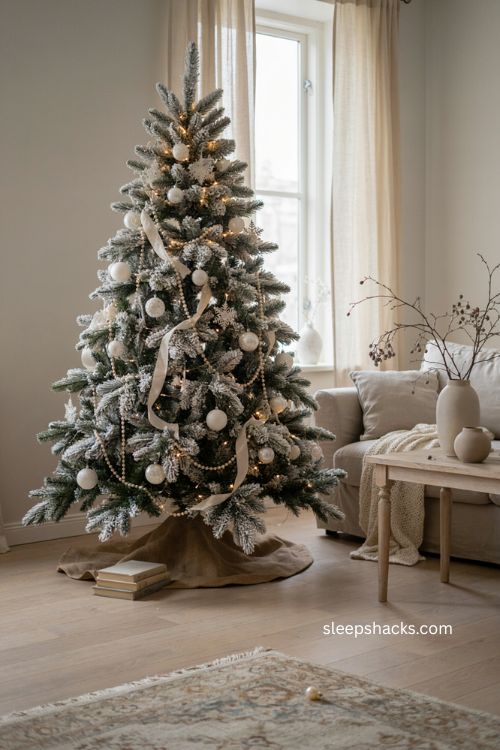
A flocked tree already looks like it’s been dusted with snow, which makes it one of the easiest starting points for this whole look. Layer in white glass ornaments, a few snowflake shapes, and strands of pearls so the decorations don’t just disappear into the snowy branches. White velvet ribbon adds a soft, slightly luxurious touch that photographs beautifully against the flocking. Keep the surrounding room fairly neutral so the tree itself remains the clear focal point rather than competing with a busier backdrop.
3. White With a Touch of Silver
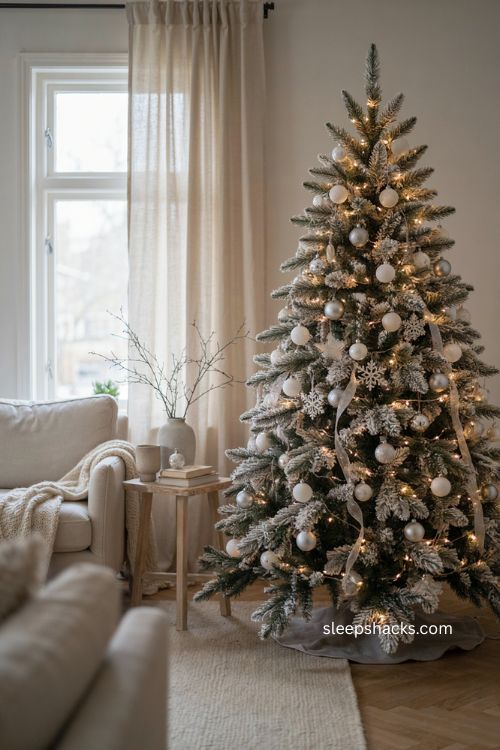
Keep white as the dominant color, then bring in silver sparingly through snowflake ornaments, a few metallic baubles, and a delicate ribbon woven through the branches. The goal is subtlety — you want the silver to catch the light rather than announce itself as a second major color. A silver-toned tree collar at the base ties the accent together without overwhelming the softer white palette above it. This combination comes alive in the evening, when the metallic pieces pick up the glow from the lights.
4. Warm Lights as the Secret Ingredient
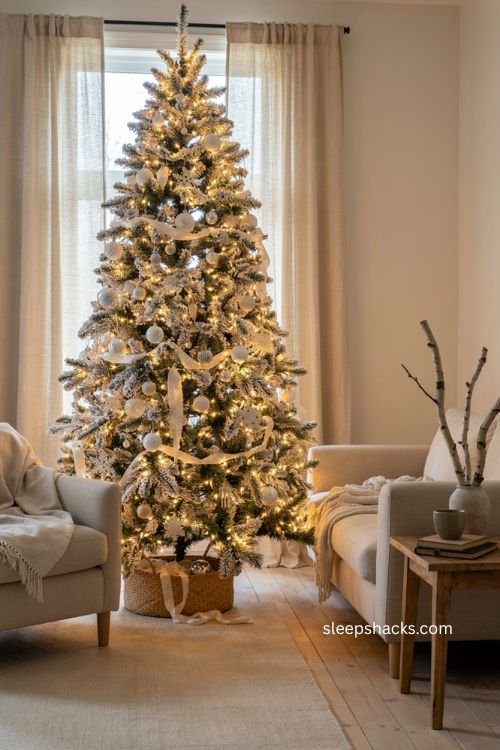
An all-white tree can start to feel a little cold or clinical under the wrong lighting, which is exactly why warm white bulbs matter so much here. Wrap the lights evenly through the branches before adding any ornaments, then layer white baubles, ivory ribbon, and a handful of textured snowflakes on top. The warmth from the lights creates a gentle contrast against the pale decorations rather than washing everything out. Keeping nearby furniture in cream, beige, or light wood tones extends that same cozy feeling into the rest of the room.
5. Velvet Ribbon That Cascades
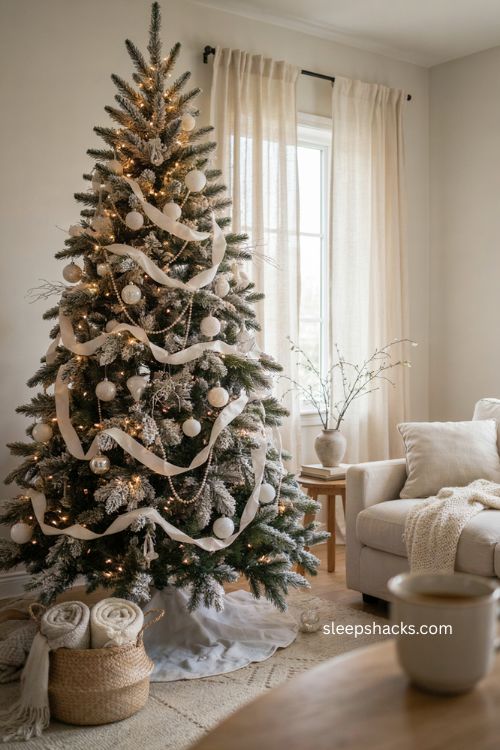
Rather than wrapping ribbon tightly and evenly around the tree, let wide white velvet fold and drape loosely between the branches for a softer, more luxurious effect. Fill in the open spaces with white ornaments in a mix of sizes and finishes so nothing feels too sparse. A few pearl strands or frosted branch picks add quiet detail without competing with the ribbon itself. This approach pairs especially well with a flocked tree, since the velvet’s texture blends naturally into the snowy branches instead of standing apart from them.
6. Pearls for Quiet Elegance
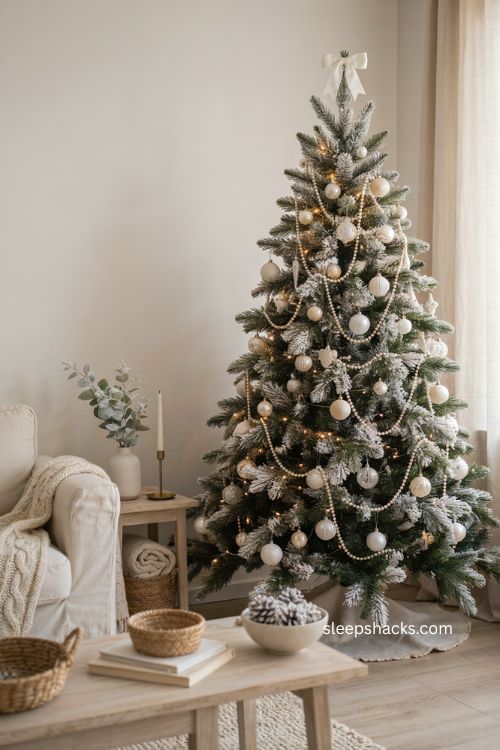
Long strands of faux pearls draped loosely around the tree, or tucked into shorter sections between branches, add a refined touch without introducing any new color. Pair them with white glass ornaments and pearl-finished baubles so everything feels connected rather than mismatched. Warm white lights underneath let the pearls catch a soft glow rather than a harsh shine. Keep the topper simple — a plain white bow or a small cluster of snowy branches finishes the look without pulling focus from the pearls themselves.
7. Snowflakes in Every Size
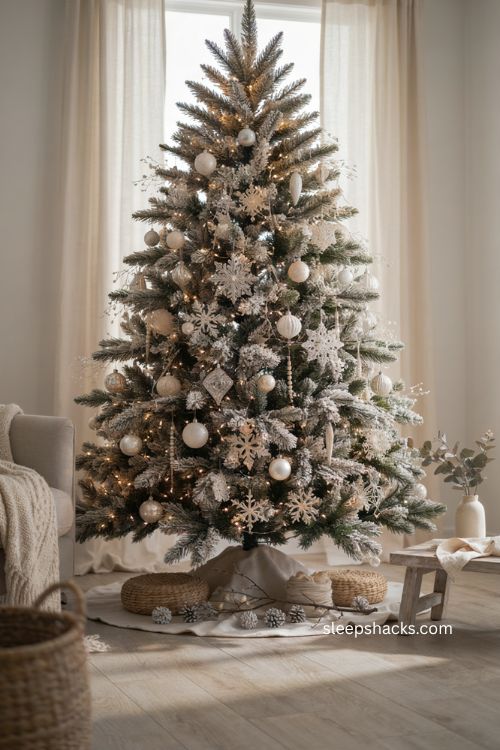
Building the tree around snowflake ornaments in a range of sizes creates an instant winter wonderland feel without needing to add any other color. Start with a white or flocked base and layer in warm lights before adding the snowflakes, mixing large statement pieces with smaller ones so the tree feels layered rather than repetitive. A few crystal-style ornaments tucked in between add sparkle while staying within the same palette. Finish with a white tree skirt and a bit of simple winter styling at the base to round out the theme.
8. A Minimalist Approach
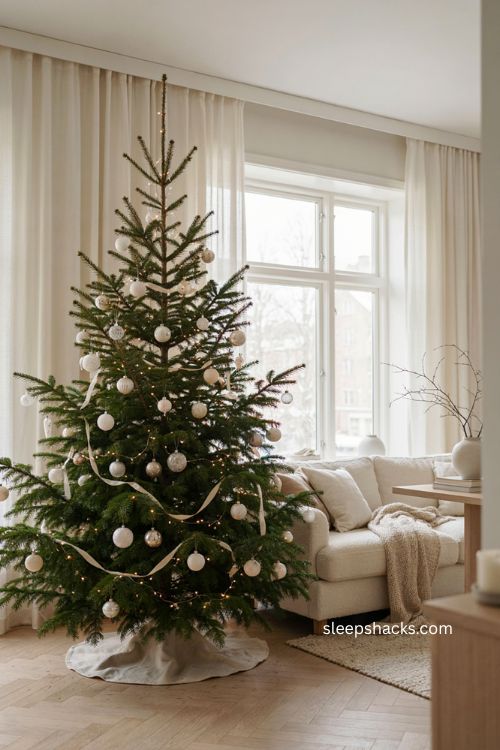
Sometimes the most elegant option is also the simplest — use fewer ornaments and let the natural shape of the tree stay visible through the branches. Choose white baubles in matte and satin finishes, add a thin ribbon or a few delicate hanging pieces, and let warm lights carry most of the visual interest on their own. Resist the urge to fill every branch; the open space is part of what makes this version feel calm and intentional. This restrained approach suits modern or Scandinavian-style rooms particularly well.
9. Oversized Bows Instead of Small Ornaments
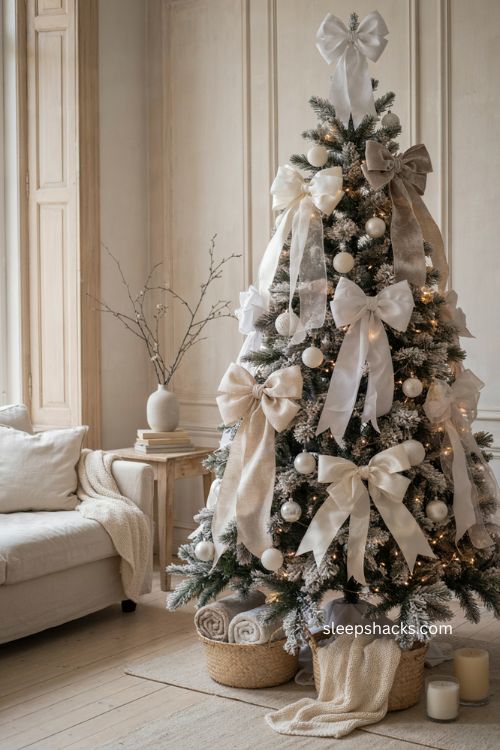
Rather than covering the tree in dozens of small pieces, place a handful of large white bows throughout the branches as the main statement. Satin, velvet, linen, or sheer ribbon each create a slightly different mood, so choose based on how formal or relaxed you want the tree to feel. Simple white baubles tucked between the bows help balance out the larger shapes without overcrowding them. A matching oversized bow at the very top ties the whole design together while keeping the palette entirely white.
10. Small Touches of Gold
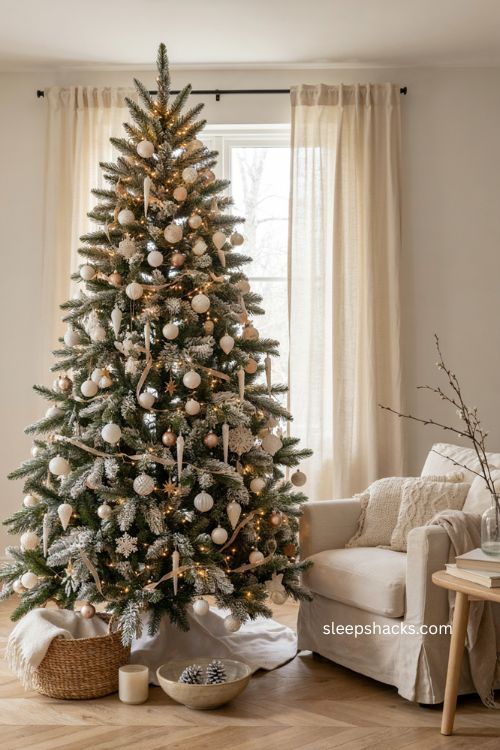
White stays the clear star here, but a few delicate gold accents — tiny stars, small baubles, or a thin metallic ribbon — add just enough warmth to keep the tree from feeling flat. The key is restraint: gold should read as a secondary detail, not a second dominant color, or the tree stops feeling like an all-white design. Warm white lights pair naturally with this combination, especially in a room already furnished with natural wood tones or cream-colored textiles nearby.
11. Clear Ornaments for Added Dimension
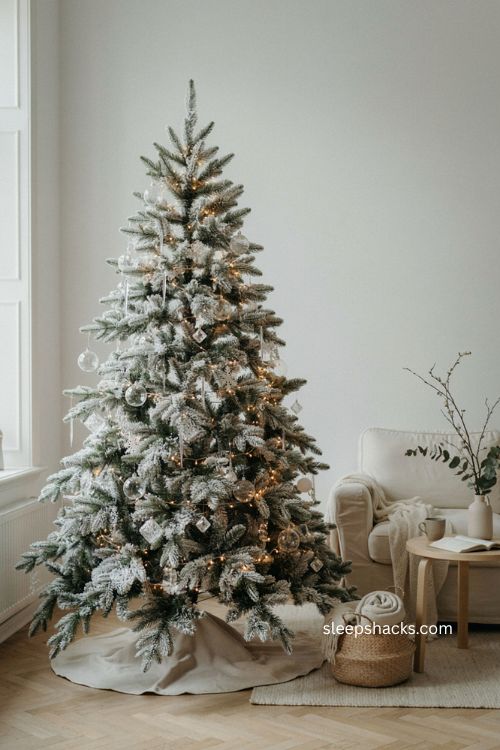
Transparent glass baubles, clear snowflakes, and crystal-style pieces add depth to a white tree without introducing any actual color. Because the ornaments themselves are see-through, the lights and any flocked branches underneath remain visible right through them, adding a layered, almost airy quality. Mixing several different shapes and sizes of clear pieces keeps the tree from feeling one-note despite the limited palette. This version tends to feel especially delicate and light, which makes it a good fit for smaller spaces.
12. Several Shades of White and Ivory
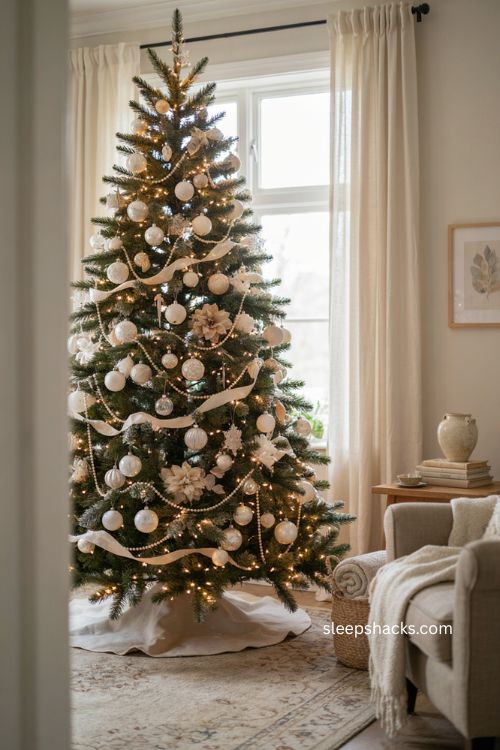
Rather than relying on one single shade, mix bright white ornaments with ivory velvet ribbon, cream-toned faux flowers, and soft beige-white decorations throughout the tree. That slight variation in tone keeps the display from reading as flat while still staying entirely within a monochromatic family. Warm white lights and a cream-colored tree skirt round out the finish. This particular mix leans especially well into traditional or vintage-inspired holiday rooms, where a single flat white can sometimes feel too stark.
13. A Few Natural Wood Accents
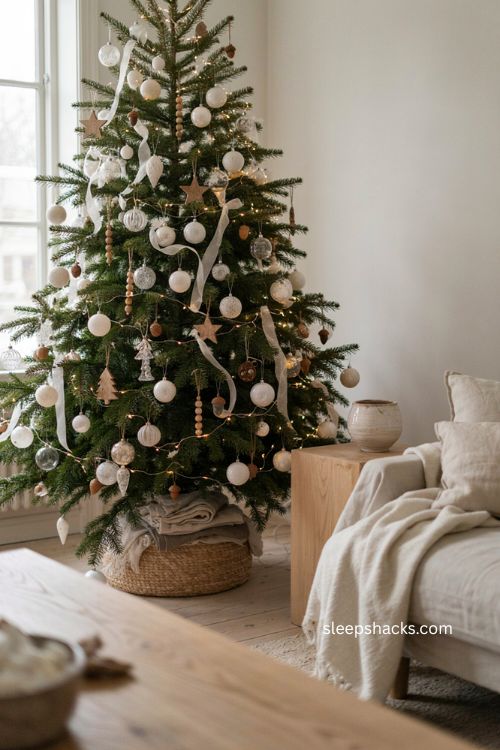
For a warmer, slightly Scandinavian take on the all-white tree, add a small number of light natural wood ornaments — simple stars, wooden beads, or small carved shapes — scattered among the white pieces. The wood introduces warmth without overpowering the overall monochromatic look, since it stays limited to just a handful of accents. A woven basket or a neutral throw blanket placed near the tree extends the same cozy, natural feeling into the surrounding space, tying the whole corner together.
14. Filled Out With White Florals
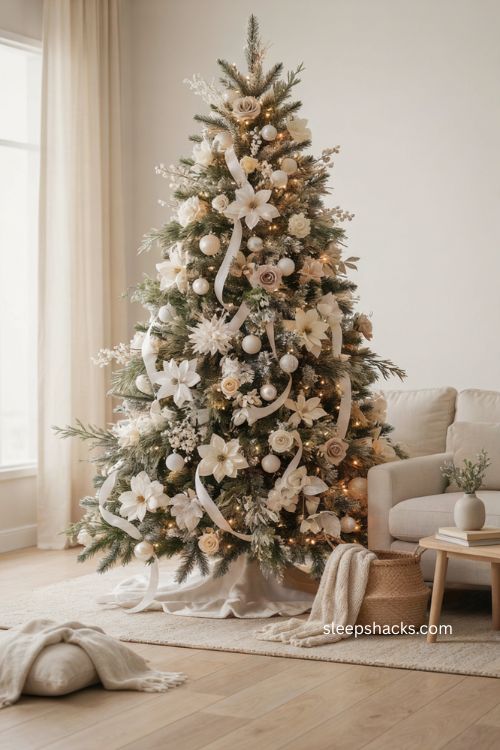
White faux flowers — poinsettias, roses, magnolia-style blooms, or small clusters of berries — help an all-white tree feel abundant and full rather than sparse. Tuck them into larger gaps between ornaments, then keep the rest of the decorations simple with white ribbon and a few basic baubles so the florals don’t get lost in extra detail. A handful of frosted greenery picks adds shape and a bit of dimension while staying entirely within the same soft, snowy color story.
15. One Oversized Bow as the Topper
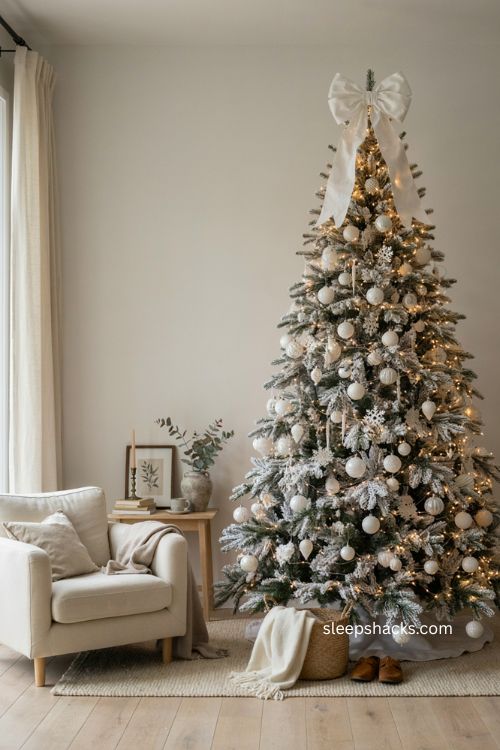
Finish the tree with a single large white bow at the top, letting the ribbon tails fall naturally down through the upper branches rather than trimming them too short. Velvet, satin, or a textured linen ribbon each give the topper a slightly different character depending on the mood of the room. Keep everything below fairly simple — white baubles, a few snowflakes, warm lights — so the oversized topper remains the clear finishing touch rather than one more competing detail.
Final Thoughts
The real trick to an all-white Christmas tree is remembering that one color doesn’t mean one texture — velvet, glass, pearl, wood, and ribbon all catch light differently, and that variety is what keeps the whole thing from looking flat. You don’t need every idea here at once; even two or three layered together, like flocking plus pearls plus warm lights, can carry the entire look. Let the simplicity be the point, and the tree will feel elegant rather than empty.
Frequently Asked Questions
Q: Do I need a flocked tree for an all white Christmas tree look?
No — a flocked tree makes the snowy effect easier to achieve, but a regular green tree decorated entirely in white ornaments and ribbon works just as well.
Q: What lighting works best for an all white Christmas tree?
Warm white lights keep the palette feeling cozy rather than stark, while cool white lights can make an all-white tree look flatter and colder by comparison.
Q: How do I keep an all white Christmas tree from looking plain?
Mix different textures and finishes — matte, glossy, velvet, and pearl — so the tree has visual depth even though everything shares the same color.