

There’s something about a tree done all in whites, silvers, and icy blues that feels like stepping into a snow globe the moment you flip on the lights. A winter wonderland tree skips the usual red-and-green playbook entirely, leaning instead into frost, sparkle, and a color palette that mimics an actual snowy forest.
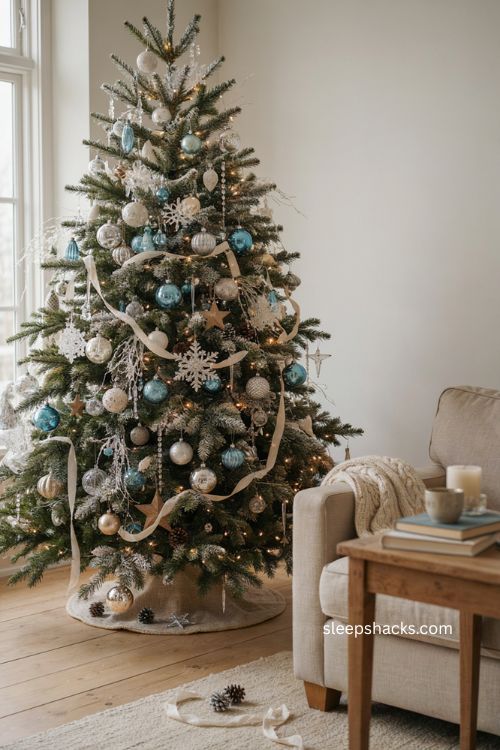
It works just as beautifully in a grand hotel lobby as it does in a living room corner, since the whole idea scales up or down depending on how many ornaments and layers you’re willing to add. If you’ve been craving something a little more magical than traditional decor this year, these fifteen ideas will get you there.
1. White, Silver, and Teal Blue Layering
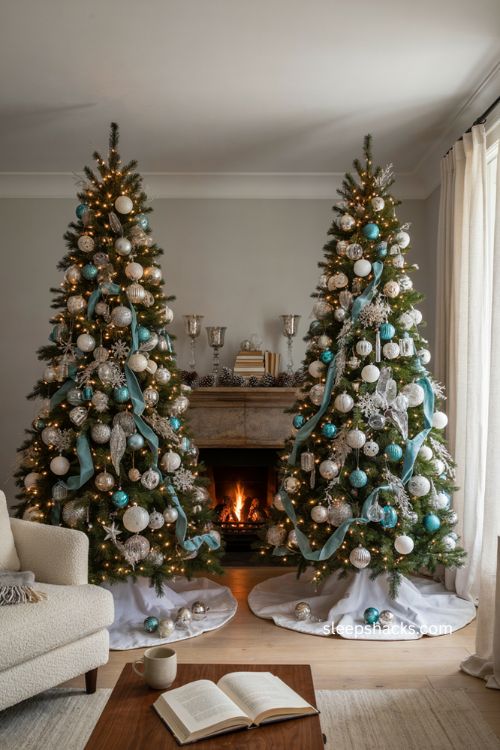
Start with a base of white and silver ornaments, then work in touches of teal blue through baubles, ribbon, or even a tree skirt to add a slightly icier, more modern edge to the classic winter palette. The teal keeps things from reading as purely silver-and-white, giving the tree a bit more personality without straying from the wintery theme. Layering matters here — mix matte and glossy finishes so the tree catches light differently depending on the angle. A pair of these trees flanking an entrance or fireplace doubles the effect and makes the whole space feel intentionally designed.
2. Frosted Forest Creatures
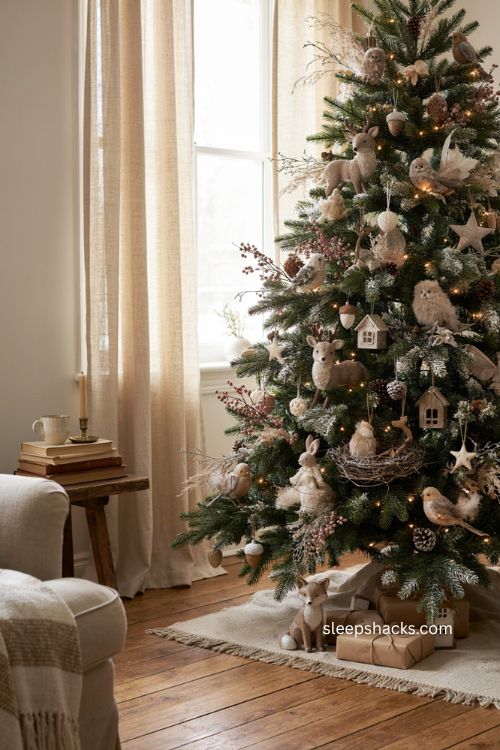
Look for ornaments shaped like deer, foxes, owls, or other woodland animals in white and cream tones, some with a soft, fuzzy texture and others with a bristled, almost frosted finish. Scattering these throughout the branches turns the tree into more of a scene than a simple display, as if you’ve caught a glimpse of a snowy forest mid-story. Adding a few branches of faux berries or dried flowers helps fill gaps between the animal ornaments while keeping the natural, woodland feeling intact. This idea works particularly well for anyone who wants their tree to feel whimsical rather than strictly elegant.
3. Tiffany Blue and Silver With Gold LEDs
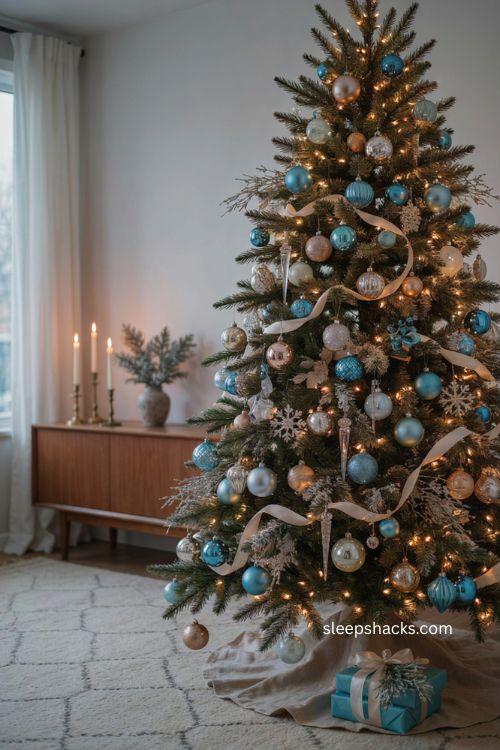
Pairing a soft, robin’s-egg blue with silver ornaments creates a cooler, almost jewel-box quality, and warming it up with gold-toned LED lights keeps the whole thing from feeling cold or sterile. The contrast between the warm light and the cool color palette is really what makes this combination sing — too much silver and blue under white lights can feel flat, but gold light adds a subtle glow that ties everything together. This pairing photographs especially well at night, when the warm light against the icy tones creates real depth throughout the tree.
4. Champagne and Silver With Luxury Fabrics
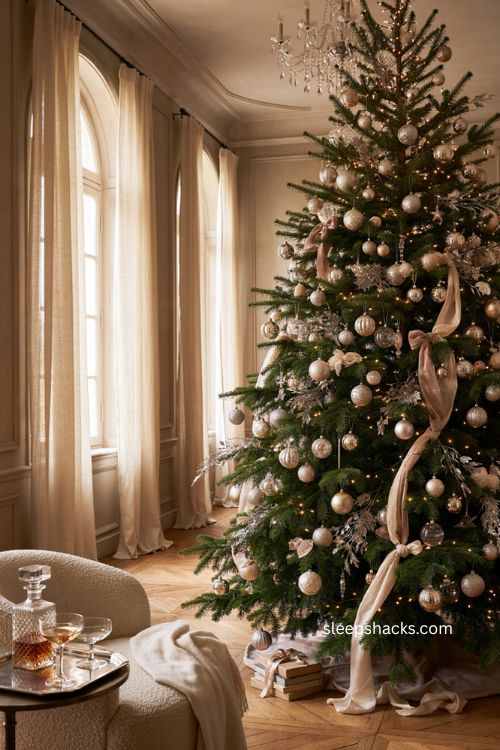
Skip the typical glass ornaments in favor of ones wrapped in silk, velvet, or other soft luxury fabrics in champagne and silver tones, mixed with a few sparkling baubles for contrast. This combination leans more toward elegant than playful, and it tends to suit formal spaces — think hotel lobbies, event venues, or a more traditionally styled living room. Adding fabric ribbon in the same tones, draped rather than tightly wrapped, gives the tree a softer, almost couture-like silhouette compared to a tree covered only in hard, glossy ornaments.
5. Blue and White Twin Trees With a Snowflake Lighting Rig
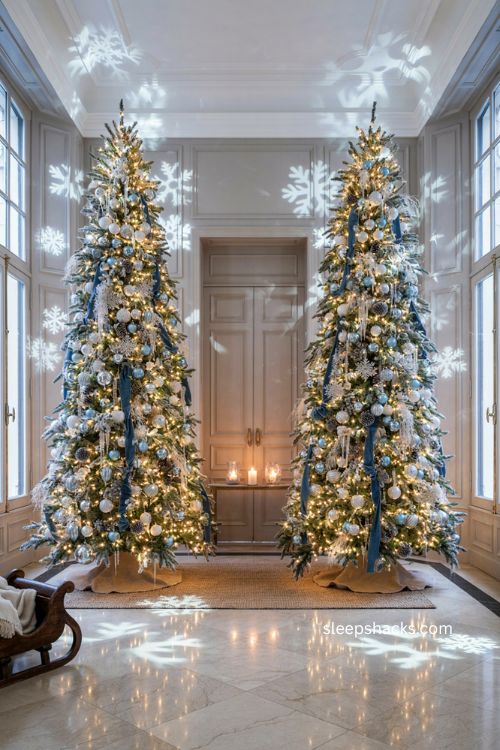
If you have the space for two trees, placing matching blue-and-white ones on either side of an entrance or focal point instantly elevates the whole room. Adding a lighting rig that projects snowflake patterns onto the walls or ceiling nearby extends the winter wonderland feeling well beyond the trees themselves. This idea works best in larger spaces — a foyer, a hotel reception, or an open living room — where there’s enough room for the twin-tree effect to actually register rather than feel cramped. Keep both trees identically decorated so the symmetry reads as deliberate.
6. All-White With Silver and Rose Gold Accents
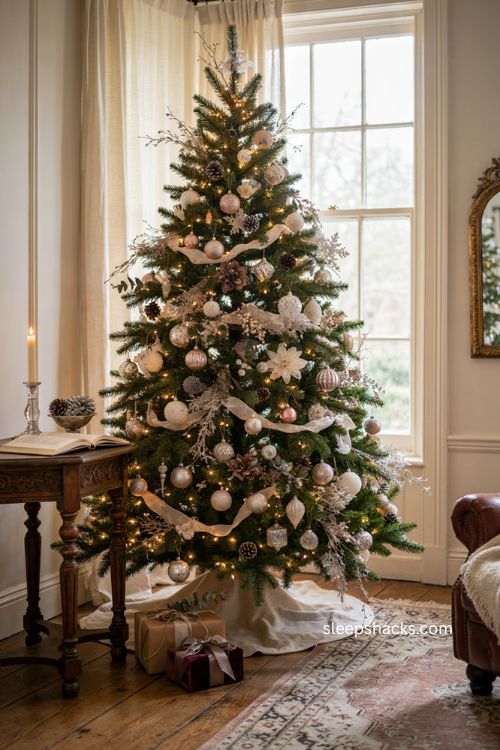
Starting with an all-white ornament base and layering in silver and a touch of dusty rose gold gives the tree warmth without breaking from the winter theme entirely. Deep purple-brown accents tucked in sparingly add just enough contrast to keep the palette from feeling too uniform or flat. Branches of faux flowers and berries fill in gaps between ornaments, giving the tree more volume and a slightly more natural, less overtly sparkly feel. Plenty of fine glitter throughout ties the whole combination together and catches the light from every angle.
7. Woodland Snowy Ornaments
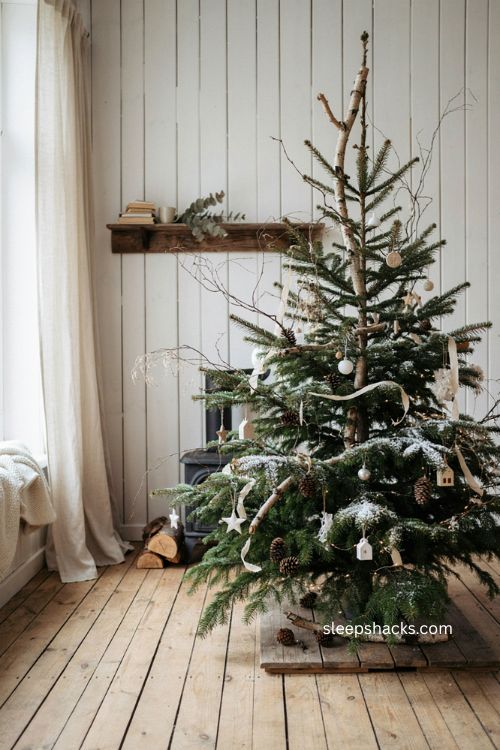
Rather than focusing on color, build this tree around texture and shape — pinecones, birch branch picks, and snow-dusted greenery mixed with simple white or clear glass ornaments. The goal is a tree that looks like it grew straight out of a snowy forest rather than one decorated with typical holiday pieces. Keep the color palette limited to white, cream, and natural wood tones so the textures themselves carry the visual interest. This version tends to feel a bit more rustic and grounded than some of the shinier winter wonderland options, which makes it a good fit for cabins or farmhouse-style spaces.
8. A Snowflake-Shaped Ornament Focus
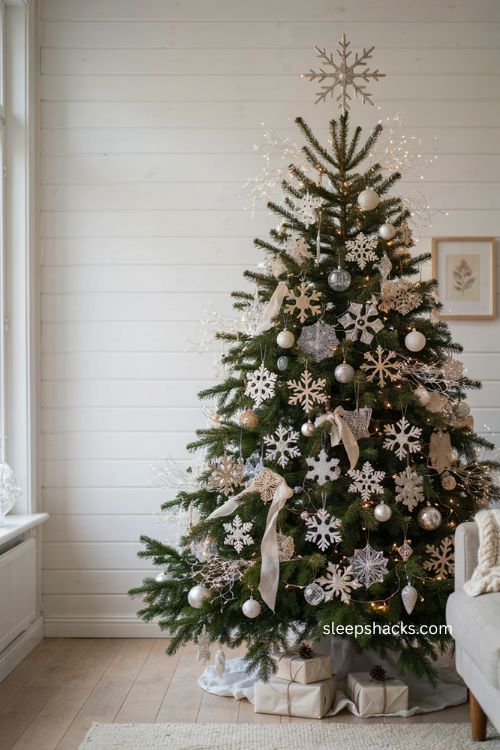
Commit to one recurring shape — snowflakes — in varying sizes and finishes, from delicate silver wire versions to chunkier white glittered ones. Repetition of a single motif like this creates a cohesive look even if you’re mixing several different textures and finishes throughout the tree. Adding a snowflake-shaped topper instead of a traditional star reinforces the theme all the way to the top of the tree. This idea is especially easy to execute gradually over a few seasons, since snowflake ornaments are widely available and easy to add to an existing collection.
9. Handcrafted and Luxury Fabric Mix
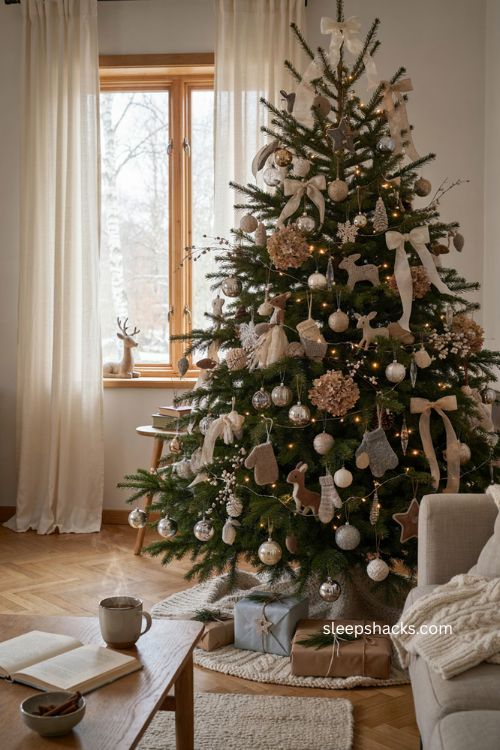
Combine handmade-style decorations — think fabric bows, small knitted or felt ornaments — with more polished, luxury pieces like glass baubles or metallic picks for a tree that feels both personal and elevated. This mix keeps a winter wonderland tree from feeling too commercial or catalog-perfect, since the handcrafted pieces add a bit of warmth and individuality. Branches and flowers tucked in throughout help blend the two ornament styles together so the tree doesn’t feel like it’s pulling in two different directions at once.
10. Full White Flocking With Icy Blue Ribbon
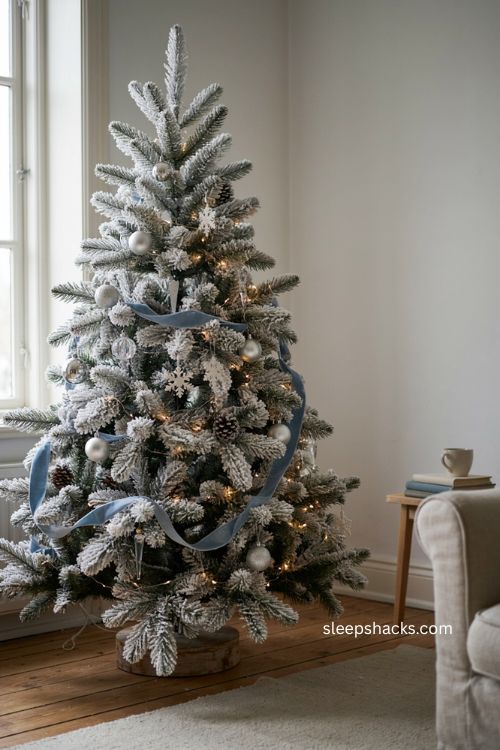
A heavily flocked white tree already does a lot of the winter wonderland work on its own, so keep the additional decor relatively simple: icy blue ribbon woven through the branches and a handful of silver or crystal ornaments. The flocking itself creates texture and shadow that plain green branches don’t have, which means the tree looks full and interesting even with fewer ornaments than usual. This is a good option if you want the winter wonderland effect without a huge amount of decorating time, since the tree does most of the visual heavy lifting before you even add anything.
11. Sparkling Twig and Branch Sprays
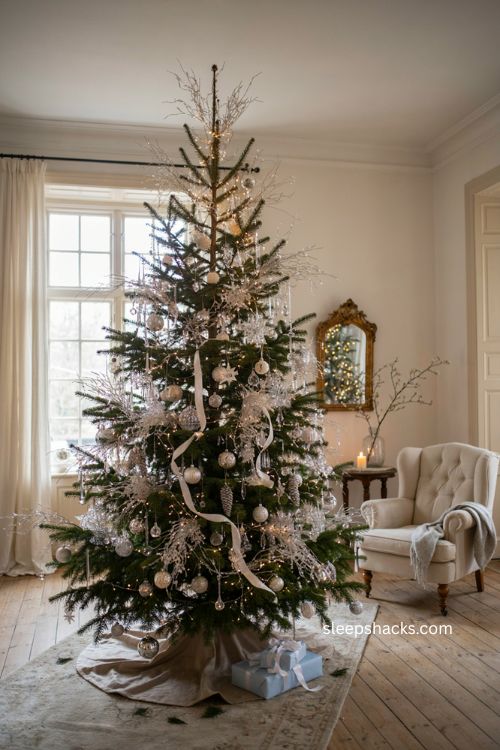
Add sprays of sparkling, crystal-encrusted twigs throughout the tree to catch and reflect light from every direction, layering them in among more traditional ornaments rather than using them alone. These branch sprays add height and texture that round ornaments alone can’t achieve, filling out gaps and making the tree feel fuller without adding weight. Combined with white or silver lighting, the crystal detailing on each branch throws small points of light across the room, adding to the overall wintry, glittering effect.
12. Purple-Brown and Silver Contrast
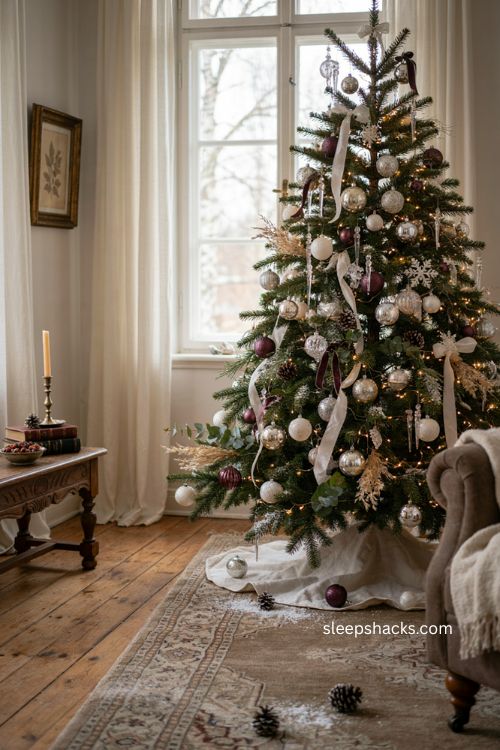
For a slightly moodier take on the winter palette, mix in deep purple-brown tones alongside the usual white and silver, using them sparingly on ornaments or ribbon rather than as a dominant color. This small contrast keeps an otherwise very light, icy tree from feeling flat or one-note, adding just enough depth to make the eye linger. It works especially well paired with soft, warm-toned lighting rather than stark white bulbs, since the warmth helps the darker accents feel intentional rather than out of place.
13. A Fully Frosted Silver Tree
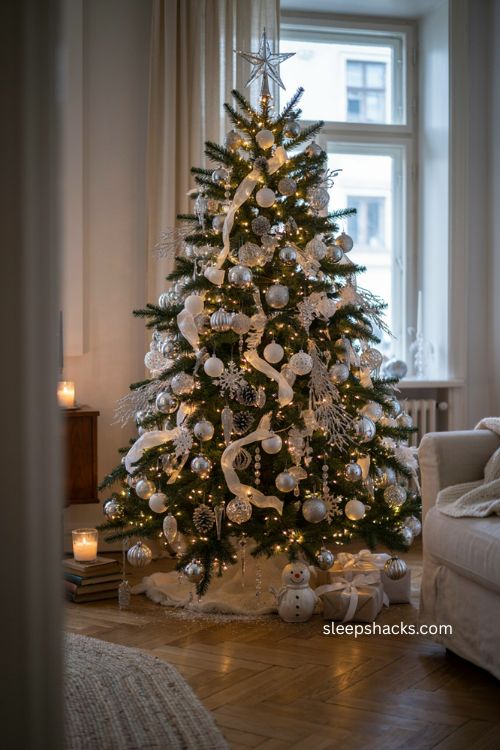
Go almost entirely silver and white, layering in different textures — glittered, matte, and glossy ornaments — so the monochrome palette still has visual variety even without introducing a second color. A silver or crystal topper finishes the look, and warm white lights (rather than cool white) keep the tree from feeling too stark or clinical. This version photographs beautifully in low light, since the silver tones catch and scatter even a small amount of light across the whole tree.
14. Champagne Ornaments With Natural Greenery
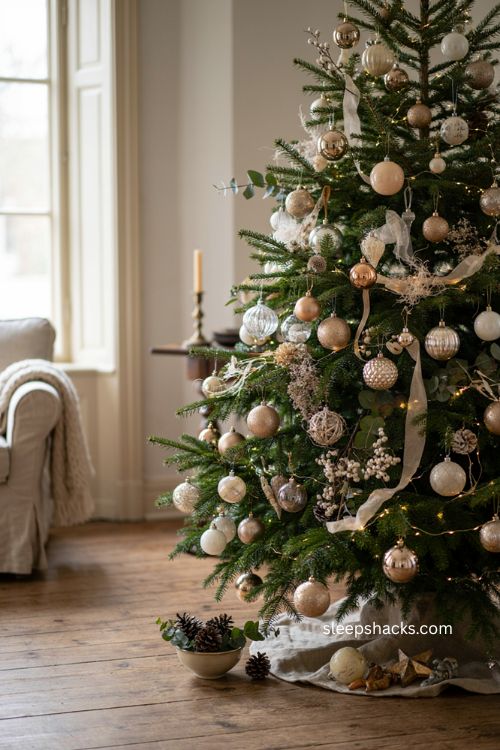
Balance the sparkle of champagne-toned ornaments with plenty of real or faux greenery tucked between them, so the tree doesn’t feel overly glitzy or artificial. The greenery grounds the metallic tones and adds a natural, organic element that pure sparkle alone can’t provide. A few sprigs of white berries or dried flowers scattered throughout tie the natural and luxury elements together without overcomplicating the palette.
15. Layered Whites With a Statement Topper
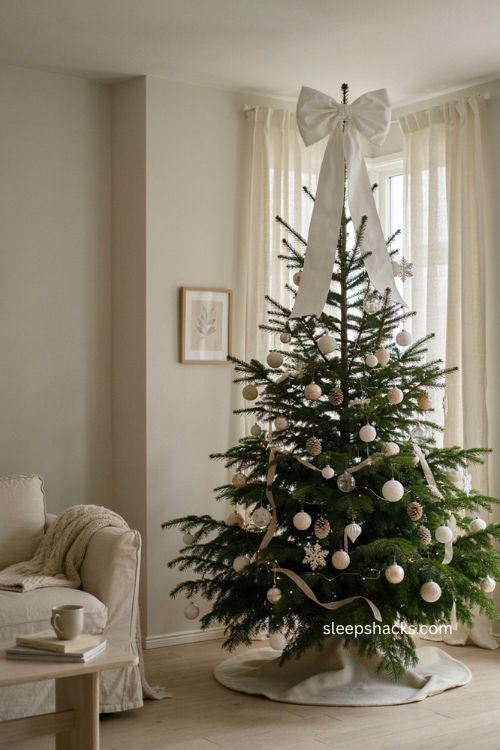
Keep the ornaments themselves fairly simple and uniform in white and cream, then let one dramatic topper — a large star, an oversized bow, or a cluster of branches — become the tree’s true focal point. This approach relies on restraint throughout the body of the tree so the topper actually stands out rather than competing with a dozen other statement pieces. It’s a good option for anyone who wants the winter wonderland look without spending hours layering multiple textures and colors throughout every branch.
Final Thoughts
A winter wonderland tree works because it borrows from something we already find beautiful — an actual snowy landscape — and translates that into something you can walk past every day during the holidays. There’s real freedom in this palette too, since white, silver, and icy blue all play well with almost any additional accent you want to bring in, whether that’s warm gold, deep purple, or blush pink. Pick the version that matches the mood you want your space to have this winter, and let the rest of the room follow its lead.
Frequently Asked Questions
Q: What colors are used in a winter wonderland Christmas tree?
White, silver, and icy blue form the base palette, often layered with accents like champagne, rose gold, or teal for extra depth.
Q: Do I need a flocked tree to get the winter wonderland look?
No — a flocked tree makes the effect easier to achieve, but a regular green tree works just as well when decorated with white, silver, and blue ornaments.
Q: What lighting works best for a winter wonderland tree?
Warm white lights keep the icy color palette from feeling too cold or stark, while a few cooler white accents can enhance the frosted, sparkly effect.