

Florists will tell you that Thanksgiving is one of the busiest flower-buying holidays of the entire year, and honestly, it makes sense once you think about it.
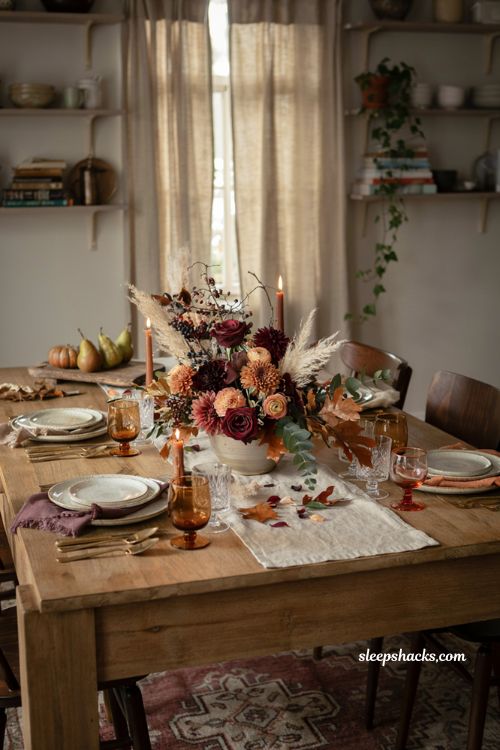
Guests notice the table before they notice the food, and a good arrangement does more to set the mood than almost anything else in the room. But a stunning Thanksgiving flower arrangement doesn’t have to mean orange mums crammed into a vase — it can be moody and dark, bright and unexpected, or built almost entirely from things already sitting in your kitchen. These fifteen Thanksgiving flower arrangement ideas cover a real range of styles, so there’s something here whether you’re hosting a formal family dinner or a relaxed Friendsgiving.
1. Mix Textures Instead of Just Colors
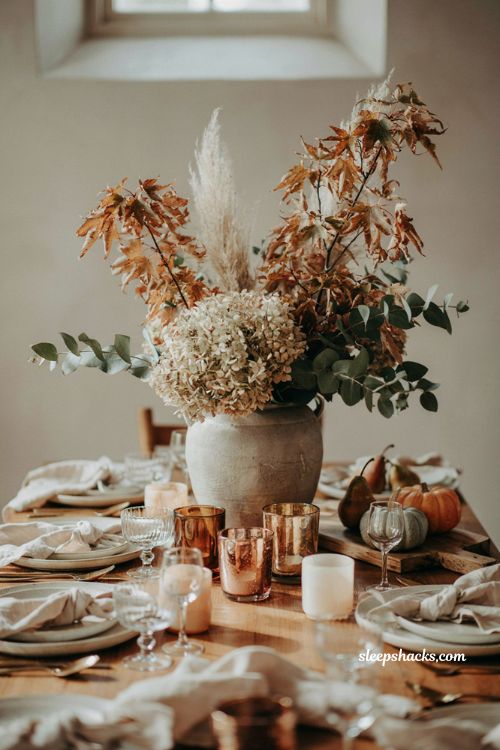
A beautiful arrangement isn’t only about picking the right color palette — texture matters just as much. Combine something soft and full, like hydrangea, with something feathery, like ornamental grass, and something structural, like a few branches of fading maple or eucalyptus. Even if you keep the whole bouquet in a single tonal family, the variety in shape and texture keeps it from feeling flat or one-note. This approach also gives you more room to work with what’s actually available at the store that week, since you’re building around contrast rather than one specific bloom.
2. Swap the Vase for a Hollowed Pumpkin
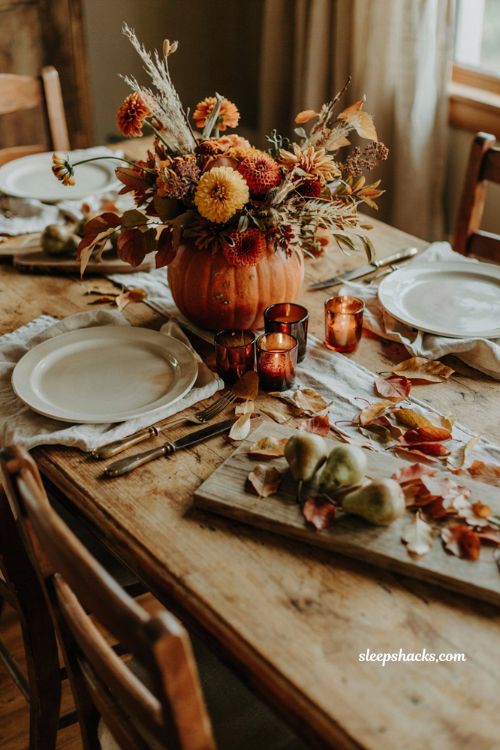
Instead of reaching for a glass vase, hollow out a small to medium pumpkin and use it as the container for your flowers instead. Scoop out the seeds and pulp, line the inside with a plastic liner or a small jar of water, and arrange your stems directly into the opening. This works especially well with warm-toned blooms like marigolds or dahlias, since the pumpkin itself becomes part of the color story rather than just holding it. It’s also a nice way to repurpose a pumpkin that’s already sitting on your porch or entryway.
3. Build on an Evergreen Base You Can Reuse
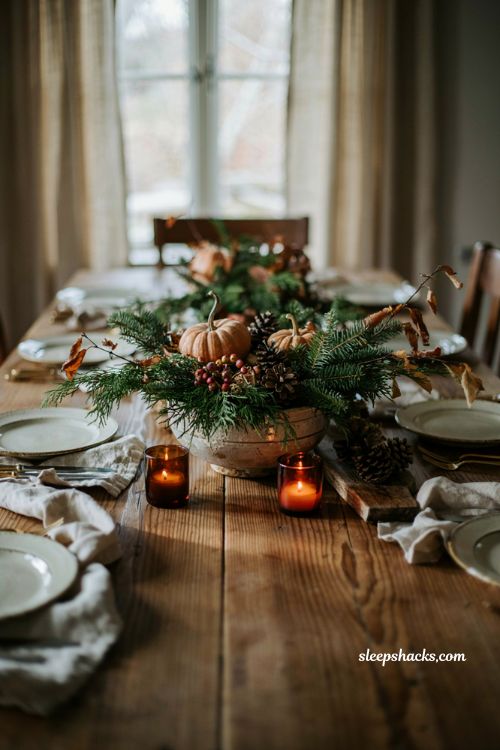
Start with a simple base of evergreen fronds in a low bowl or vase, then layer seasonal pieces on top that you can easily swap out later. For Thanksgiving, tuck in a few pinecones and small pumpkins; once December arrives, pull those out and replace them with ornaments or holly berries instead. This approach saves you from building a completely new arrangement for each holiday, since the greenery foundation carries you straight through the season. It’s a practical trick if you’re hosting multiple gatherings between November and January.
4. Keep the Arrangement Long and Low
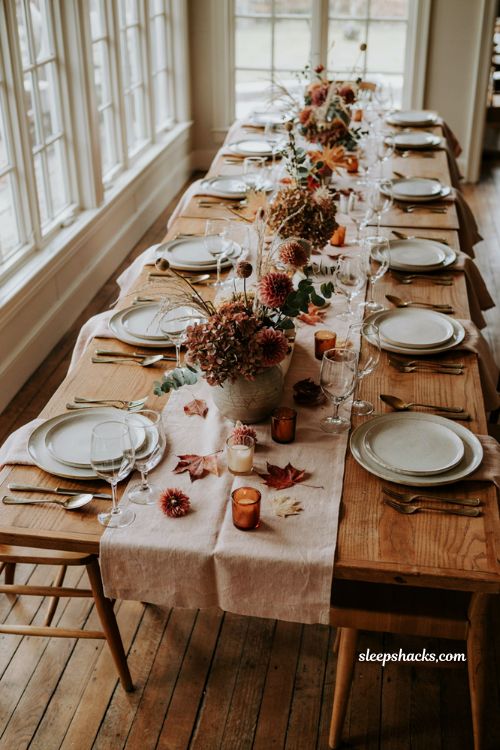
On a long rectangular table, a tall centerpiece can actually work against you by blocking sightlines and making conversation harder. A long, low arrangement that runs closer to the table’s shape lets your dinnerware and food stay visible while still giving the table a clear focal point. Focus on horizontal movement rather than height — layering focal blooms with softer texture and a few controlled branches along the length of the table. This style also happens to leave more room for platters and serving dishes once dinner is actually plated.
5. Stick to One Side of the Color Wheel
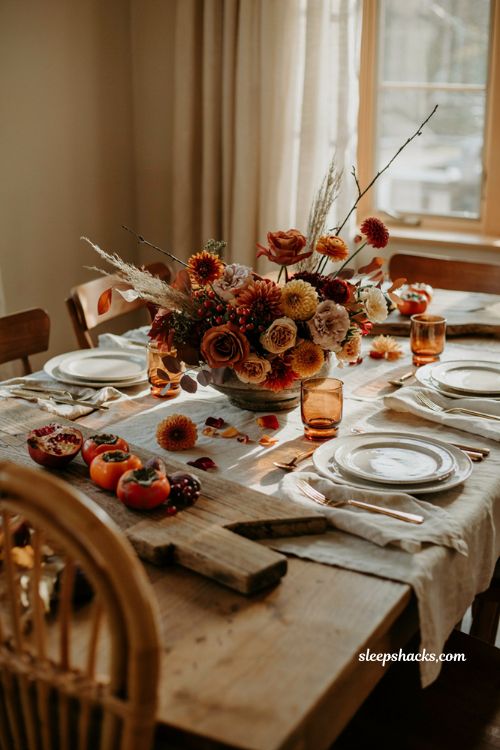
For an arrangement that feels cohesive rather than chaotic, commit to either warm tones or cool tones and stay there. Reds, oranges, and warm pinks play well together, just as blues, purples, and cooler creams do on the other side of the wheel. Even lighter, more neutral blooms should lean toward whichever temperature you’ve chosen — a cream rose reads differently next to warm reds than it does next to cool blues. This single decision does more to make an arrangement look professionally styled than almost any other choice you’ll make.
6. Add Just One Accent Color
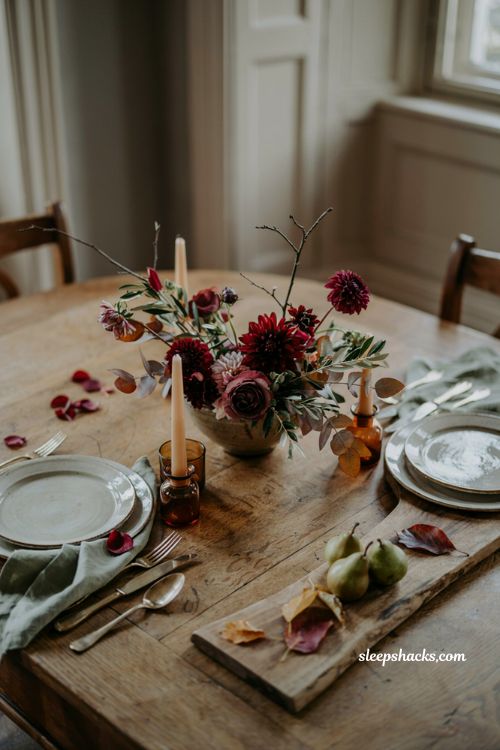
Rather than mixing five or six different flower colors together, choose one dominant hue and add just a single accent color to break it up. Green foliage or a contrasting hydrangea placed between vibrant roses keeps the arrangement from reading as a solid wash of one shade. Coordinate that accent color with something else on your table, like your napkins or place cards, so the whole setting feels intentional rather than like the flowers were an afterthought. This restraint is often what separates a polished arrangement from one that feels overdone.
7. Go Branch-Only for a Neutral Look
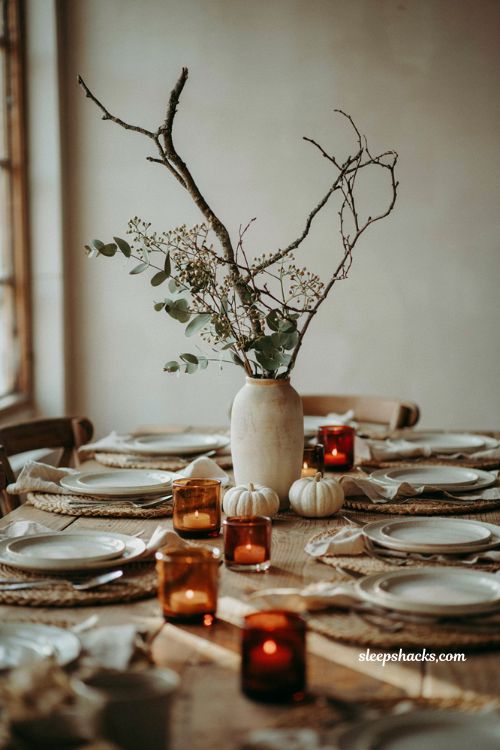
If traditional flowers aren’t really your thing, a collection of bare or berry-covered branches makes a striking, low-maintenance centerpiece on its own. Small white berry stems or seeded eucalyptus branches arranged simply in a tall vase give the table real presence without needing a single bloom. This style also transitions beautifully into winter, since the same branches can hold small ornaments once Thanksgiving wraps up and the next holiday takes over. It’s a smart choice if you want something that looks intentional but requires almost no daily maintenance.
8. Fill a Cornucopia With Blooms
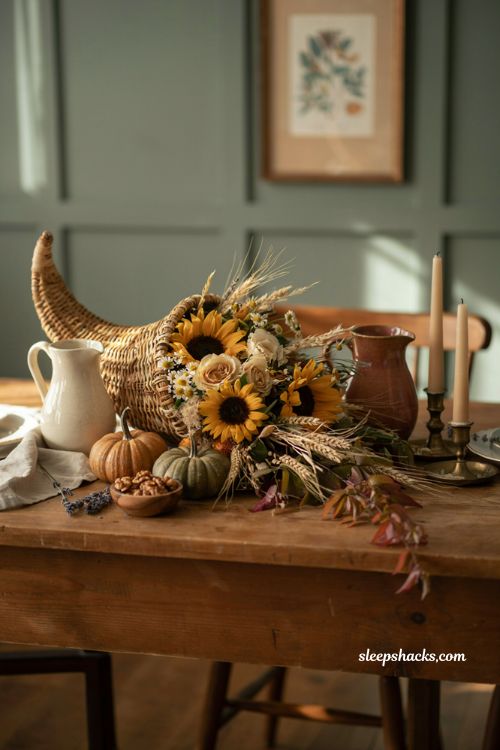
The traditional cornucopia gets a fresh update when you fill it with flowers instead of just produce. Sunflowers, roses, and daisies tucked into the horn, along with a few stalks of wheat or barley for texture, keep the symbolism of abundance while adding real color and softness to the table. Set it on a buffet or console rather than the dining table itself, since the shape can take up more room than a typical centerpiece. This idea works especially well if you already own a cornucopia and want to give it new purpose beyond gourds and mini pumpkins.
9. Make a Trio of Pumpkin Vases
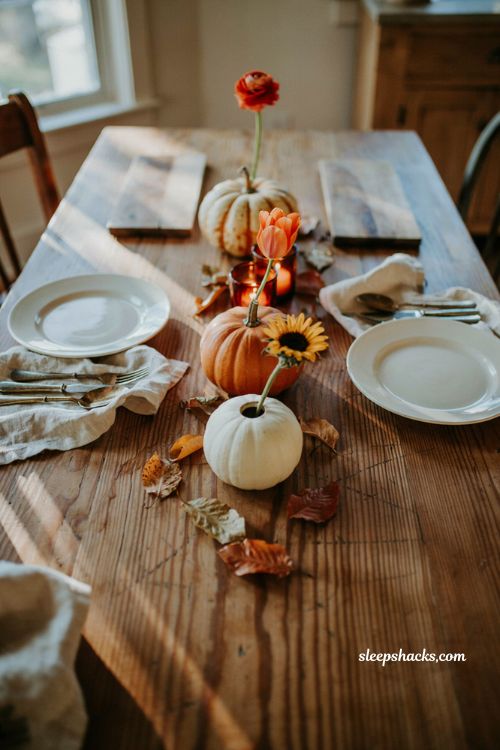
Small pumpkins, hollowed out and filled with single flower stems, make an adorable and inexpensive alternative to one large centerpiece. Group three together in slightly varied sizes, and mix in a couple of pumpkin varieties, like white and traditional orange, for visual interest. Sunflowers, orange tulips, or scarlet ranunculus all work well as single-stem options that let each little pumpkin vase stand on its own. This idea is especially fun for a smaller table, since the trio can be spaced out without needing much extra room.
10. Try Birch Bark for a Modern Base
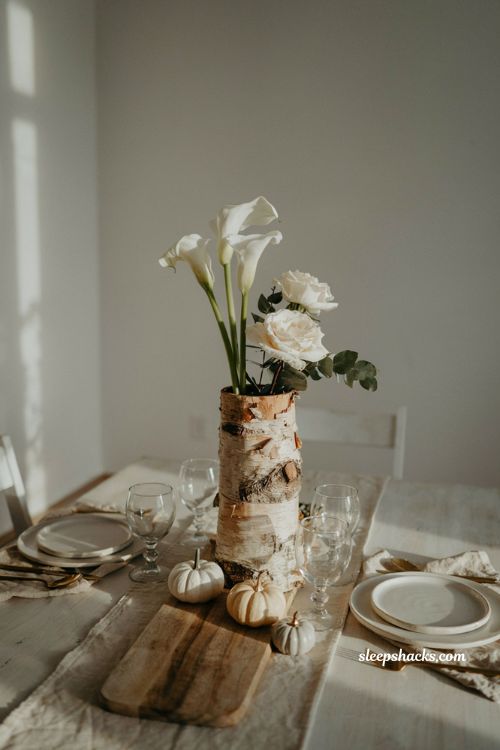
A tall vase wrapped in or made from birch bark gives an arrangement a refined, slightly modern edge that plain glass or ceramic can’t quite match. White calla lilies or roses set against the pale, textured bark create a striking contrast that photographs beautifully in natural light. Keep the greenery minimal here, since the bark itself is doing a lot of the visual work and doesn’t need much competition. This style suits a table that’s already leaning neutral or monochromatic, since the birch tone ties in naturally with cream or white dinnerware.
11. Float Blooms With Candles in a Bowl
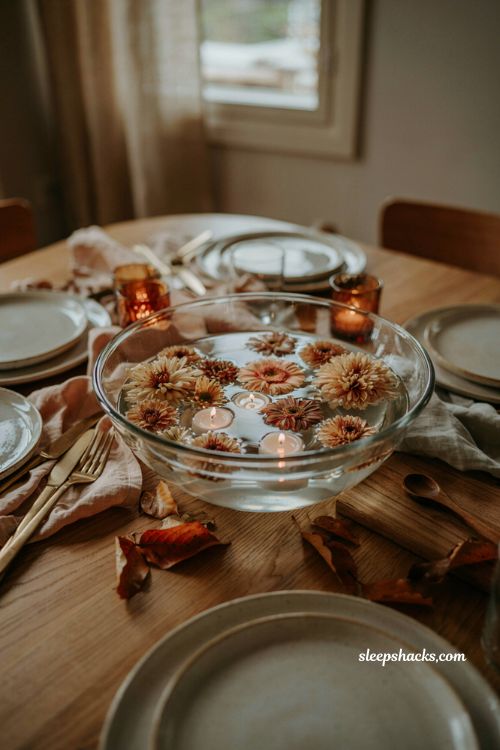
A large glass bowl filled with water, a few floating candles, and loose flower heads like gerbera daisies or chrysanthemums creates a cozy, glowing centerpiece that’s genuinely different from a typical vase arrangement. Keep the flower heads relatively flat so they float evenly rather than tipping over in the water. Light the candles right before guests sit down for the best effect, since the flicker against the water is really what makes this idea special. This is a nice low centerpiece option if you want something that won’t block sightlines across the table.
12. Use Grapes Instead of Extra Flowers
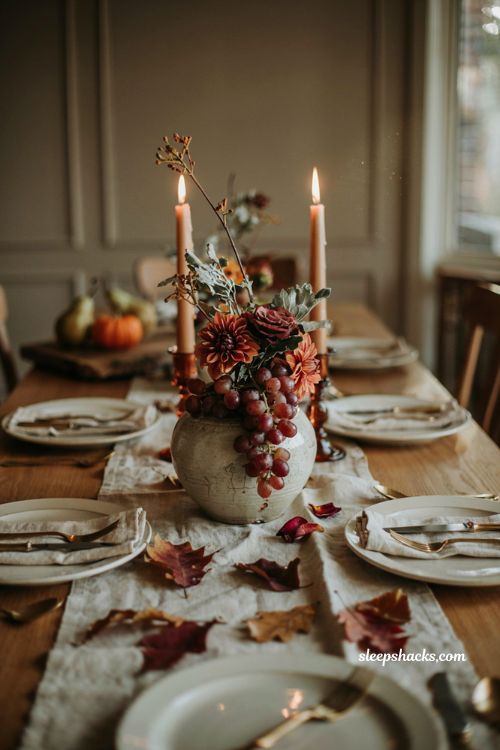
Purple grapes, draped loosely alongside a smaller cluster of flowers or branches, add unexpected color and texture that most Thanksgiving tables don’t typically include. Real or faux both work here, so this is an easy idea to reuse year after year if you go the faux route. The deep purple tone pairs beautifully with warm oranges and reds, giving the arrangement a slightly richer, more unconventional feel than a standard fall palette. It’s a good choice if you want your table to look a little different from everyone else’s without straying too far from the season.
13. Layer Metallics Into the Arrangement
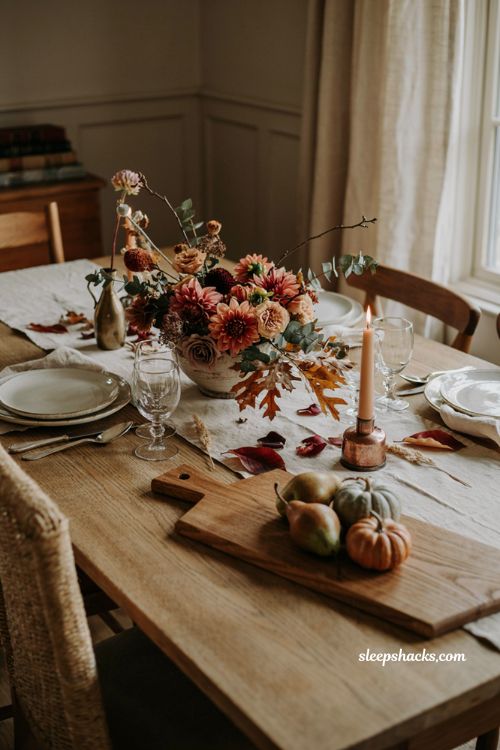
A touch of metal — chrome, brass, or copper — woven into your centerpiece through candle holders, small vases, or accent pieces gives an otherwise natural arrangement some extra shine. You don’t need to overdo it; even one or two metallic pieces tucked among the greenery adds enough glint to feel intentional. Mixing metals, rather than sticking to just one, actually reads as more collected and modern than a single uniform finish. This approach works well alongside almost any flower palette, since the metallics function as a neutral accent rather than competing with the blooms themselves.
14. Build a Wooden Tray Centerpiece
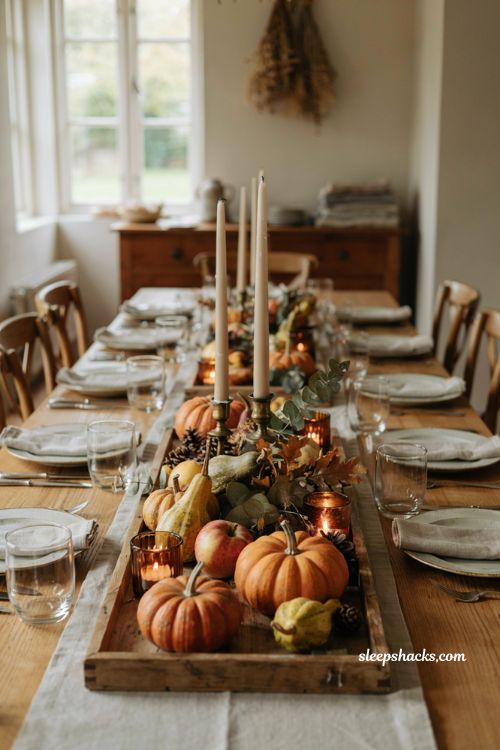
A generously sized wooden tray makes an easy, low-effort base for a full Thanksgiving centerpiece built from pumpkins, gourds, fresh produce, and a bit of greenery. Add a couple of taper candles at varying heights for extra dimension, and keep the arrangement loose rather than tightly packed so it reads as abundant instead of cluttered. This style is especially forgiving if you’re working with whatever seasonal produce you already have on hand, since the tray pulls everything together visually even if the individual pieces don’t match perfectly. It also stores flat and easily between uses.
15. Let One Flower Type Lead the Whole Table
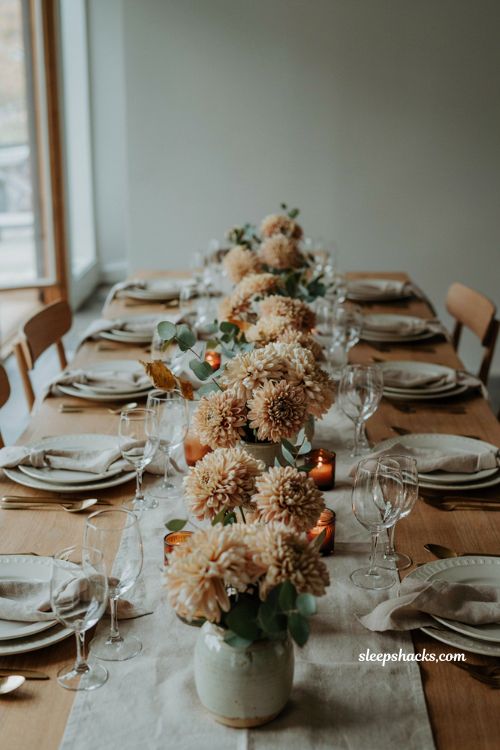
Sometimes the simplest, most striking choice is picking just one type of bloom and letting it guide the entire table. A cluster of carnations, a row of classic mums, or a single variety of protea creates a cohesive look without requiring you to coordinate multiple flower types and colors. This approach also tends to be more budget-friendly, since buying one type of flower in bulk is usually cheaper than a mixed arrangement. It’s a good option if you’re short on time before guests arrive but still want the table to feel considered.
Final Thoughts
None of these ideas require a florist’s budget or a design degree — most of them come down to picking one clear idea and actually committing to it instead of trying to do everything at once. A hollowed pumpkin, a tray of produce, or a single type of flower can carry a whole table just as well as an elaborate arrangement can. Grab whatever’s already around your kitchen or yard before you head to the store, because some of the best Thanksgiving flower arrangements start with things you already have.
Frequently Asked Questions
Q: What flowers are traditionally used for Thanksgiving arrangements? Mums, carnations, roses, sunflowers, and asters are common choices thanks to their vibrant colors and wide seasonal availability.
Q: How do I keep a Thanksgiving centerpiece from blocking conversation? Choose a long, low arrangement instead of a tall one, especially on a rectangular table where guests are seated across from each other.
Q: Can I make a Thanksgiving flower arrangement without buying a vase? Yes — hollowed pumpkins, wooden trays, and even glass bowls filled with water and floating blooms all work well as alternatives.